
THAT HIDEOUS STRENGTH: Chapter 12

A striking image of a large bear reminds me that Mr. Bultitude, though subdued by Dr. Ransom’s Adam-like understanding of the animals (Genesis 1-2) is still an animal by nature. He is not a human being. Nor is he something to be trifled with or presumed upon as the animals are in the vivisection lab at Belbury. (Image from PixelsTalk.net)

WET AND WINDY NIGHT 

Overview Question

This is another whirlwind chapter with numerous sub-plots moving around each other: Jane, Dimble, and Arthur are still out searching for the elusive Merlin. Wither has his own people searching as well, but they are on a false trail. Meanwhile, Frost is trying to train Mark in the ambitions of the NICE but Mark is changing inside and only feigns his full devotion. At the same time, the people back at St. Anne’s have a conversation with MacPhee and Dr. Ransom about the nature of their animals (Mr. Bultitude and the cat) in contrast to the emotions and virtues that shape a human life. And back at Belbury, the leaders are welcoming the tramp (thinking they have captured the real Merlin) while Mark barely escapes another demonic attack of vanity by engaging in a kind of desperate elementary prayer. So much going on; but is there a thread that ties it all together?   

For me, the clue comes with the different images and ideas set forth in this chapter about what it means to be human, especially regarding the role of emotion and virtue in the constitution of a truly human life. On the one hand, we have Frost’s insistence to Mark (echoing closely the first principles of the modern worldview) that the “objectivity” of the NICE requires ridding oneself of all emotional (that is “merely chemical”) attachments that might keep one from pursuing a line of experiment no matter where it leads. And, on the other, we have Ransom’s insistence, in the discussion about Mr. Bultitude, that what makes a human being fully and truly human is precisely the emotional capacities (virtues) for intentional friendship that lead ultimately to Love (charity, agape).

These two opposing visions of the place of emotion and virtue in human life clearly represent the two worldviews (modern and traditional) with which we have been working from the beginning. And they lead to our Overview Question for this week:

What are the two views of emotion and virtue that are expressed by Frost and Ransom, and how does this contrast help to clarify what is at stake in practical terms by choosing to commit one’s mind and heart to one vision or the other?

As you think about this question, it may also be helpful to remember Lewis’s statement (in the Preface of THS) that his modern fairytale has behind it the same point he was trying to make in The Abolition of Man: The modern conception of “objectivity” (which defines poetry and emotion as purely “subjective”) has created “men without chests,” that is, men whose hearts and minds are no longer shaped by the virtues and emotions that arise from the biblical story and worldview. As Lewis also knew, he was affirming the traditional view of the passions (the evil thoughts/demons of pride, vanity, greed, impurity, etc.) which impair human reason and cut us off from a true perception of reality and nature. See also, John MacMurray, Reason and Emotion, and Alasdair MacIntyre, After Virtue, which also examine the importance of emotion and virtue for the formation of human nature, freedom, and reason.
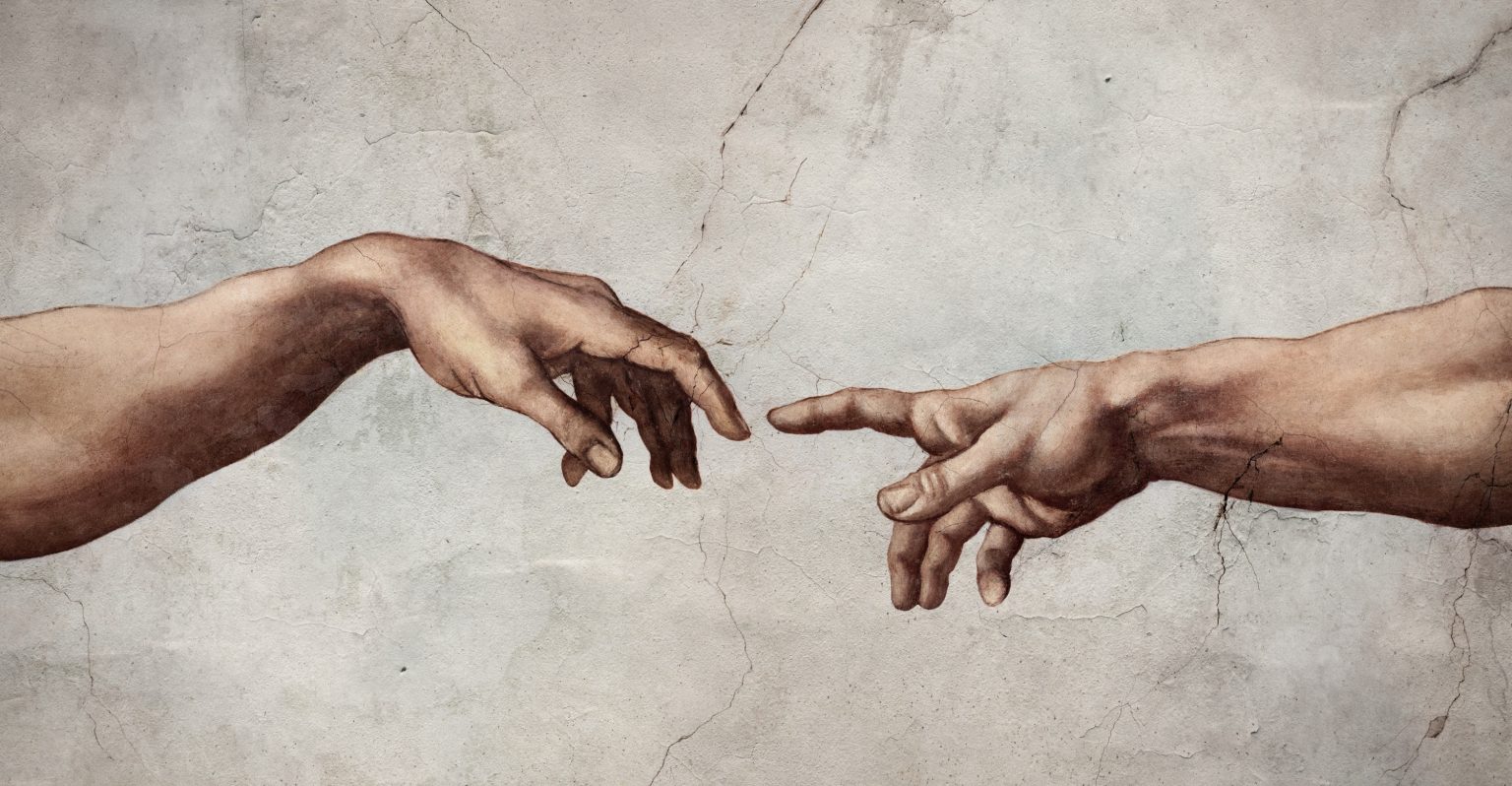
Detail from Michael Angelo’s Sistine Chapel painting of the Creation of Adam. The frescos of the Chapel portray the larger story from Genesis 1-2 of the creation of man, male and female, in God’s image.

DEEPER-DIVE QUESTIONS

1. Frost’s modern view of “objectivity” (stripped of all traditional emotional values) is directly counter to the biblical and classical view which claims that the virtuous life—far from interfering with reason, or objectivity, or the accurate perception of nature—actually connects us to them. Frost’s account of reason and objectivity, note well (and by his own reckoning) readily leads to the most horrific experiments and treatment of other human beings that would formerly (under the traditional worldview) have been considered unthinkable (e.g., genocide). Where in the world of contemporary “politicized” science are we seeing a similar break with the traditional values of religion and virtue combined with an anti-nature” or “anti-reality” agenda?

2. In his conversation with MacPhee about the difference between animals and humans, Dr. Ransom alludes to the biblical and traditional hierarchy of being: mineral, vegetable, animal, human, and angelic. Furthermore, in keeping with his sources (Genesis 1 and classical cosmology, see Lewis’s The Discarded Image) Ransom locates our human calling specifically between the animal and the angelic. Like the animals, we have sensation (the sensitive soul), but like the angels we also have understanding and reason (the rational soul). Thus, according to Ransom, human beings are created and called to embody not only appetites and sensations (like animals) but also intentional virtues such as friendship and charity. To be truly human, then, contrary to Frost’s vision of technocratic man, is precisely to embrace a certain shaping of our emotional life centered in Christ and rejecting the evil passions.  How does this conversation bring out the very different conception of human nature, reason, and emotion in the traditional worldview at St. Anne’s? And how does Mrs. Dimble’s self-discipline to control her own anxieties, earlier in this section, demonstrate the task?    

3. In Part 6, Wither and Frost welcome to Belbury the tramp, whom they suppose to be the real Merlin.  There is a great irony at work here in Lewis’s portrayal of Wither and Frost (the enlightened elite) being strung along by an ordinary and unsophisticated vagrant who is himself driven by little more than his sensate (animal) appetites. But this is, perhaps, part of Lewis’s hidden point. For this downtrodden human being has a kind of natural shrewdness that neither Wither nor Frost can penetrate. For all of their pretense to elite knowledge about the technocratic “man” of the future, they are completely duped by their present quarry. How does the tramp, in this regard, register points for the traditional view of nature and human nature over against the modern?

4. In the 7th and final Part of Chapter 12, Mark goes through a terrible gauntlet of temptation and resistance. He has discovered how evil are the leaders at Belbury, and he wants to escape their clutches. And yet, God help him, he cannot stop himself from feeling pulled again and again by the fallen power of his own vanity, his desire to be someone important in the inner ring of NICE. This terrible juggernaut culminates in Mark’s brief but earnest prayer, “Oh don’t, don’t let me go back into it.” After which, the room is suddenly cleansed and he simply goes to sleep. How does all of this illustrate the role of human emotion and the human will in response to God’s provision to which Ransom has earlier alluded?   
THAT HIDEOUS STRENGTH: Chapter 11

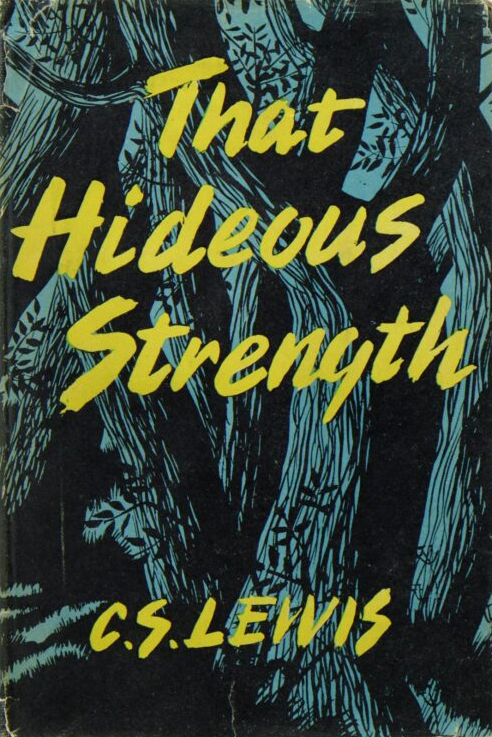
First published in 1945, the original dust cover for That Hideous Strength evokes something of what it feels like to walk into a shadowy forest at night. And that, of course, is what the opening scene of chapter 11 is all about. “I can’t see a thing,” said Jane.

BATTLE BEGUN 

Overview Question

In this chapter, Belbury and St. Anne’s are both seeking to strengthen their sources of strategic knowledge (“military intelligence” one might say) in order to undermine and defeat the other side. Belbury hopes to capture Jane and make use of her clairvoyance to reveal the plans of their as yet unlocated and unidentified enemies. St. Anne’s hopes to find Merlin in case he will be on their side, but also to try to stop him from helping the NICE if that is his inclination. Neither side is omniscient; but each uses very different methods to try to achieve their goals. Overview Question:

Based on what you already know about these two groups of people, as well as what you learn in this chapter (especially Frost’s speech to Wither toward the end of Part 2), how would you characterize the different goals of each group, and how are these goals consistent with the very different methods that each group uses?

The following quotation from Lewis’s The Screwtape Letters (Letter VIII) should also help with considering this question in greater depth. (Screwtape, the senior devil, is speaking to Wormwood, his understudy.)  

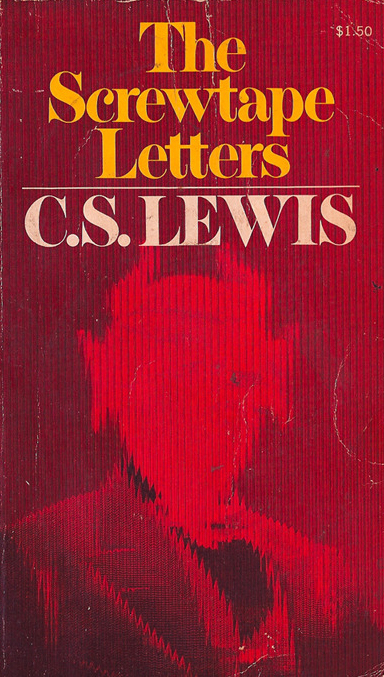
“To us a human is primarily food; our aim is the absorption of its will into ours, the increase of our own area of selfhood at its expense. But the obedience which the enemy demands of men is quite a different thing . . . He really does want to fill the universe with a lot of loathsome little replicas of himself . . . not because he has absorbed them but because their wills freely conform to His. We want cattle who can finally become food; He wants servants who can finally become sons.” (emphasis added)


Cover art for the 1961 edition of The Screwtape Letters.

DEEPER-DIVE QUESTIONS

1. As Jane, Dr. Dimble, and Arthur Denniston look for Merlin in the fields and woods at night, each of them begins to realize that, up to now, their ideas and beliefs about Merlin, or King Arthur, or the ancient Druids, or even about the Christian God and religion in the modern world, have often been either theoretical and abstract (Dimble) or shallow and poorly informed (Jane). Now they are about to encounter something in person, and it all looks very different. What parallels can you find in the culture wars of America today among some groups or individuals for this kind of awakening to the deeper reality and seriousness of faith and religion, and to the possibility that one might have to sacrifice something, even to give one’s life, in order truly to serve the good cause of God? Have you yourself felt or experienced this kind of sharpening of religious focus? 

2. Continuing a theme that we saw in Chapter 10, the leaders at Belbury believe they can use coercive techniques to manipulate Mark into doing their will (to bring Jane to Belbury). And yet there are signs of a kind of myopia or blindness built into their worldview, in particular their view of “man” (in this case Mark and others). What signs of this blindness can you detect in the chapter, and why do you think these types of ideological blindness are particularly endemic to the modern worldview?

3. In Part 3, after being arrested, Mark goes through another series of realizations and reactions about himself and Belbury; but he seems unable to sort it all out. As the narrator informs us, Mark is a materialist. He has no absolute reference point for moral judgement; and yet his conscience is still functioning at a level high enough to allow him to realize that he has been a fool to trust the people of NICE (Wither, Feverstone, Curry, Frost). He even has a momentary picture of his own corruption and villainy in the ways he has treated Jane and other friends from the past. According to the narrator, what is missing from Mark’s worldview that might have allowed him to understand his own foolish behavior more fully, more deeply? What is it in his current lifeworld that has blocked him from acquiring these other insights? 


THAT HIDEOUS STRENGTH: Chapter 10

This is the cover art for the 1960 edition of That Hideous Strength from Pan Books in London. The artwork by S. R. Boldero suggests the devastation of Edgestow as refugees flee from homes and buildings that have been destroyed by rioting. The Saracen’s head hovers in the background.

THE CONQUERED CITY  

Overview Question

In this chapter, the efforts of NICE to take over and control the town of Edgestow and surrounding villages has reached a crescendo. The “stages of cultural revolution” (demoralization, destabilization, crisis, new normal) that we observed earlier in Mark Studdock as an individual (see Chapters 5 and 6) have now reached the level of “mass formation” for the people of Edgestow as a whole. And yet, due to the nature of these dynamics, not everyone is being affected or responding to the trouble in the same way or at the same time. This brings us to our Overview Question for this chapter:

What are the different ways that people at Edgestow are responding to the troubles stirred up by the NICE? What explanation can you give for these differences? Try to identify at least two different sub-groups. Also, what parallels for these differences can you identify in recent cultural and political events of American society?

As you ponder this question, you may find it useful to revisit our earlier discussion (in the general Introduction) of the “Stages of Cultural Revolution” as described by Yuri Bezmenov, and of “Mass Formation” as described by Mattias Desmet. Neither of these models is difficult to understand in itself; and both cast a good deal of light on the kinds of psychological and social dynamics that Lewis portrays among the people of Edgestow. Both also help clarify the cultural dynamics at work in society today.

“What struck Mark deeply was the almost complete absence of indignation among the speakers, or even of any distinct sympathy with the refugees.”

DEEPER-DIVE QUESTIONS

1. In Part 1, the leaders at Belbury (Wither and Fairy Hardcastle) continue with their efforts to manipulate Mark so they can force him to bring Jane to Belbury. They seem confident that they can pull this off, given their view of Mark’s nature, by framing him for the murder of Prof. Hingest. At times they seem to be succeeding. And yet, as we work through the chapter as a whole, we find Mark at other times responding in ways they do not predict. Indeed, by the end of the Part 3, he almost responds to Dimble’s offer to help him leave the NICE; but then he settles back again into his double-minded ways. What account would you give of this inner conflict in Mark so unforeseen by the NICE? 

2.  In Part 2, Mark makes his second attempt (this time successful) to escape from Belbury. He goes to Edgestow to look for Jane; but first he encounters a continuous flow of refugees leaving their homes under Emergency Regulations. In a local pub he overhears other residents (not yet displaced) discussing how the refugees must have brought this on themselves. He goes home and finds Jane gone but an envelope addressed to Mrs. Dimble. By the end of this part, despite having just run away from Belbury, Mark is thinking of himself as a victim of the Dimble’s interference, and of how nice it is (all things considered) to be part of NICE. What kinds of resources or practices, and what view of the world would Mark and the people of Edgestow need in order to avoid being sucked into this powerful mass formation?   

3. In Part 3, Mark has gone to Northumberland College to confront Dr. Dimble about the whereabouts of Jane. But here, Mark meets someone for the first time who is clearly not under the influence of the NICE; and, indeed, Dimble stands in direct and forceful opposition to everything that the NICE represents. Lewis leaves several clues in this part and at the beginning of Part 4, as to the sources of Dr. Dimble’s strengths and virtues in this regard. Why and how is Dimble able to stand for what is good and true despite Mark’s adoption of the “victim” and “shaming” mentality. What practices and sources can you identify that help Dimble take this stand, even though he clearly struggles at times?  

4. In Part 4, back at St. Anne’s, and based on Jane’s dreams, Ransom is putting together a team to go out and look for Merlin, though no one can yet be sure which side Merlin will take. One thing is clear, however, those who go must be in a relationship of obedience to Maledil. On this basis, Jane can go; and MacPhee cannot. Why does MacPhee’s lack of obedience leave him less suited than Jane to face the unknown forces of spiritual warfare? What strengths or virtues are enhanced simply by placing oneself under the obedience?

5. Extra Credit: In Part 4, Ransom talks about Merlin, Logres, and the “parachronic” (alongside time) state, a state where time is suspended in some way that allows the influence of ancient figures upon current life. Can you think of anything in the sphere of human experience today where something like this influence of character and principle across time really does take place? (This question is a first stab at an important issue that we will come back to in later chapters.)    

THAT HIDEOUS STRENGTH: Chapter 9

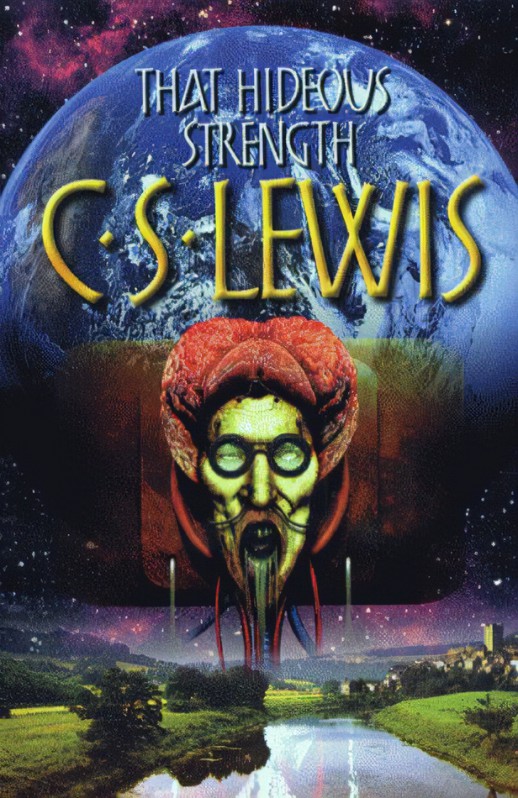
Cover illustration for Harper Collins January 2000 edition of That Hideous Strength. The image is a depiction of the grotesque head of Alcasan (an experiment in artificial intelligence) hoovering over the peaceful and natural landscape of the fictional town of Edgestow.

THE SARACEN’S HEAD

Overview Question

In this chapter we come at last, more directly and in greater detail, to the most challenging elements of Lewis’s science fiction fairytale. Indeed, now that we are about halfway through the novel, one of our primary tasks going forward will be to try to discern where the science fiction and fairytale end in Lewis’s story, on the one hand, and where the reality of spiritual forces at work in human life begins, on the other.

For my part, I will say from the outset that I think Lewis intends for his readers to regard the bodiless head experiment, with which the chapter begins and is titled, as well as the descriptions of Ransom’s space travels, which come later in this chapter (as well as in the earlier volumes of the trilogy) as science fiction. He does not want us to get tied up in knots trying to figure out if or how these things might really have happened.[1] The real question we must answer in order to understand their role in the story is what they represent.

Similarly, the idea of a bodily return of Merlin, the 5th century Druid, to 20th century England is, I feel sure, of allegorical importance and meaning. This does not mean that Merlin never existed (in Lewis’s own view) nor that he is of less importance in the modern setting of THS. The real question again is: What does the return of Merlin represent? What is it that the figure of Merlin brings into this story about a battle for the soul of England in the twentieth century that is of critical importance to what the story itself is trying to tell us? This, then, leads to our Overview Question for this week, focusing first on the eldil:  

If we are not really asked to believe in Ransom’s space travel and his meetings on other planets with the so-called eldil, nor per se in the dark eldil who inhabit our planet and control Belbury, then what do these eldil and their planets represent in the real world and spiritual experience of human beings on planet earth? 

In order to answer this question, you will need to call upon your knowledge of Scripture and of the history of Christian thought regarding the identity and role of angelic beings? Where do the good angels dwell? What do they do? What is their role in relation to human beings? What stories from Scripture can you recall that provide insight into any of these questions? And for the dark eldil: Who is the devil? By what names is he known? What are the demons? What are the fallen powers of which Paul writes? And what, according to Scripture, are the aims and methods of all of these dark creatures in the fallen world? How do they operate?

I don’t imagine that all of you will have lengthy responses to all of these questions. It isn’t a subject that many Christians today have spent much time studying. But the questions should, at any rate be familiar to you. And the answers you give can be measured against Lewis’s portrayal of the eldil, which is filled with biblical allusion as well as with the medieval allegories of the virtues and the planets (see also his, Discarded Image). We shall also, by the way, refer to Lewis’s Screwtape Letters for additional help with his views on this subject.  

______________________________________________

[1] Just as Dante knew there was no opening in the ground near Florence leading down to hell, and John Bunyan knew there was no actual city of Vanity Fair, Lewis employs the classical and medieval imagery of the planets as an allegory related to the human experience of virtue, temptation, and vice. 

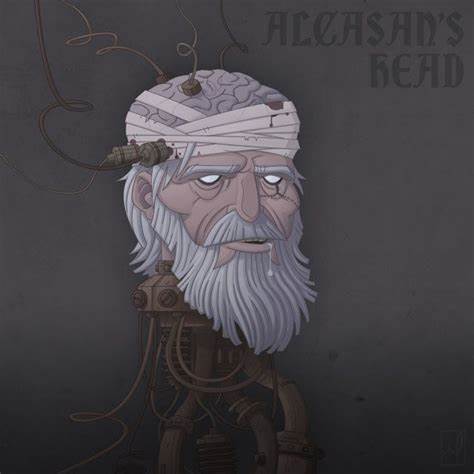
Another illustration of “Alcasan’s Head,” this one by artist, M. S. Corley.

DEEPER-DIVE QUESTIONS

1. The chapter opens with Jane’s most vivid dream yet, this time of Mark getting sick and fainting when he is forced to bow with Filostroto and Straik before the disembodied head (see the end of Chapter 8). Then in Part 2, when Mark wakes up the next morning at Belbury, he is full of disgust for what he has seen; yet afraid of what will happen to him if he does not cooperate and bring Jane to Belbury. How does the narrator (Lewis) account for this double-mindedness in Mark which finally leaves him unable to break away from Belbury even though he wants to? What would need to change in Mark’s worldview and lifeworld practices in order for him to become the kind of person that can stand up to Belbury?

2. In Part 3, Mr. McPhee, the household skeptic at St. Anne’s, tells Jane about Ransom’s story of space travel and meeting with the eildils on other planets, as well as the role of the dark eldils on earth (see also the first two volumes of the trilogy). But MacPhee is a strict empiricist, despite his own religious heritage that he seems to respect but does not embrace (his Scottish Presbyterian uncle). He will not believe in anything that cannot be proven by strict adherence to observable (physically measurable) evidence. How does this empiricism make MacPhee a great asset to the cause at St. Anne’s, yet leave him sadly shorthanded when it comes to understanding or dealing with the spiritual powers?

3. In Part 4, the council at St. Anne’s comes together to discuss the reality-status of the head in Jane’s dream. We saw in the last chapter, and now again in this one, how the head represents a desire at Belbury to achieve immortality through artificial intelligence and thus to give the NICE technological power and control over society and the world. What analogs for this kind of technocratic vision can you identify in American society and the world today? How widespread is this phenomenon? 

4. At the end of Part 4, and in part 5 of Chapter 9, Ransom and Dimble wrestle further with the question of Merlin’s role in everything that is happening. They can’t seem to make up their minds about whether the Merlin they know from the Arthurian legend would come back today as a representative of the powers of coercive black magic and the dark eldils (such as Morgan Le Fay with her corrupting passions run amok) or as a representative of something much closer to the Christian view of nature and of man’s role in creation. Ransom is sure, however, that Belbury’s interest in Merlin is under the power of the dark eldil and, therefore, has to do with black coercive magic. He is also clear, moreover, that the good eldil will not use coercive power to accomplish the goals of Maleldil. What does this tell us about the methods and the goals of the good eldil? And why is Ransom so concerned about the danger of combining the technocratic vision at Belbury with the old dark powers of the passions and the fallen angels? What would be an example of this dreadful and destructive combination today?

5. Extra Credit: Given what you have learned about the importance of free participation and human partnership in the cause of the good eldil and of the people at St. Anne’s on the Hill, what sense can you make of Camilla’s love for the quotation from Charles William’s poem, Taliesin Through Logres, which portrays how the battle of Badon Hill (in the Arthurian legend) was won by an act of “patience” on the part of the poet Taliesin? Note that Camilla uses this quote to interrupt MacPhee’s interview with Jane: “Fool, All lies in a passion of patience, my Lord’s rule.” How does the quotation sum up the basic traditional worldview of the people at St. Anne’s?