FIRST SUNDAY OF ADVENT 2022: Gabriel’s Message and Mary’s Obedience

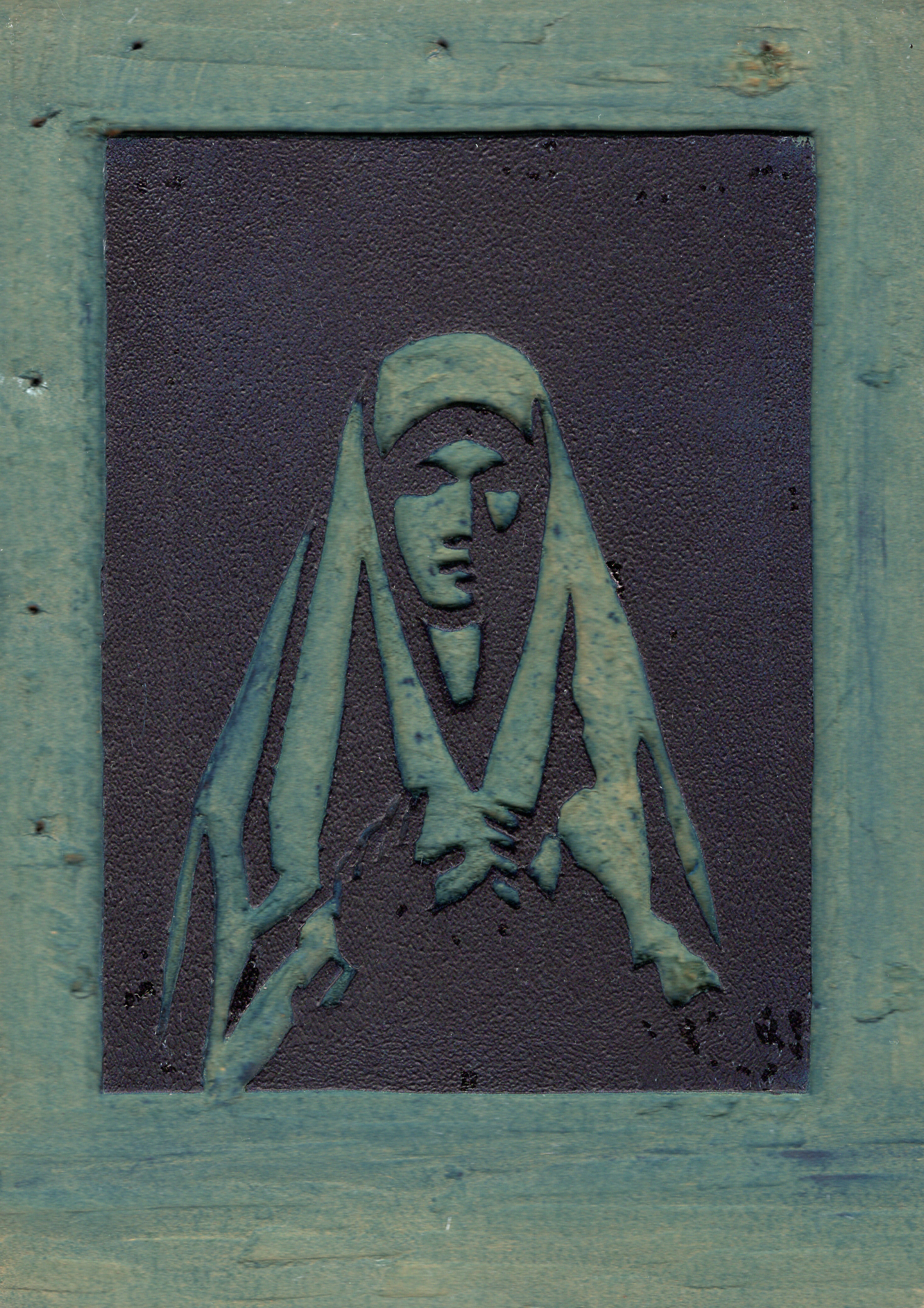
She Kept These Things and Pondered Them in Her Heart, linoleum block print by Craig Gallaway, copyright 2000. After Antonella Da Messina, Virgin Annunciate, 1465.

Gabriel’s Message, a 13th century Basque carol paraphrased into modern English (mid 19th century) by the Anglican priest Sabine Barring-Gould. This arrangement for cello and guitar by Craig and Deborah Gallaway (copyright 2019) influenced by a live-video performance of the recording artist, Sting.

“BE IT UNTO ME, O LORD, ACCORDING TO THY WILL.”

When the angel Gabriel came to Mary to announce that she would give birth to a very special son, Mary already knew and loved the ancient Scriptural story of the covenant and the promise of which he spoke; and thus, though initially startled by his appearing, she came quickly to see why he called her “favored one.” Her son would become the promised King of Israel in the line of David (that is, the Messiah, Christos). And he would fulfill the promise that God made to Abraham (Genesis 12:1-3): “All the nations of the earth shall be blessed in you.” Given this background, we may find it only reasonable, an almost predictable response, that Mary would answer Gabriel, “Be it unto me according to what you have said.” But then we would miss the chain of difficulties, warnings, and dangers that the angel’s message brought into Mary’s life. Her faithfulness was never untested.  

For one thing, the angel’s message put Mary’s approaching marriage in jeopardy. How would she explain this unprecedented pregnancy? Matthew’s gospel is candid about Joseph’s initial misgivings. We know that Joseph eventually stood faithfully with Mary as her husband; but she did not have assurances of this when she first embraced Gabriel’s life-altering news. And yet, in this way, Mary also gave her own marriage back to God, the Creator of marriage itself. She did not make an idol of it or bend it into some other shape that would come between her and her Maker. Her marriage would be a place where God’s purpose to restore the world, to restore the faithfulness of marriage as well, would be at home.

Then, after Jesus’s birth at Bethlehem, Mary and Joseph took their son to have him circumcised at the Temple in Jerusalem (Luke 2:22-35). And there, meeting Simeon, Mary faced another fierce test of faith. For though Simeon confirmed Jesus’s identity as the promised King whose reign would bless the whole world; he also warned Mary that her son would be a cause of division and conflict in Israel and that “a sword will pierce your own heart as well.” Yet here again, Mary did not pull back. She did not make an idol of her own or her son’s future safety by grasping at security. How “normal” that sort of family-anxiety would have been. Instead, she offered her life and waited to see how God’s promise would yet unfold. Did she foresee clearly or fully how Jesus would defeat the fear of death and the stubborn idols of anxiety and avarice at the cross, in his resurrection, and with the gift of his Spirit? No, surely not, at least not as yet; but she put her faith in the God whose promise to Abraham was to restore the world, and whose covenant was now focused somehow in this Son to whom she had so recently given birth.  
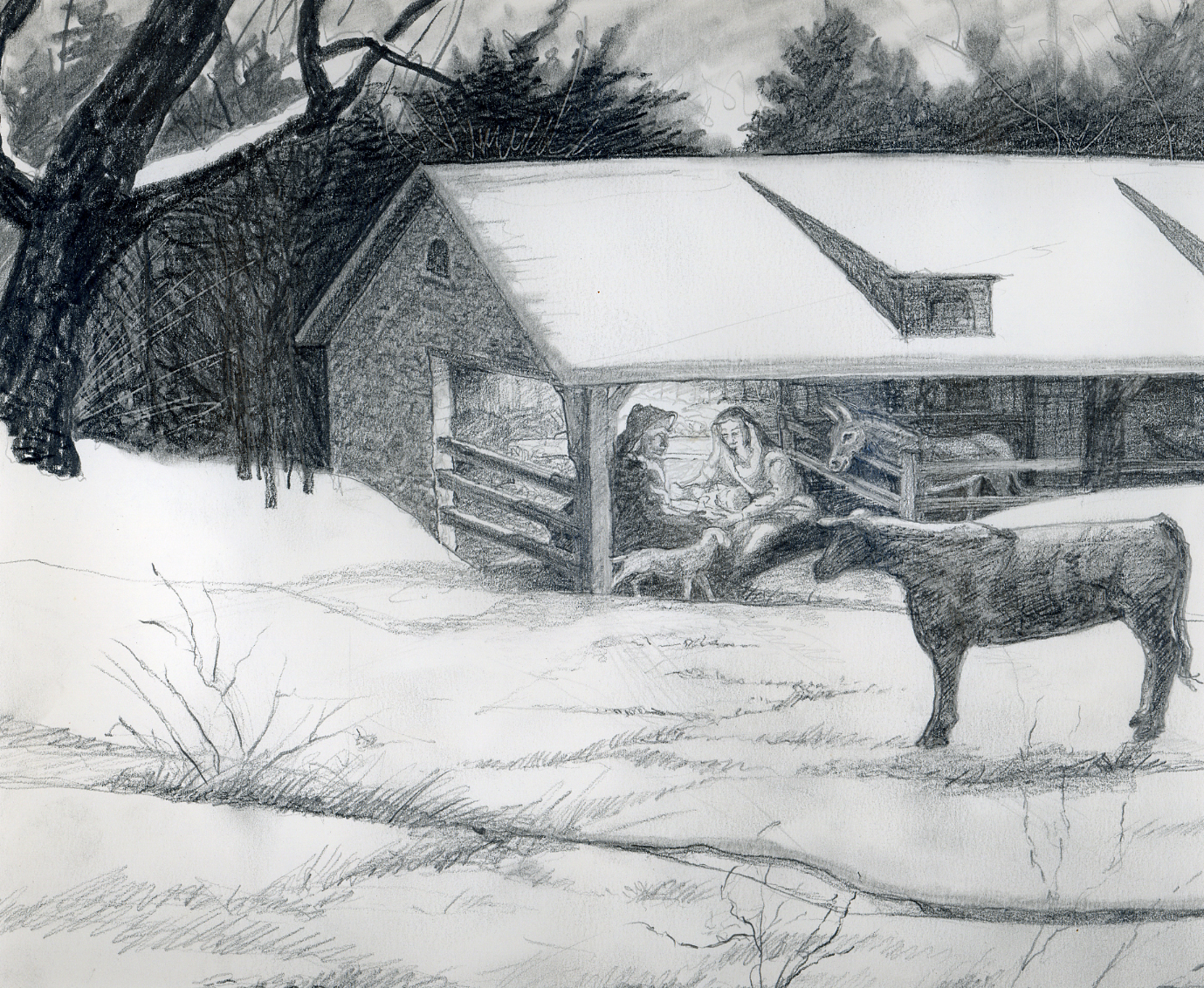
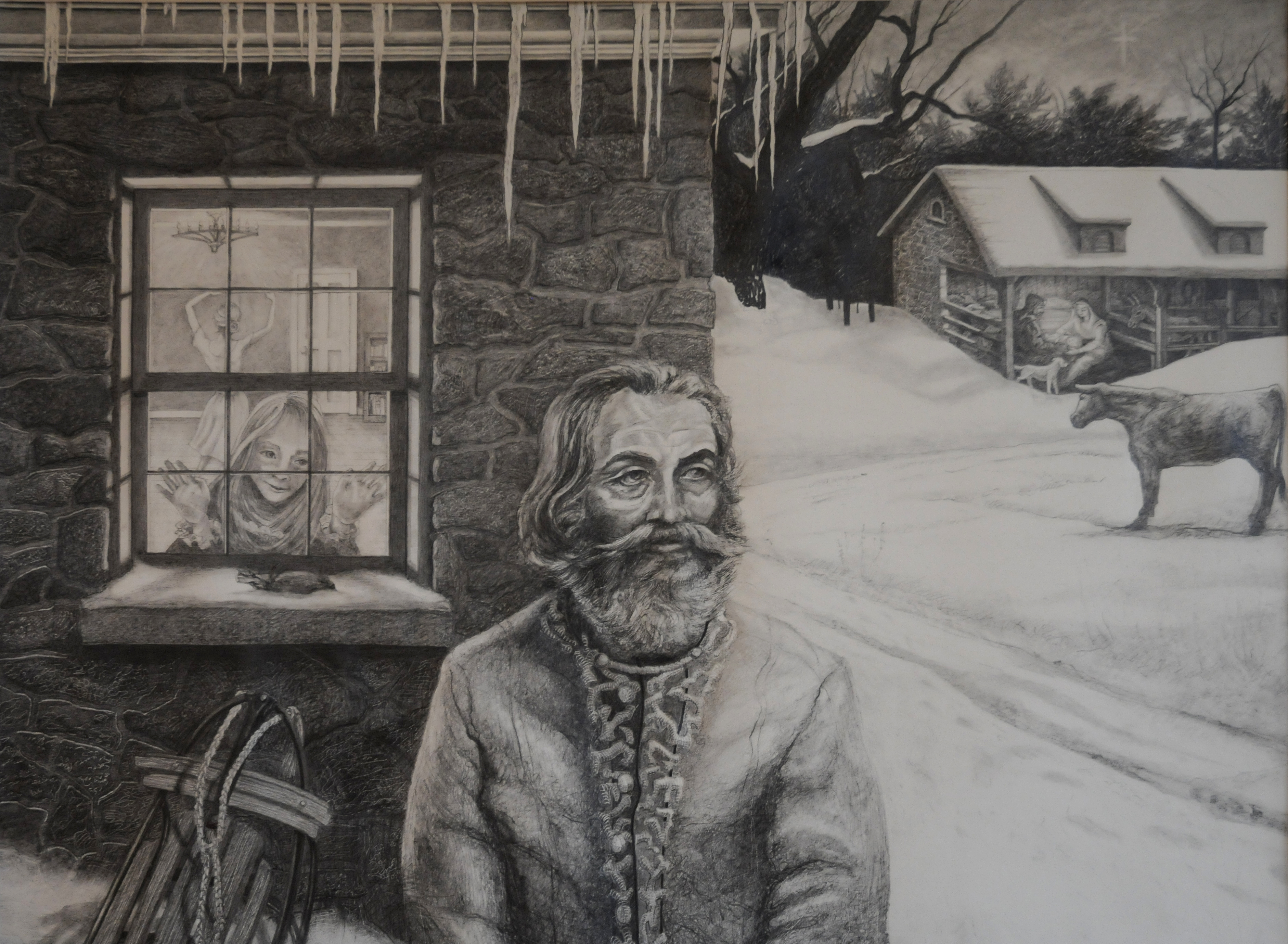
Study for Saint Nicholas of the Dowry, graphite drawing by Craig Gallaway, copyright 2011.

And then there came the Magi, the three wise men from the East, who brought gifts to honor the King whose birth even the stars of heaven bore witness. They came by way of power-hungry Herod. They departed Bethlehem wisely by another route. They were warned in a dream, as Joseph was warned by an angel: Herod, the existing authority of state in Jerusalem, would kill the child if he could find him. And so, Mary and Joseph became a kind of outlaws, running away to Egypt until Herod did his worst and finally died. They were not against the government or the state in principle. They had, after all, come to Bethlehem to participate in the census for the purpose of taxation. But neither would they make an idol of the government. If the government set itself up against the purpose and promise of God, they would not cooperate. They would not obey. Afterall, the government was given to serve God’s purposes, not the other way around.  

And so, when Mary responded, “Be it unto me according to what you have said,” she did the most basic thing of all: she placed herself in obedience to the One true God of Israel, the God of Abraham, and David, the Creator of the universe, her Creator. She placed her whole life into God’s hands—her marriage, her hopes for a family, her future security and safety, her social standing and political influence. And though we have an advantage over Mary, at least at that early stage in her life—for we look back on Jesus’s birth from the other side of his faithful life and death, his victorious resurrection, and the sending of his Spirit with power—yet we are also very much like her and Joseph. For we also look forward through the haze of challenging personal, moral, social, and political trials and temptations to the ultimate fulfillment of our Lord’s promise to restore the whole world, and our own lives as well.

Mary no doubt came to know more fully in her life what the apostle Paul would later describe as the general pattern of life for all Christians, what we sometimes too readily soft pedal or skirt around, that we must be prepared to suffer and do battle, and yes to “groan,” as we make our way toward the fulfillment of the new creation. Indeed, Paul describes our calling with great clarity and spirit (Romans 12:1-2): “In view of the mercies of God,” he says, “present your bodies as a living sacrifice . . . that you may prove what is the good, acceptable, and perfect will of God.” Thus, in our own time and place, like Mary, we also can say with growing faith and hope, “Be it unto me, O Lord, according to thy will.”
Preparing for Advent 2022: The Promise of New Creation

The Promise Image

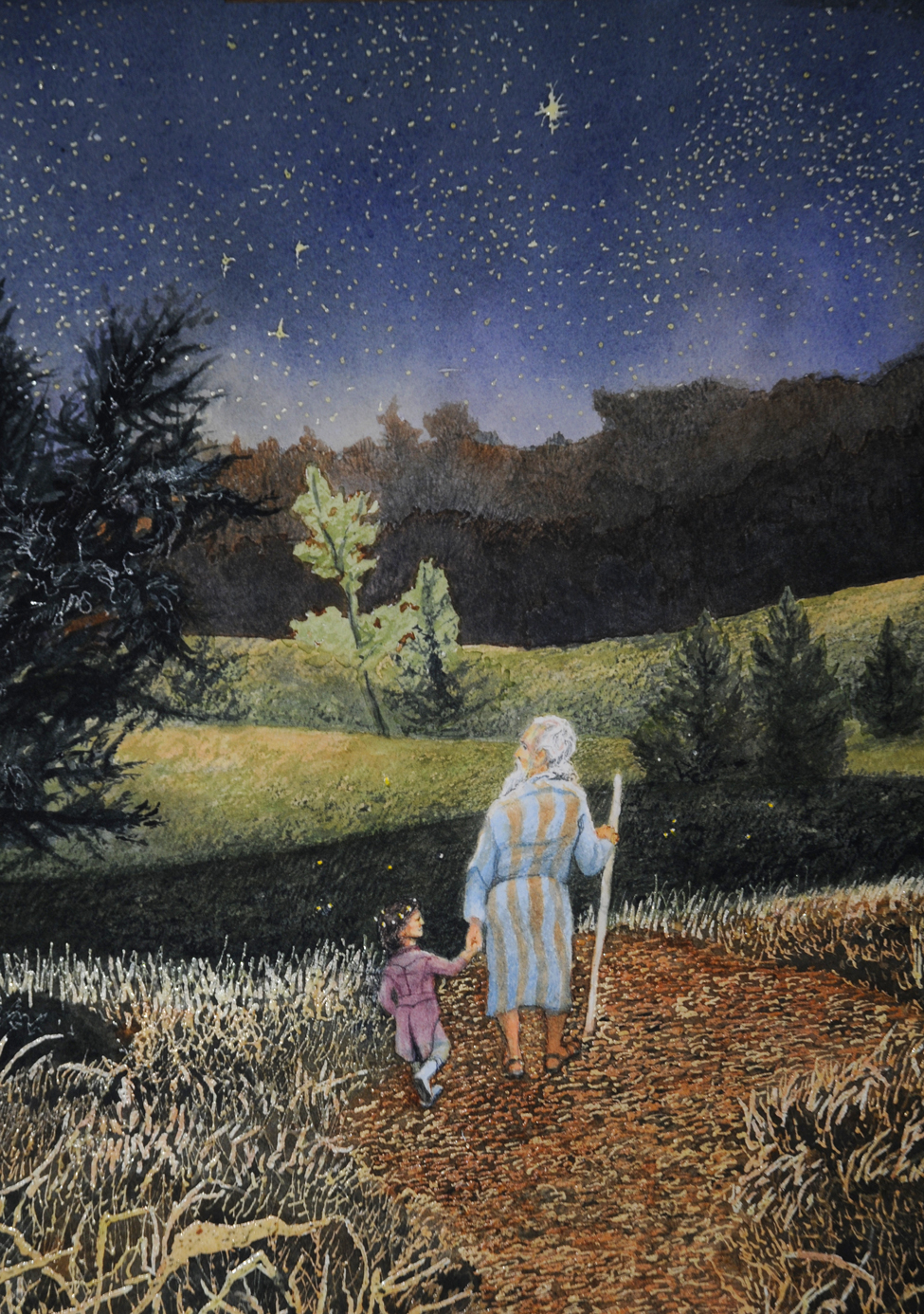
FATHER ABRAHAM, watercolor by Craig Gallaway (copyright 2018). After the fall of Adam and Eve with its many branching consequences (Genesis 3-11), God came to the old man Abraham and his wife Sarah (Genesis 12) promising to use their descendants (as yet unbegotten and unborn!) to restore the broken, sinful, and divided world. 

Father Abraham, words and music by Craig Gallaway, arrangement for cello and guitar by Craig and Deborah Gallaway, copyright 2020. Based on a traditional 17th century Swedish folk melody, Hoken.

Saint Athanasius in the 4th century asked a very important question: “Why the incarnation?” Why did the Son of God, the Word of God, become a human being? Why did he become a man living among us, suffering, dying, and rising again to new life? And Athanasius’s answer was the full and salutary biblical answer (John 1:1-12): He did this in order to restore the fallen world, to bring about the New Creation, as his Father had promised Abraham He would do. This, according to the Apostle Paul, is what has happened (with results that continue to unfold today) in Jesus’s victorious death, resurrection, ascension, reign, and the sending of his Spirit into the world. Thus, when we celebrate Christmas, the birth of Jesus, the incarnation of the Son of God, we celebrate this whole grand sweeping story of the renewal of the world in which we are still living and making our journey with him toward the final fulfillment. The whole creation waits eagerly for that day (Romans 8:19).

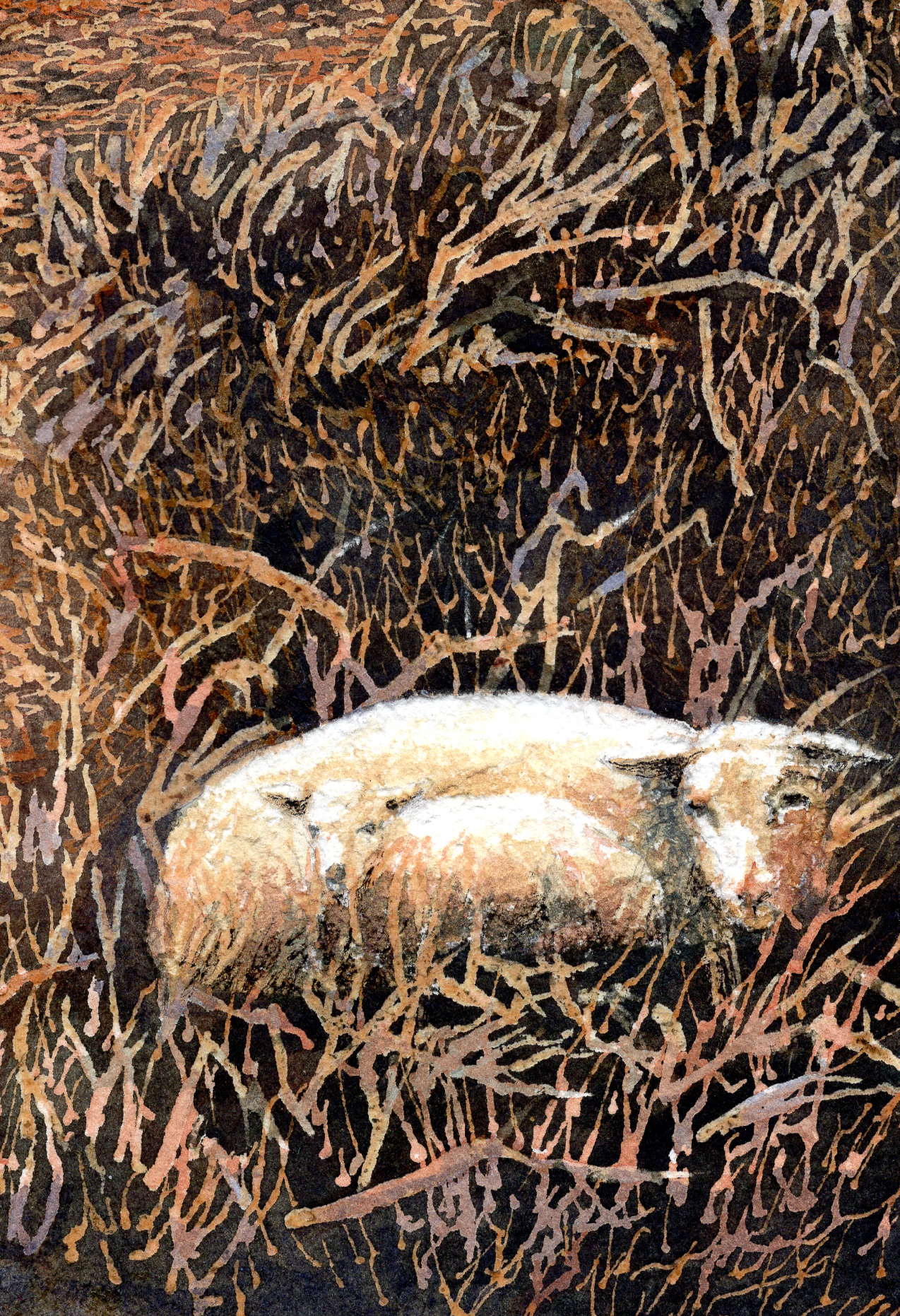
FATHER ABRAHAM (detail), watercolor by Craig Gallaway, copyright 2018.

This is why Deb and I begin our Advent preparation this week with a song about the promise God made to Abraham (Genesis 12:1-3). And it is why each verse of “Father Abraham” anticipates the other themes and songs that we will share with you in the weeks ahead, all of them proclaiming the ongoing New Creation work of the risen and exalted Christ. For our Lord is even now putting all sorts of things back into their proper creation order (1 Corinthians 15:20-28). For example, the third verse of “Father Abraham” speaks of how we lean into his kingdom work as he builds within us the virtues of justice, beauty, and love. And we will sing again about each of those virtues in the weeks ahead as we celebrate our Lord’s special reordering through his Spirit of how we see the value of our own work, and how we approach the problem of racism, and how we recover a life of holiness in marriage. All, as a result of the incarnation. All, as a consequence of Christmas. All, a matter of his new creation purpose.

So, Yes! Christmas is about all of these things because it is about the birth of the baby Jesus who took our nature upon himself in order to restore it. And it is about his faithful life and death, because that was the initial battleground upon which he achieved the restoration by defeating sin, death, and the devil in his own body, irrevocably, at the cross. And it is about his resurrection and ascension and the sending of his Spirit, because that is how he makes the power and glory of his victory available to us even now as we make our journey with him toward the ultimate fulfillment of his plan and purpose. No wonder, then, that Charles Wesley’s famous hymn has remained so resonant among all who love and celebrate Christmas:

Come, thou long expected Jesus, born to set thy people free;

From our fears and sins release us, let us find our rest in Thee.

Israel’s strength and consolation, hope of all the earth thou art;

Dear desire of every nation, joy of every longing heart.

In the weeks of Advent just ahead, then, Deb and I will be sharing one song and at least one work of art each week that celebrate some of the different facets of this grand Christmas story. Here is a brief preview:

She Kept These Things and Pondered Them in Her Heart, Linoleum Block Print by Craig Gallaway, copyright 2000. After Antonello Da Messina, Virgin Annunciate, 1465.

Week 1, Nov.27The Angel Gabriel and the story of Mary’s obedience, “Be it unto me according to Thy will.” In a way, Mary did what Paul calls all Christians to do in Romans 12:1-2, “In view of God’s mercies, present your bodies as a living sacrifice . . . that you may prove the full extent of God’s holy purpose.”

Snow Dance, watercolor by Craig Gallaway, copyright 2010. Based on C. S. Lewis’s Narnia Tales.

Week 2, Dec. 4In the Bleak Midwinter and the call to lay our talents, our gifts, and our work at our Lord’s feet in service to others (Romans 12:3-16). This might seem simple enough at a glance; but it is actually very difficult in a world that trains us constantly to be concerned about our own status in comparison to others, especially in our areas of work and professional life. This song quietly reminds us to give our hearts to the Master, who took a towel and a bowl of water . . .

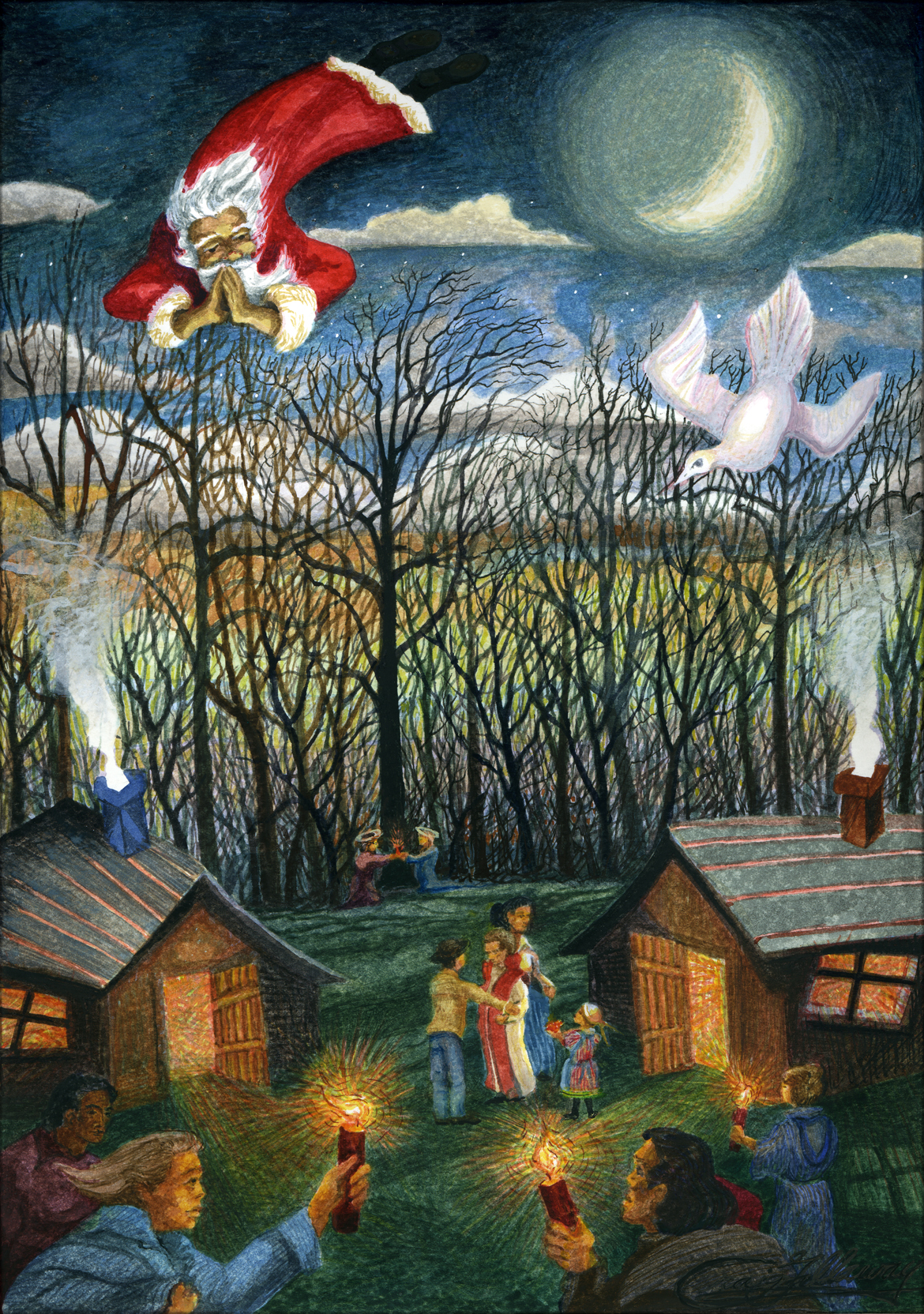
Saint Nicholas Praying for the Recovery of His Tradition, watercolor by Craig Gallaway, copyright 2005.

Week 3, Dec. 11Some Children See Him and the celebration of our common humanity in Christ (Galatians 3:28). In a world where the charge of racism is abused by neo-Marxist critical theory to stir up envy and to divide, the Lord’s call to unity and to the simple affirmation of cultural differences is a healing balm indeed. “So, lay aside each earthly thing; and with your heart as offering . . .”

Saint Nicholas of the Dowry, graphite drawing by Craig Gallaway, copyright 2012. Based on the stories of Nicholas’s provision of dowry resources for daughters of the poor.

Week 4, Dec. 18You Ain’t Goin’ Nowhere and the joyful recovery of marriage following the bridegroom’s example (Ephesians 5:21-33). Again, in a world riddled with sexual decadence, pornography, and licentiousness, the Lord’s example of a life of caring, faithful, self-disciplined stewardship on behalf of one’s spouse is like a harbor for the soul and for society as well. “Ooh wee, ride me high, tomorrow’s the day my bride will arrive . . .”

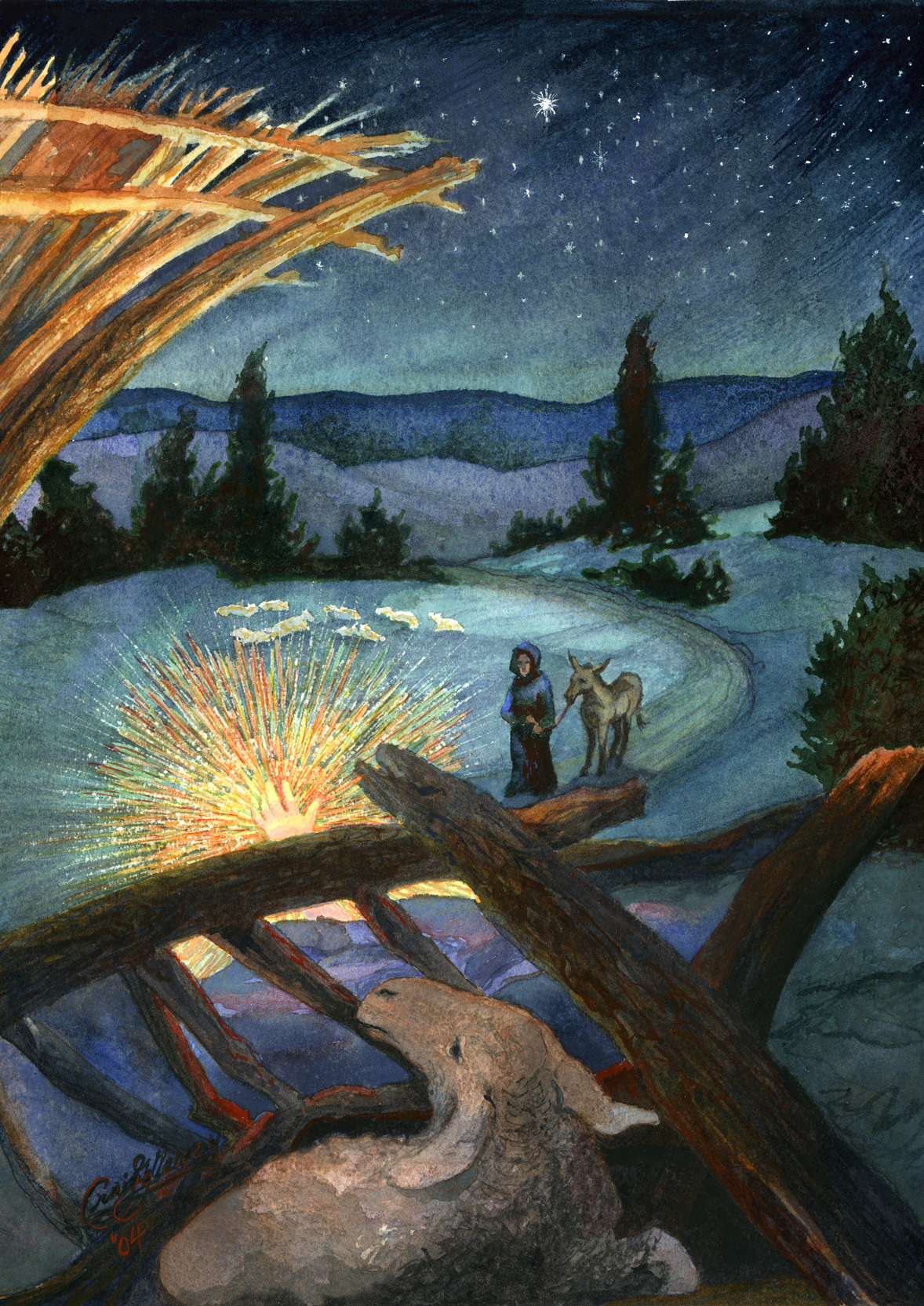
All Creation Waits in Eager Expectation, watercolor by Craig Gallaway, copyright 2004.

Dec. 25 – On Christmas day, then, we’ll share Charles Wesley’s great hymn of invocation, personally welcoming and inviting our Lord’s ongoing work in our lives both at Christmas and in the year ahead.

If you choose to make use of these Advent offerings from our house to yours in the weeks ahead, we hope they will bring an added element of worship, praise, thanksgiving, and hope to you and your house.

THAT HIDEOUS STRENGTH: Chapter 13

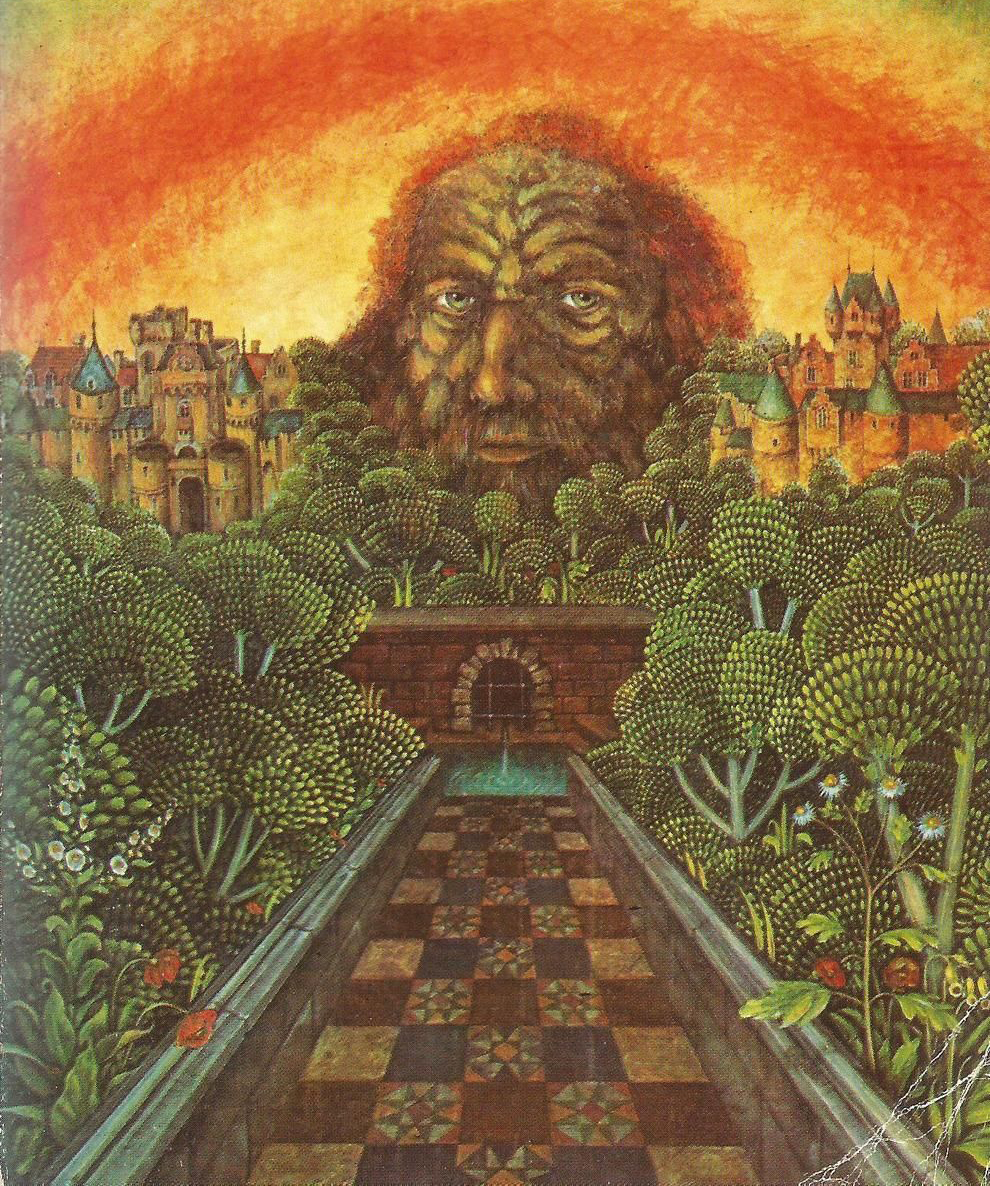
An image of Merlin’s countenance hovering above Merlin’s Well in Bragdon Wood evokes the cultural legacy of King Arthur and Logres for which Merlin himself stands. This image was the cover art for
the 1983 Pan Books edition of THS.

THEY HAVE PULLED DOWN DEEP HEAVEN ON THEIR HEADS 

Overview Question

This is the first of three chapters (along with Chapters 15 and 16) which clarify in one way or another who Merlin is, and what is his special role in the spiritual battle between St. Anne’s and Belbury. Chapter 15 will show how Merlin is equipped by the heavenly powers to undertake the battle. And Chapter 16 will show the destructive results for Belbury of Merlin’s engagement, like live video of an ongoing battle. In this chapter, however, we discover why God has chosen to use Merlin in the first place. Why doesn’t God just send down the heavenly powers themselves to destroy Belbury? Why wait for a man of ancient Logres and work through him?

This aspect of God’s strategy is announced most clearly in Part 5 of the chapter when Ransom explains to Merlin why God will not break the “Seventh Law” by allowing the planetary powers to work directly on the earth. As Ransom explains, “They will work only through man.” And then he goes on to explain why Merlin is precisely the sort of man that God needs for the job. One who is a Christian and committed to the ancient “natural” order of creation, yet also one who is a penitent and knows the ways of sinful man.

There is much in Ransom’s longer explanation that is simply part of Lewis’s fairytale (for example, his travels in space, and Merlin’s travel through time, as we saw in Chapter 9). These do not require a literal or concrete interpretation. But the principle of the Seventh Law, of God’s choosing to work only through a human agent, is another matter. Overview Question

Given what you have already learned about the traditional worldview and its understanding of human nature (for example in the portrayal of Mark’s struggle with his own vanity until he finally calls out to God for help) why would God refuse to produce a spiritual victory by divine fiat rather than requiring the obedient response and practiced discipline of faithful human beings who turn to him for help? Why won’t God break the Seventh Law?


An ancient ruin deep in an old forest evokes the fictional setting in THS of Merlin’s Well and Bragdon Wood. The real history of the ancient Celts and Druids is, however, consistent with the Christian and biblically grounded portrayal that Lewis provides of Merlin, Arthur, and Logres in the 5th and 6th centuries. (See, for example, Peter Berresford Ellis, The Druids.)

Deeper-Dive Questions

1. In Parts 1 and 3, Merlin and Ransom and the people of St. Anne’s must “vet” each other as to their respective bona fides—that is, they must test and prove to each other their allegiance to the right side. They do this by asking and answering questions that ferret out the principles upon which each of them takes their stand. In this way, Merlin discovers that Ransom is in fact the Pendragon, the heir of King Arthur and the realm of Logres; and Ransom discovers that Merlin is a Christian who affirms the gifts and disciplines of faithful marriage as well as the biblical tradition of God’s creation and providence. Similarly, the search party (upon their return and surprise at finding Ransom and Merlin together) are finally convinced of Merlin’s good faith when the Director vouches for his loyalty to the Christian essence of Logres (which Dr. Dimble had long wondered about and hoped for).

In this light, our own question about the bond between Merlin and St. Anne’s must be equally probing: To what group or tradition do these principles (King Arthur, Logres, the Bible, Christianity, faithful marriage, etc.) correspond in the cultural and spiritual battles that we face and fight today, and that Lewis faced and fought in post-war England? What is it that Merlin stands for (along with the people of St. Anne’s) in the battle against the dark spiritual forces of the NICE?

2. Part 2 of Chapter 13 gives us another peek into the troubled lifeworld of those at Belbury who hold the modern worldview. While discussing their strategy for working with the tramp (their false “Merlin”) Wither and Frost are drawn into a set of sniping and threatening remarks toward each other. What is it about the modern worldview (with its conception of the individual, the “freedom” of the individual, and “universal” reason) that seems to provide the perfect seedbed for this kind of combative and divisive social atmosphere?

3. In Part 4, Dr. and Mrs. Dimble discuss the effect of Merlin on the people at St. Anne’s and speculate about how Merlin’s influence will affect the whole course of their battle with the NICE. Dr. Dimble notes Merlin’s ancient and intimate connection with nature in contrast to the modern view of nature as a machine, and even more in antipathy toward Belbury’s desire to change, alter, and work against nature (the anti-nature posture that we have noted before). And then Dimble observes how everything in the cultural and political atmosphere seems to be polarizing, “coming to a point,” as he puts it: “Good is always getting better and bad is always getting worse.” Then Mrs. Dimble sees how this is like the biblical portrayal of judgement when the “wheat is separated from the chaff.” Where in the polarizing events of our own time do you see such a separation between good and evil taking place, and what other biblical grounds can you suggest for advocating this view of our own cultural, political, and spiritual battles, especially right now as the midterm elections pressure everyone to make the “terrible choice” (Mrs. Dimble’s reference to Browning).   

4. In Part 5, Ransom defines for Merlin what will be the necessary tools and methods by which the battle with the dark eldil can be won, but only if Merlin will submit to the part he has to play. At the same time, Ransom also clearly and forcefully rejects certain other tools and methods that Merlin finds more congenial to his tastes and confidence. Thus, Ransom rejects Merlin’s acquaintance with ancient natural magic and remedies because they are no longer “lawful,” and because they are merely earthly in scope. Something more powerful is needed. Also, Ransom rejects the resort to national, global, or ecclesial authorities because they are already tainted with the same evil infection and anyway, they also do not possess the necessary kind of power to defeat the dark powers.

Instead, according to Ransom, what is needed is a human being, a Christian and a penitent, who is willing to be invaded by the powers of heaven in order not only to withstand the evil influences of the dark eldil, but also to draw them out into the light where they will have to face the ultimate consequences of their own choices. What is needed is a person who is willing to have his own heart changed in this way so he can be used by heaven in the wider world to expose and defeat the dark powers, and to help establish under God’s rule the good community of the restored creation. How does this definition of Merlin’s role expand and fill in the principles we have already noted regarding the tradition of Arthur and Logres, the Bible and Christian marriage? Is there a political, spiritual, and cultural tradition in our own time (as well as in Lewis’s time) that embraces these same basic principles and commitments? If so, what is it? And what would it take to recover it today?