
THAT HIDEOUS STRENGTH: Chapter 16

This is the cover image for the 2012 edition of That Hideous Strength published by Harper Collins. The image portrays the destruction of John Wither, Deputy Director of the NICE, by Mr. Bultitude, the bear ennobled by Dr. Ransom at St. Anne’s. This is probably the great deed prophesied of Mr. Bultitude by Merlin in Chapter 13. The larger meaning of this event within the traditional worldview of St. Anne’s has to do with the proper stewardship of creation at St. Anne’s versus the heartless, utilitarian manipulation of nature at Belbury.

BANQUET AT BELBURY 

Overview Question

In an odd sort of way, the overview question for this week provides an occasion to evoke two rather contradictory emotions: On the one hand, to breathe a sigh of relief (and hope, even joy) as we watch the terrible villainy of the NICE at Belbury at long last pay itself out in death and destruction; yet, on the other, to consider soberly (bravely and even sorrowfully) the hard result that this implies for those in our own time who have followed the worldview and the lifeworld of Belbury. These results, in other words, are both sad (Saturn) and hopeful (Jove).

What I suggest, then, as a way to take in and understand the chapter as a whole, is to follow the action of each Part and to ask at each stage a single Overview Question:

How do the actions and events of each Part demonstrate the logical results of following either the fallen eldil (as at Belbury) or the good eldil (as at St. Anne’s and in Merlin)?

This means that you will be looking as you follow the actions of Wither or Merlin, Frost or Fairy Hardcastle (and others) for signs either of the good eldil, or the fallen ones. Signs, that is, and for example, of the heavenly Mars (courage, patience, etc.) or the fallen shadow of Mars (domination, coercion, etc.). Or, for two very different examples, signs of the good Venus (kindness, life giving help) or the fallen Saturn (despair and indifference rather than “good grief”).

To do this, you will need to remember what we learned about the planets in the last chapter and in Chapter 12, where we also discussed the virtues and the passions that characterize the good angels (God’s messengers) and their fallen counterparts. And try to keep in mind how this is both a joyful and a sorrowful exercise because we are talking about a real world, our world, not just a fictional one. 

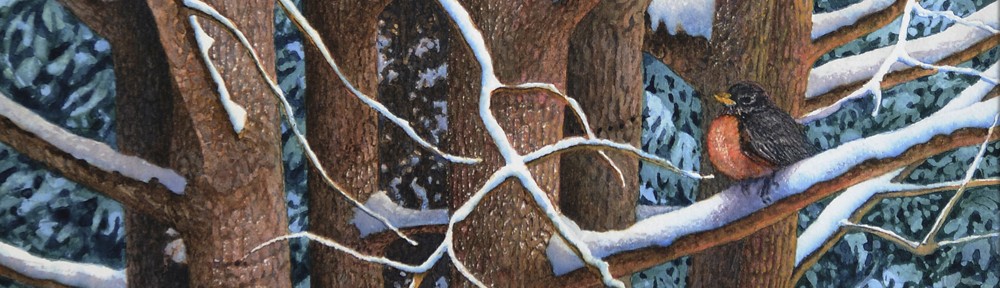
This panorama of the English countryside reminds us, in keeping with the traditional view of “nature” in That Hideous Strength, that God’s good creation persists in the wider world and at St. Anne’s even as the evil work of the NICE is collapsing in the town of Edgestow and at the banquet at Belbury.

DEEPER-DIVE QUESTIONS

1. How does the collapse of language (i.e., the power of Mercury) at the banquet—first with Jules, then with Wither and throughout the room—illustrate the logical consequences of the post-Enlightenment exaltation of the individual (i.e., individual freedom and “reason”) and the denial of the traditional understanding of God, truth, and reality? What signs can you discern today of this kind of collapse in the speeches and responses of our elected officials and other leaders of business, media, society and, yes, even the church?

2. Why does the dissolution of language and meaning at the banquet (and in society today) lead to the shadow side of Mars—that is, to mindless violence, bravado, and murderous coercion (rather than to courage, fortitude, and self-control, etc.). Which characters, in which parts of the chapter, clearly illustrate this dissolution of the true power of Mars? What actors illustrate fallen Mars today?

3. Which of the good eldil shine forth in the actions of Merlin when he frees both the animals and the human prisoners (including Mark and Mr. Maggs) and how is Merlin’s way of sending them forth also a recovery of the good order of creation (“nature” rightly understood as commanded by the Creator of all, Maleldil)? As a corollary to this question: Why does it make sense, from the standpoint of the traditional worldview, that the animals would attack the advocates of Belbury to destroy them? Is there some sense in which nature itself will ultimately “refuse” to support what is evil? How is “nature” reasserting itself today in rejection of woke anti-nature ideology?

4. In Parts 4, 5, and 6, Wither, Feverstone, and Frost, each in his own way, enacts the logical consequences of the worldview that they have all embraced and tried to live by (their modern lifeworld). How do the murderous actions of Wither, the self-absorbed and self-centered actions of Feverstone, and the suicidal actions of Frost, demonstrate the consuming passions of the dark eldil–that is the passions of fallen Mars, fallen Jove, and fallen Saturn, respectively? What actors and agencies in the spiritual battle of our cultural, political, and media wars today seem determined to embrace these same or similar passions represented by the fallen powers as they are also described in Scripture? (For Scriptural descriptions see, for example, Romans 1:18-32; Ephesians 4:17-6:20.)  
THAT HIDEOUS STRENGTH: Chapter 15

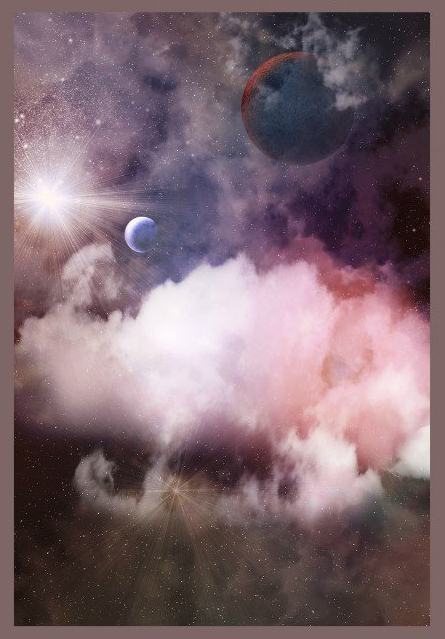
The angelic figures of the eldils in C. S. Lewis’s space trilogy are drawn from the allegorical interpretation of the planets (Mercury, Venus, Mars, Saturn, and Jupiter) as described in classical and Medieval literature. See, C. S. Lewis, The Discarded Image. The artwork above comes from the cover of a Study Guide for Lewis’s space trilogy by Vicki Tillman.

THE DESCENT OF THE GODS 

Overview Question

In this chapter, especially in Part 1, Merlin is finally equipped with the virtues of the heavenly powers that he will need in order to do battle with the fallen powers of Belbury. Our overview task, therefore, is to draw out (at least provisionally) some conclusions about how best to understand the nature and character of these powers, both in their true, created form and in their fallen, corrupted deformation.

We may begin with a quick review of insights that we have already gathered from earlier chapters. In Chapter 9, for example, we saw how Lewis was using the classical and Medieval identification of the planets and virtues to portray the angelic beings known as the eldil. Thus, Mercury, Venus, Mars, Saturn, and Jupiter represent five specific powers or virtues that are built into the natural order of God’s good and unfolding creation.[i] And then, in Chapter 12, we saw (in keeping with the biblical sources of the traditional worldview) how each of these good powers can be corrupted and turned to evil purpose by the fallen angels or eldil. Furthermore, in Chapter 13, we discovered the telling insight that while the dark eldil are quite willing to work by coercion and domination to achieve their goals in human society, the good eldil insist on working only through human beings who willingly choose to be obedient partners with God in caring for and restoring the good creation (the 7th law). In this way, as we suggested in our questions for Chapter 13, the role of Merlin in Lewis’s story actually becomes our role as free human beings under God’s power and guidance to fight back against the cultural dissolution of our own time. In other words, we need the same virtues and strengths for our battle that Merlin needs and receives in the story!  

All of this echoes, of course, with themes from Scripture about spiritual warfare (Ephesians 6); about our Lord’s battle with the fallen powers (1 Corinthians 15:20-28); about the “fruits of the Spirit versus the works of the flesh” (Galatians 5), and also with Jesus’s own description in the beatitudes about the traits that characterize those who are committed to the victory of God’s kingdom (Matthew 5). Indeed, if we keep these scriptural themes in mind, we will gain many insights into the nature and character of the battle between the powers as Lewis portrays them, and as they are relevant to our own battles today. This brings us to the Overview Question for this week:

What are the virtues and strengths that Lewis associates with each of the planets–that is, with the good eldil and the good order of creation? How do these relate or compare to Paul’s list of the fruits of the Holy Spirit in Galatians 5? Also, what are the vices and corruptions that arise when these powers are misused, misconstrued, or made into idols?

As you read through Lewis’s powerfully poetic descriptions of each eldil in Part 1, keep in mind the insights from earlier chapters, and the aforementioned Scriptural themes. Try to create a basic chart or “map” of the virtues, strengths, and spiritual fruits that are given to Merlin (and to the other people at St. Anne’s). How do each of these work, and what would they look like if they were corrupted? It may help to think about different characters, both at St. Anne’s and at Belbury, as you ponder the embodiment and practice of each of the virtues and vices. For example, in what way do the Dimbles or Dr. Ransom reflect the virtue of Venus, while Fairy Hardcastle and even Mark and Jane (at least at the beginning of the story) reflect the corruption and dissolution of this created power? Remember, these planetary virtues, rightly understood, align with the fruits of the Spirit and with the beatitudes of the Kingdom of God. As such they represent strengths that we also need for our “Merlin” work today.

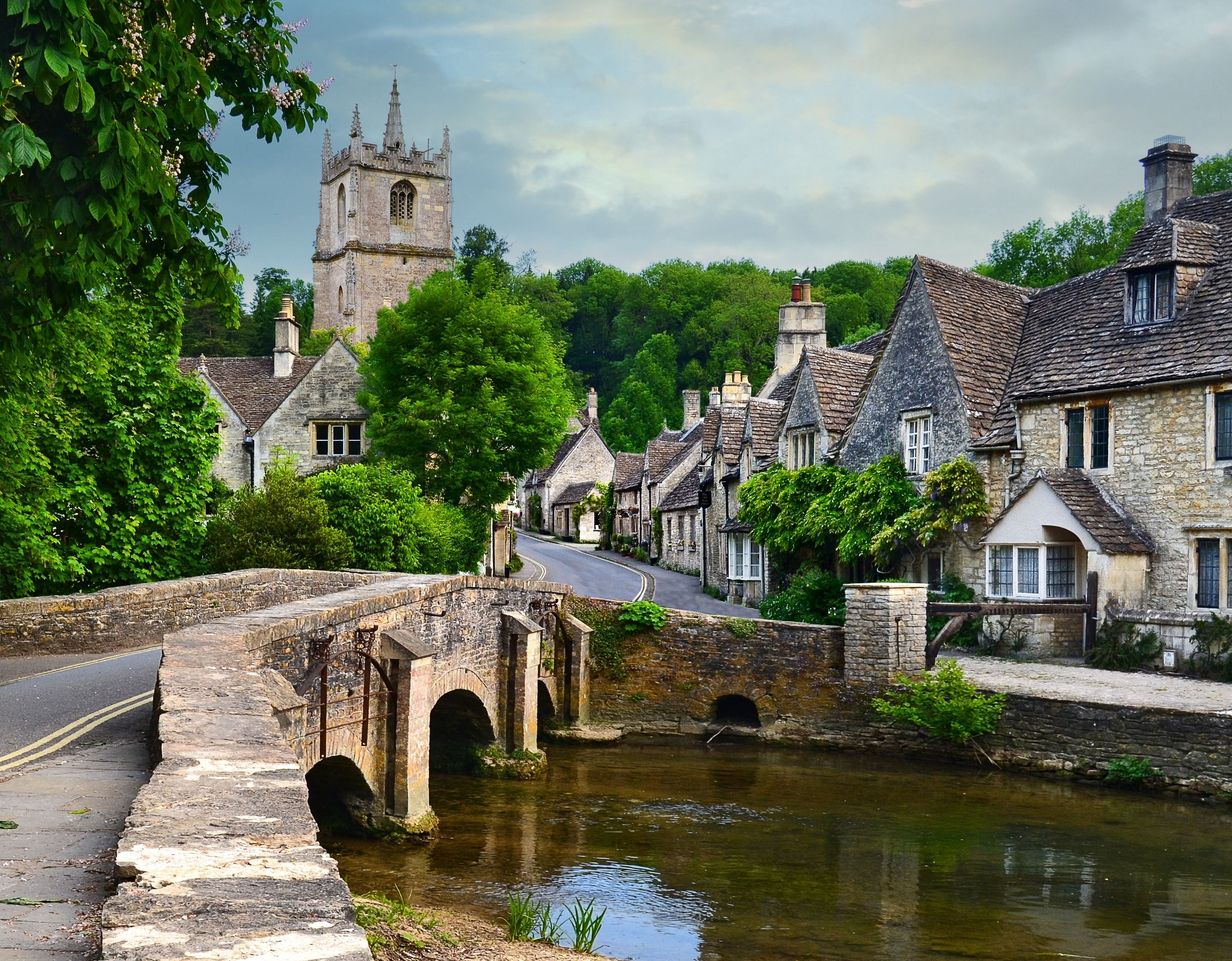
This image of an English village by a river suggests the kind of place and culture (like the village of Cure Hardy in Chapter 4 of THS) that keeps pulling Mark Studdock’s memory and conscience away from his job aspirations at Belbury. This type of place (and its people) are surely the source in Mark’s mind and heart for what he calls “Normal.” And it is this connection with traditional society and the traditional worldview (its cultural, moral, and religious values) that finally strengthens Mark enough to resist the “objectivity” training of Prof. Frost.

DEEPER-DIVE QUESTIONS

1. One of the really curious and funny things about Chapter 15 (in Parts 2 and 3) is the way Wither and Frost are reduced by Merlin (who is now among them at Belbury and fully equipped with the heavenly powers) to a pair of bowing and scraping buffoons. These great leaders and spokespersons for the future of technocratic society and its ideological “science” are almost completely duped about the true identity both of the Tramp and of the real Merlin. What account can you give for this deficiency of intelligence on the part of Wither and Frost? What explains their epistemological blindness? As you ponder this question you might also consider a similar pattern in the following sources: [a.] the inability of the fallen powers, according to Paul, to understand what Jesus was about at the cross (1 Cor. 2:8). [b.] The short-sightedness of the White witch in the Narnia Tales to understand the “deep magic” of Aslan’s willing sacrifice at the stone table. And [c.] The inability of Sauron in Tolkein’s trilogy to foresee that anyone would try to destroy the ring of “power.”

2. As you read through Parts 2, 3, and 5, try to identify places or moments in the action where you can see the powers of the good eldil shining through the actions of Merlin. Where is the Mercurial power of language, wit, and intelligence at work? What about Mars and the capacity for courage in the face of danger? Or Venus and the virtue of charity and the spiritual fruits of agape and kindness? At the same time, watch for the shadow side of the dark eldil in the various attitudes (vices and passions) of envy, anger, or suspicion, that arise among the characters of Belbury. Can you think of any ways that Merlin’s actions might provide a model for how we engage the agents of destruction today?  

3. In Part 4, Mark’s battle with the dark eldil comes to a head in the “objectivity room” when Frost demands that Mark commit an act of sacrilege against the Christian religion by defacing one of its central symbols, a crucifix. Mark is still not a Christian believer; but his conversion toward what is Normal has also been a hard turn away from the wanton abolition of all traditional religious and moral values. In the course of his struggle to resist Frost’s demands, Mark comes to realize that the cross is not just a story; but something that really happened. Furthermore, he realizes that the cross is what, as he puts it, the” crooked” does to the normal and the “straight,” indeed, what Belbury will do to him. He realizes that the man on the cross was the embodiment of what is good, and true, and normal. In the end, even though he knows Frost may kill him, he refuses to enact the defamation; and suddenly Merlin breaks into the room to release Mark from the diabolical training. How does Mark’s battle with Frost over the meaning of the symbol of the cross illuminate what is most deeply at stake in the spiritual battle between the heavenly powers of the Creator (Maleldil) and the dark fallen powers of Belbury?   


[i] Lewis also has Dr. Dimble (in Chapter 13) call these powers “intelligences,” that is, types of creaturely intelligence that are built into creation itself, and are amenable to human beings made in their Creator’s image. Thus, for example, to understand language (Mercury) or love (Venus) or courage (Mars) or grief (Saturn) or joy (Jove) aright is to be faithful and true to the nature of our own creation. But to subvert these, or to misconstrue them for the cause of rebellion and self-centered power (by turning them into their shadows: linguistic trickery, lustful conquest, domineering violence, willful indifference, and mindless debauchery) is to plant the seeds of our own destruction.

THAT HIDEOUS STRENGTH: Chapter 14

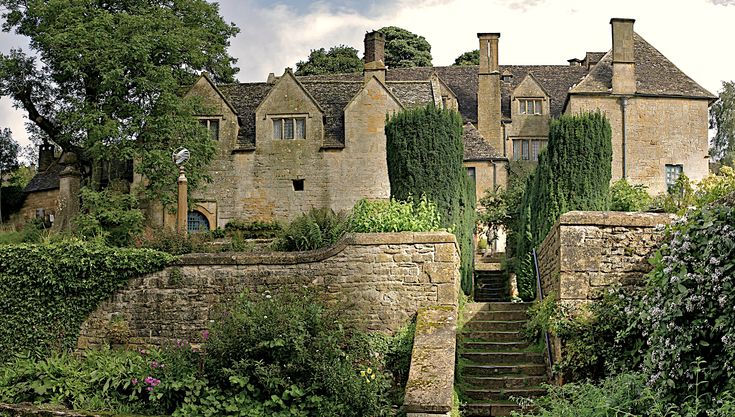
An English manor house and grounds suggests the kind of place–with gardens and stone walls in close proximity with nature–that Lewis describes as the setting for the traditional community of St. Annes. We might imagine Mr. MacPhee at work in his garden, or Camilla and Arthur Denniston standing out on the hill watching the weather and rejoicing in the clouds of an English sky.

“Real Life Is Meeting”

Overview Question

In this chapter, both Jane and Mark move further along the path of what can only be called, in Christian terms, “conversion.” They have come a long way since the beginning of the story. They are both being converted from their earlier formation in the Enlightenment worldview, during their college and professional years; and they are being converted to what we have called (from the beginning of our study) the traditional worldview. The latter also includes what we came in the last chapter to identify with the role of Merlin in Lewis’s story: Merlin the advocate of God’s order of creation in nature, and of Christian marriage, and of English common law with its conservation of basic human rights and freedoms (the 7th law) as these are shaped by biblical faith. All of these are integral parts of the traditional worldview (lifeworld) as it came to expression in England from the Middle Ages onward until it was challenged head-on in the 17th and 18th centuries by the anti-tradition and anti-religious worldview of the Enlightenment.

Jane and Mark are being converted from their former college training and formation; and both are coming to see and appreciate why the traditional worldview (with its inherent lifeworld) holds much that they now want to re-embrace if they can only discover how. But each of them comes to this by a different set of means or mediations. This brings us to our Overview Question for this chapter:

Look carefully at Mark’s “conversion” in Parts 1 and 4 (note Lewis’s use of the term) from Prof. Frost’s deconstruction of all traditional values, and toward what Mark only knows to call the “Normal.” Then, look closely also at Jane’s struggle (in Parts 2 and 5) first with Mother Dimble’s traditional ways about marriage, and then with her own licentious fantasies, until she turns in the garden (after her talk with Ransom) toward the “presence” of God. Based on your observations, try to identify the means by which each of them is helped along this path of conversion. What kinds of things are involved in each of their cases (e.g., mentors, memories, conscience, innate or instinctual longings or repulsions, Scripture, and other traditional echoes). By what means from within the traditional worldview are Jane and Mark drawn into the orbit of God’s further influence and healing? 

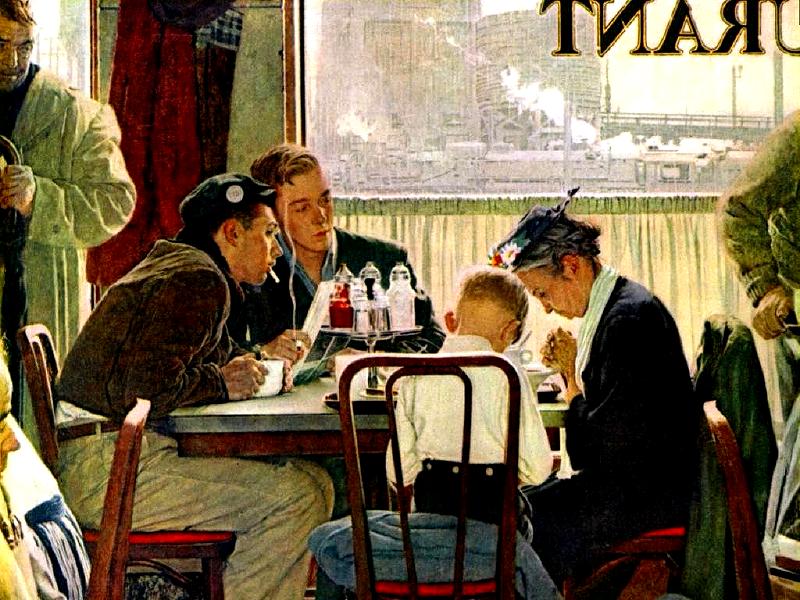
Norman Rockwell’s painting, Saying Grace (1951), though set in America, reflects the place of religious faith in mid-twentieth century English culture as well. The deep biblical roots of the Christian religion were still visible in public life but were beginning to be pressed to the margins and to become a novelty.

DEEPER-DIVE QUESTIONS

1. The title of this chapter may hold a clue to the importance of several “minor” characters at this point in the story, characters whose impact we might be inclined to ignore unless we understand the deeper significance of the conversion that is taking place in both Jane and Mark. For example, in Parts 1 and 4, Mark is introduced to the Tramp—Frost’s and Wither’s false Merlin—whom they hope will help them advance their plans to combine ancient magic with modern technocratic controls. During Mark’s sentry duty, however, he finds that he is able to bond with the Tramp in a way that is more grounded in common humanity than he had ever achieved in his efforts to join the inner ring of power with Frost and Wither.  Similarly, Jane is at first put off by Mother Dimble and Ivy Maggs because they represent a kind of storied traditional role for women and marriage to which Jane has been averse; but then she begins to discover that they are part of something that is much deeper and truer to real life than her habitual feminist ideas have led her to believe. Why is it that these “common people,” with their uneducated and even uncouth ways (the Tramp), embody the promise of meeting real life in a deeper and truer way? What is the source of this real life that Jane and Mark are meeting in these common people?

2. In the middle of the chapter, Part 3, we find a brief digression on the fate of Mr. Bultitude, the bear. Lewis goes to some lengths (as he always does in his descriptions of the bear) to notice how Mr. Bultitude’s way of processing information is not the same as that of a human being. Mr. Bultitude does things by instinct, not by moral choice, reflective deliberation, or conscience. This echoes Lewis’s traditional sense of the hierarchy among animals, humans, and angels (an echo of his love for the “triadic” thinking of the Middle Ages[i]). The result of this triadic thinking is to highlight, by contrast and comparison, the specifically human task of being human. How do the innate limitations of Mr. Bultitude’s instinctual behaviors help to clarify the specifically self-reflective and moral nature of the choices and loyalties that are now required of Mark and Jane if they are to complete their conversions and become fully “human” in the traditional sense?

3. All along the way in our study of THS, since we began early last August, we have tried to evaluate the relevance of Lewis’s insights regarding the cultural battles of his time (the mid-1940s) with the cultural and political battles of our own. With only three chapters after this one left to consider, this may be a good time to take an interim inventory. Here are some of the major discoveries that we have made along the way so far. Consider briefly how each one of these may find a counterpart in the events and agencies of our own day.

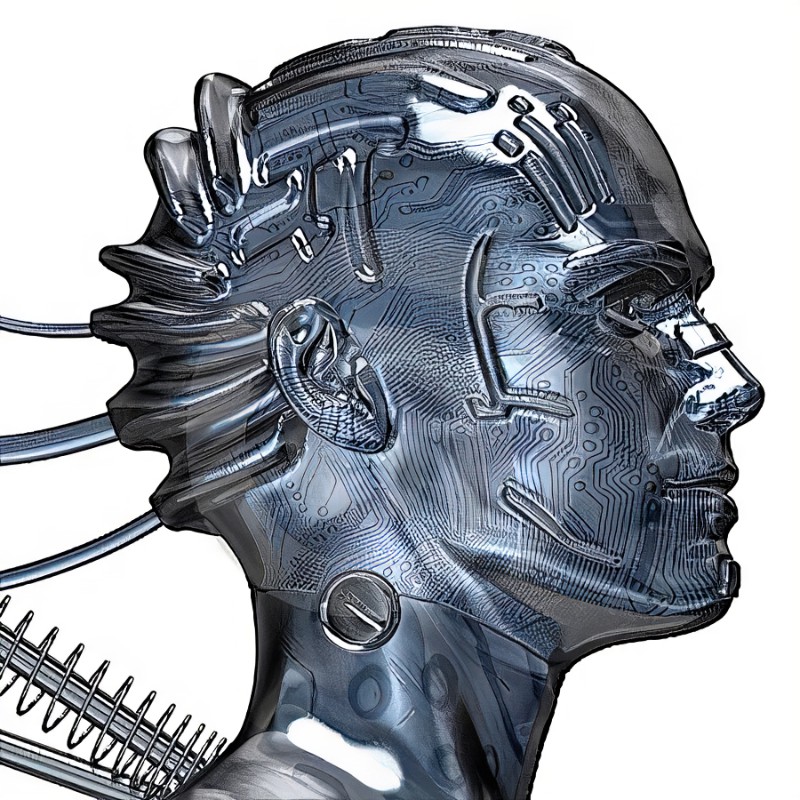
A high-tech image of a head suggests the kind of technocratic vision of the future promoted by the NICE. This has only grown and become more lurid and explicit since Lewis’s day among groups like the WEF and the “transhumanism” movement.

a. In Chapter 2, the faculty and Feverstone discuss how their ideology will spread through all the institutions of society—including education, politics, science, business, the press, etc. (cf., the neo-Marxist Long March Through the Institutions). Where is this sort of thing taking place today?

b. Also in Chapter 2, we saw how Busby and Mark and others endorse a kind of “applied science” which is really a mask for their social ideology and a way to gain control both of society and academia, for example, by rejecting traditional scientists such as William Hingest (who still require empirical evidence to support their claims). Where have we seen this sort of thing today?

c. In Chapter 6, Mark caves in to the NICE and assumes the role of an “activist journalist,” writing propaganda articles that whitewash the NICE for public consumption. What are the primary arms of activist journalism today, and on what stories have they practiced this kind of white washing? Are there any news agencies today that practice traditional journalism?

d. In Chapter 7, Jane discovers that she has held a view of marriage and sexuality that is centered, like her Enlightenment worldview, on the freedom of the individual self (self-expression, self-definition, self-indulgence). This has led her to regret her marriage to Mark, and to be vulnerable to adulterous thoughts. Where do we see this self-centered view of sexuality and even of marriage in our culture today?

e. In Chapter 8, Filostroto proclaims to Mark his vision for a future technocratic society where people are programmed by technology, and where human beings achieve a kind of immortality through artificial intelligence. Where do we see this kind of ideology at work today?

f. In Chapter 10, the NICE take control of Edgestow as the four stages of cultural revolution come full circle with the declaration of emergency powers. At the same time, normal people become jaded against their fellow citizens in a kind of mass formation which allows them to “stay under the radar,” protect themselves and their own jobs, while they “go along in order to get along.” Where have we seen this sort of thing at work today?

g. In Chapter 11, Jane goes with other members of the St. Anne’s community to look for Merlin, and they all find themselves shaken awake by the nominal degree of their own faith when they have to face some kind of real spiritual power or danger. Where have we seen, in recent events, the awakening of faith as a result of coming face to face with the denial of human rights and basic freedoms, including the freedom of religion and conscience under God?

h. In Chapter 13, Ransom explains to Merlin why God will only work to set things right by working through human beings who are willing to be his partners in the work of restoration (the 7th law). Where in our political debates today do we find this concern to preserve the role of human conscience and agency under God? And where do we find this calling either manipulated (made to serve a prior state agenda), rejected, or simply absent from the discussion of how to restore and renew society?


[i] C. S. Lewis, The Discarded Image (Cambridge, 1964) pp. 56-57, 71-72.

START THE NEW YEAR in 2023 WITH COVENANT RENEWAL

Blue Current, watercolor by Craig Gallaway, copyright 2008. Clear water flowing over exposed rock, reflecting the blue light of the sky, reminds me of the waters of baptism. And those waters represent, for those who put their lives in his hands, the cleansing and transforming power of Jesus’s life, death, and resurrection at work in their lives by the presence of his Spirit. A fitting image for the renewal of our covenant with our Maker and Redeemer.

Here is a shortened version of John Wesley’s Covenant Renewal Service which he began using with the Methodist people in England in 1755. It was especially used at the beginning of the New Year to give the people an opportunity to think seriously about their calling to embrace whole heartedly the life of faith. This version leaves out two longer sections of the original service (Thanksgiving, Confession) which are needed in order to experience the full depth and breadth of the service. I have shortened these in the interest of making the central prayer more accessible (in violet type face below). You can find various versions of the service online. The best ones stick close to Wesley’s original.   

If you have access to a United Methodist Hymnal, No. 606 is the hymn that Charles Wesley wrote especially for this service, Come Let Us Use the Grace Divine.   

Leader: Let us pray. Almighty God, unto whom all hearts are open, all desires known, and from whom no secrets are hid; cleanse the thoughts of our hearts by the inspiration of Thy Holy Spirit, that we may perfectly love Thee, and worthily magnify Thy Holy name; through Jesus Christ our Lord. Amen.

Scripture Readings: Jeremiah 31:31-34 . . . . The renewal of the covenant.

John 15: 1-8 . . . . . . . . . . The vine and the branches.

Leader: What does it mean to renew our covenant with God?

Dear friends, the Christian life, to which we are called, is a life in Christ, redeemed by Him from sin, and through Him, consecrated to God. Upon this life we have entered, having been first admitted by faith into the new Covenant of which our Lord Jesus Christ is the mediator, and which He sealed with His own blood, that it might stand forever.   

On one side the Covenant is God’s promise that He will fulfill in and through us all that He has promised in Jesus Christ, who is the author and perfecter of our faith. That His promise still stands we are sure, for we have known His goodness and proved His grace in our lives day by day.

On the other side we stand pledged to live no more unto ourselves, but to Him who loved us and gave himself for us and has called us to serve Him, that the purpose of His coming might be fulfilled.

From time to time we renew our vows of consecration, especially when we gather at the table of the Lord; but on this day we meet expressly, as generations of our fathers and mothers have met, that we may joyfully renew and solemnly reaffirm the Covenant that binds us to God.

Let us then, remembering the mercies of God, and the hope of His calling, examine ourselves by the light of His Spirit, that we may see wherein we have failed or fallen short in faith and practice, and, considering all that this Covenant means, may give ourselves anew to God.

(This is where the longer sections on Thanksgiving and Confession occur in the original service.) 

The Covenant

Scripture Reading: Romans 12: 1-2 

Leader (with the people now standing):

And now, brothers and sisters in Christ, let us bind ourselves with willing bonds to our Covenant God, and take the yoke of Christ upon us. This taking of His yoke upon us means that we are heartily content that He should appoint us our place and work, and that He alone is our reward.

Christ, our King, has many services to be done; some are easy, others are difficult; some bring honor, others bring reproach; some are suitable to our natural inclinations and temporal interests, others are contrary to both. In some we may please Christ and please ourselves, in others we cannot please Christ except by denying ourselves. Yet the power to do all these things is assuredly given us in Christ, who strengthens us.

Therefore, let us make the Covenant with God our own. Let us engage our heart to the Lord, and resolve in the strength of His Spirit never to go back. As we kneel again together, let us make the Covenant with God our own.

Leader: O Lord God, you have called us through Christ to be partakers of the new Covenant in Him. We take upon ourselves with joy the yoke of obedience, and engage ourselves, for the love of Thee, to seek and do Your perfect will. We are no longer our own, but Yours.

Leader and People together:

I am no longer my own, but Yours. Put me to what You will, rank me with whom You will; put me to doing, put me to suffering; let me be employed for You or laid aside for You, exalted for You or brought low for You; let me be full, let me be empty; let me have all things, let me have nothing; I freely and heartily yield all things to Your pleasure and disposal.

And now, O glorious and blessed God, Father, Son, and Holy Spirit, You are mine, and I am Yours. So be it. And the Covenant which I have made on earth, let it be ratified in heaven. Amen.

Closing (All stand)

Leader: Lift up your hearts.

People: We lift them up to the Lord.

Leader: Let us give thanks to our Lord God.

People: It is fitting and right that we should at all times, and in all places, give thanks unto Thee, O Lord, Holy Father, Almighty, Everlasting God.

Leader and People together:

Therefore, with angels and archangels, and with all the company of heaven, we praise and magnify Your glorious name; evermore praising Thee, and saying, Holy, Holy, Holy, Lord God of hosts; heaven and earth are full of your glory. Glory be to Thee, O Lord most high. Amen.