THE GREAT LADY

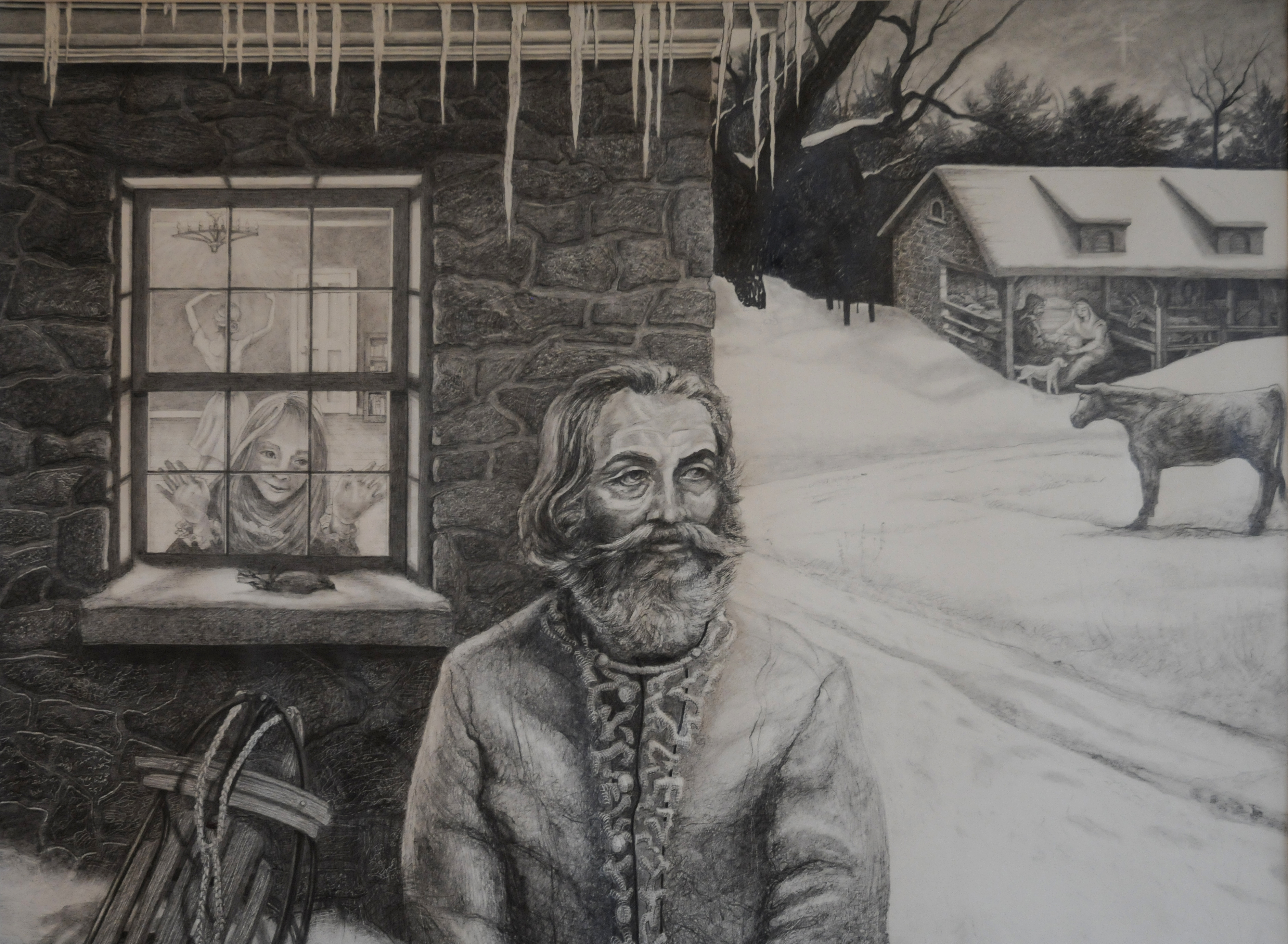
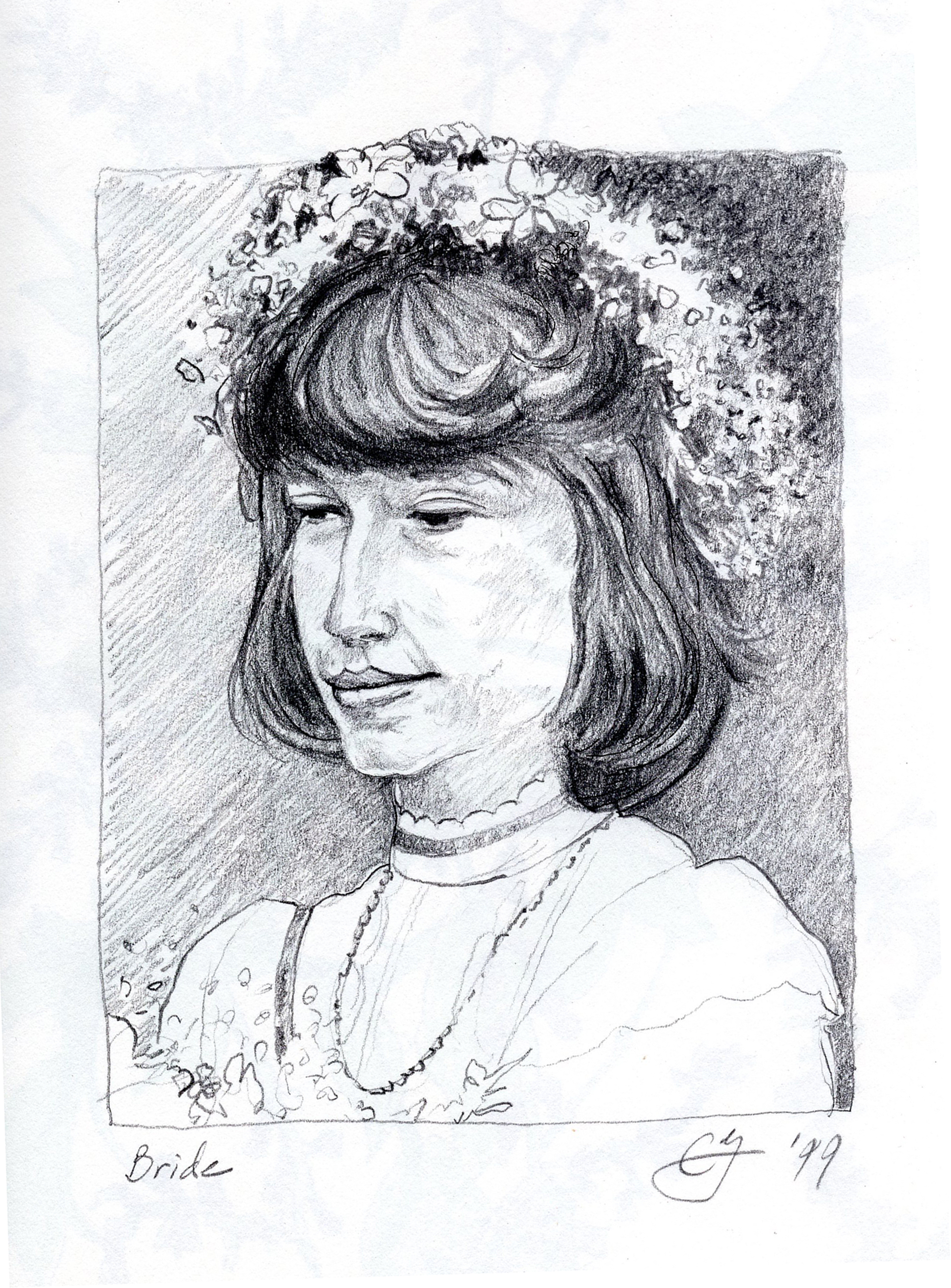
Bride, by Craig Gallaway
Graphite drawing, 1999.

The following is an excerpt from C.S. Lewis’s novel, The Great Divorce.[1] Toward the end of his story, Lewis (the narrator) is in conversation with his long-deceased mentor, the Scottish writer, George MacDonald. As they walk together, Lewis asks MacDonald about the life to come and why, for example, various kinds of people either are or are not allowed to enter its blessings. At one point, Lewis sees a light reflecting on the undersides of some leaves, and wonders if there is a river nearby. In this way he comes to meet a very great lady. I offer this excerpt in honor of my wife, Deborah, mother of our children, and in memory of my mother, Sally Gallaway, on this Mother’s Day 2025. The excerpt begins below with Lewis’s description of his conversation with MacDonald.

____________________________

The reason I asked if there were another river was this. All down one long aisle of the forest the under-sides of the leafy branches had begun to tremble with dancing light; and on earth I knew nothing so likely to produce this appearance as the reflected lights cast upward by moving water. A few moments later I realized my mistake. Some kind of procession was approaching us, and the light came from the persons who composed it.

First came bright Spirits, not the Spirits of men, who danced and scattered flowers—soundlessly falling, lightly drifting flowers, though by the standards of the ghost-world each petal would have weighed a hundred-weight and their fall would have been like the crashing of boulders.[2] Then, on the left and right at each side of the forest avenue, came youthful shapes, boys upon one hand, and girls upon the other. If I could remember their singing and write down the notes, no man who read that score would ever grow sick or old. Between them went musicians: and after these a lady in whose honor all this was being done.

“Is it? . . . Is it?” I whispered to my guide.

“Not at all,” said he. “It’s someone ye’ll never have heard of. Her name on earth was Sarah Smith and she lived at Golders Green.”

“She seems to be . . . well, a person of particular importance?”

“Aye. She is one of the great ones. Ye have heard that fame in this country and fame on Earth are two quite different things.”

“And who are these gigantic people . . . look! They’re like emeralds, who are dancing and throwing flowers before her?”

“Haven’t ye read your Milton? A thousand liveried angels lackey her.”

“And who are all these young men and women on each side?”

“They are her sons and daughters.”

“She must have had a very large family, Sir.”

“Every young man or boy that met her became her son—even if it was only the boy that brought the meat to her back door. Every girl that met her was her daughter.”

“Isn’t that a bit hard on their own parents?”

“No. There are those that steal other people’s children. But her motherhood was of a different kind. Those on whom it fell went back to their natural parents loving them more.”

“And how . . . but hello! What are all these animals? A cat—two cats—dozens of cats. And all those dogs . . . why, I can’t count them. And the birds. And the horses.”

“They are her beasts.”

“Did she keep a sort of zoo? I mean, this is a bit too much.”

“Every beast and bird that came near her had its place in her love. In her they became themselves. And now the abundance of life she has in Christ from the Father flows over into them.”

I looked at my teacher in amazement.

“Yes,” he said, “It is like when you throw a stone into a pool, and the concentric waves spread out further and further. Who knows where it will end? Redeemed humanity is still young, it has hardly come to its full strength. But already there is joy enough in the little finger of a great saint such as yonder lady to waken all the dead things of the universe into life.”  


[1] C.S. Lewis, The Great Divorce (MacMillan: New York, 1946) Chapter 12, page 106 ff.

[2] In Lewis’s imagined intermediate state, prior to the new heavens and the new earth of Revelation 21, even the heavenly world of paradise is more real and solid than the world of the fallen earth.

THAT HIDEOUS STRENGTH: Chapter 17

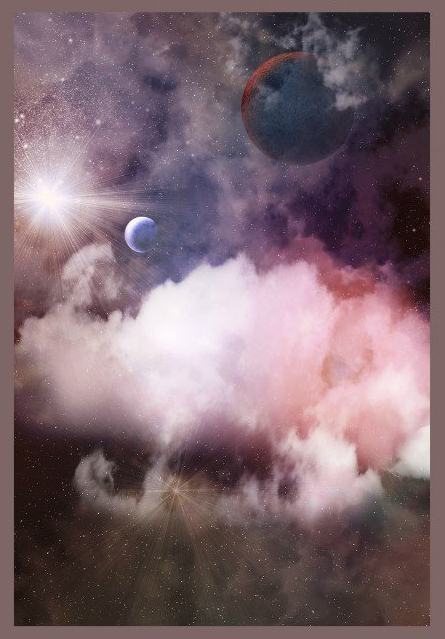
The cover art for the 2014 edition of That Hideous Strength by C. S. Lewis, published by Kindle and by Create Space Independent Publishing Platform. The image suggests the taming of fallen Venus by her more powerful original in the good order of creation. In this way, eros finds its true home within the greater virtue, the greater heart of agape. How is this a symbol for Jane and Mark, for St. Anne’s future, and for ours?

VENUS COMES TO ST. ANNE’S

Overview Question

In this final chapter, Lewis brings a few things to a sort of penultimate completion, for example the roles of Merlin and of Dr. Ransom. At the same time, he leaves us with a set of characters and questions that, rightly engaged, pull us back into the world of our own lives (our families, our congregations, our communities, and nation) to ponder our own course on the road ahead.

We have seen in earlier chapters how Ransom and Merlin, and the members of the community at St. Anne’s, have so far responded to the spiritual battle with Belbury and Edgestow in which they have been engaged. Now, in the final chapter we overhear, so to speak, their conversations about the ongoing battle that they have yet to face, and the parameters within which they must make their battle plans for the future. These parameters include hints about the ongoing “conversions” of Mark and Jane and the others at St. Anne’s (Parts 1 and 2); but also some more explicit statements about the nature of Logres, going forward, when the community at St. Anne’s must be prepared to meet again and to fight back against “other Edgestows” (Parts 4 and 5) under the same kind of distorted leadership as before (e.g., Curry, the well-informed man in the train of Part 5). This brings us to our final Overview Question:  

Taking the story of THS as a whole, especially the sense of future direction that arises in the final chapter, what would you say are the key principles—both at St. Anne’s and for us—that define the goal of their/our lives, and the signs that they/we are in fact making progress toward this goal?

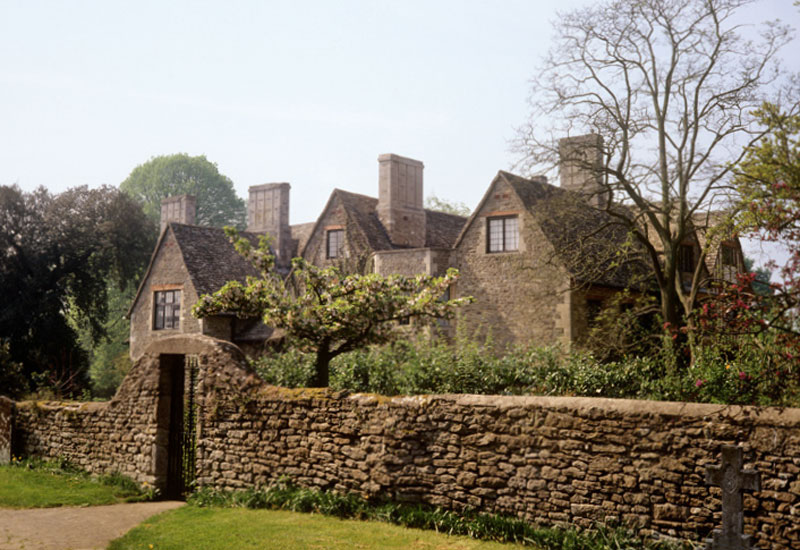
“Just” another English manor house with gardens and natural stonework suggesting the kind of place and culture created by the community of St. Anne’s on the Hill in Lewis’s story. And yet, this is also the kind of place that represents and symbolizes the critical spiritual values, virtues, and strengths of Logres in the history of England which are determinative for the future of this tradition. How is all of this attacked by the Belbury and the NICE of our day?

DEEPER-DIVE QUESTIONS

1. In Part 1, after the debacle of the banquet, Mark is making his way to St. Anne’s on the Hill to find Jane and to give her “her freedom.” What are the signs that the conversion already begun in him is really taking root and expanding into various parts of his personality and the habitual way of life (the lifeworld) that he had formerly considered so important? What does this portend for Mark’s future, his marriage, and his potential for a different role in society?

2. In Part 2, Jane is with the other women of St. Anne’s trying on beautiful dresses in preparation for a great meal that the men of St. Anne’s are preparing. What are the signs in Jane’s thoughts and attitudes that the conversion already begun in her is also expanding into the wider regions of her personality and her former habitual way of seeing herself and trying to present herself to others? What does this portend for Jane’s future, her marriage, and her potential for a different role in society?

3. In Part 3, Lord Feverstone comes to his end swallowed up in an earth quake at Edgestow. He dies in a manner reminiscent of the sons of Korah in Numbers 16, and for the same reason: He has placed his own fame and fortune above everything else in life, and so he vanishes into nothing. At the same time, Part 3 gives us the last mention of Merlin who rides away on a horse yet, as Jane has seen earlier in one of her dreams, he has also been like a pillar of light used up completely in God’s good work of deliverance at Belbury. What do these very different “ends” tell us about the worldviews and lifeworlds of Merlin and Feverstone?

Anyone who knows the reality of farming or ranching, or any life that is lived closely within the powers and forces of nature, also knows how these powers offer immense opportunity for the training of the virtues and the fruits of the Spirit. This is the world of God’s continuing creation (creatio continua) in which we live and move and have our being, and within which we give thanks for our sufferings because we know that our Maker is using them to remake us in the image of his son, our Lord (Romans 5:3; 8:29). It is also the world of everyday ordinary life when we embrace this life with all of its challenges, in Christ.

4. Part 4 begins with Camilla’s question, “Why Logres, Sir?” which she asks of Ransom; though it is Dr. Dimble and Grace Ironwood who do most of the answering. In their answers, they talk about the importance in Logres (the ancient realm of King Arthur, which we commented on at some length already in Chapter 13) of a certain understanding of “Nature” (what I would call creatio continua), and of the tradition of faith and freedom that “haunts” English history all the way back to Arthur (and before), and of how this tradition must often be pursued in the most mundane ways, as they have in fact been pursuing it steadily at St. Anne’s. Working with your earlier answers in Chapter 13 and elsewhere, how would you define the meaning and significance of Logres, both in the story and in the present world of American culture and politics which also reaches back into this history?  

5. At the end of Part 4, there is also a discussion about the status of other countries in relation to Logres (this haunting of England) and about the seeming unfairness of the judgement of the people of Edgestow. What do the conversations about these two issues tell us about the traditional worldview, at least as C. S. Lewis understood it and recommended it through the characters in his story? What parallels can you find in Lewis’s other works to support your answer?

6. Part 5 is all about the future prospects of Curry, the Sub-Warden (“Dean”) of Bracton College. This is the Curry who in Chapter 1 manipulated the faculty of Bracton to sell Bragdon Wood to the NICE with a view to padding the purse of the college as well as his own career, and without even considering the moral or spiritual dangers. In Part 5, Curry discovers a way to turn the tragedy of the destruction of Edgestow and the college into a “providential” turn of affairs for himself. Why is it significant in the story that Lewis portrays Curry as the kind of man that people will see as empathetic and wise, though in reality Curry is only thinking of the future (and even of God’s providence) in terms of his own fame.

Garden With Beans and Flowers, watercolor by Craig Gallaway, copyright 2005 by Gallaway Art. A simple painting of a well-kept garden seems an appropriate image by which to contemplate the future imagined in the story for Jane and Mark, St. Anne’s, and Logres. For a garden is symbolic in the traditional worldview both of where we began, and of how we move forward toward the goal of the New Creation. There is, of course, a battle to engage along the way; but then we have our Lord’s own Spirit and power to guide and strengthen us.

7. The final part of the chapter, Part 6, is focused on the theme from which the chapter takes its title: “Venus Comes to St. Anne’s.” In addition to all of the echoes of Genesis 1 among the animals (“be fruitful and multiply”), why does it make perfect sense, given where the story of THS begins (with Jane contemplating the emptiness of her marriage) that the story would end in a chapter with this title? That is, with Jane and Mark Studdock coming together as husband and wife in a way they have never before been able to do? What are the chief virtues that seem to characterize this new potential for marital union? And how will this practice of faithful marriage strengthen their ability to promote the cause of Logres in England going forward?

THAT HIDEOUS STRENGTH: Chapter 16

This is the cover image for the 2012 edition of That Hideous Strength published by Harper Collins. The image portrays the destruction of John Wither, Deputy Director of the NICE, by Mr. Bultitude, the bear ennobled by Dr. Ransom at St. Anne’s. This is probably the great deed prophesied of Mr. Bultitude by Merlin in Chapter 13. The larger meaning of this event within the traditional worldview of St. Anne’s has to do with the proper stewardship of creation at St. Anne’s versus the heartless, utilitarian manipulation of nature at Belbury.

BANQUET AT BELBURY 

Overview Question

In an odd sort of way, the overview question for this week provides an occasion to evoke two rather contradictory emotions: On the one hand, to breathe a sigh of relief (and hope, even joy) as we watch the terrible villainy of the NICE at Belbury at long last pay itself out in death and destruction; yet, on the other, to consider soberly (bravely and even sorrowfully) the hard result that this implies for those in our own time who have followed the worldview and the lifeworld of Belbury. These results, in other words, are both sad (Saturn) and hopeful (Jove).

What I suggest, then, as a way to take in and understand the chapter as a whole, is to follow the action of each Part and to ask at each stage a single Overview Question:

How do the actions and events of each Part demonstrate the logical results of following either the fallen eldil (as at Belbury) or the good eldil (as at St. Anne’s and in Merlin)?

This means that you will be looking as you follow the actions of Wither or Merlin, Frost or Fairy Hardcastle (and others) for signs either of the good eldil, or the fallen ones. Signs, that is, and for example, of the heavenly Mars (courage, patience, etc.) or the fallen shadow of Mars (domination, coercion, etc.). Or, for two very different examples, signs of the good Venus (kindness, life giving help) or the fallen Saturn (despair and indifference rather than “good grief”).

To do this, you will need to remember what we learned about the planets in the last chapter and in Chapter 12, where we also discussed the virtues and the passions that characterize the good angels (God’s messengers) and their fallen counterparts. And try to keep in mind how this is both a joyful and a sorrowful exercise because we are talking about a real world, our world, not just a fictional one. 

This panorama of the English countryside reminds us, in keeping with the traditional view of “nature” in That Hideous Strength, that God’s good creation persists in the wider world and at St. Anne’s even as the evil work of the NICE is collapsing in the town of Edgestow and at the banquet at Belbury.

DEEPER-DIVE QUESTIONS

1. How does the collapse of language (i.e., the power of Mercury) at the banquet—first with Jules, then with Wither and throughout the room—illustrate the logical consequences of the post-Enlightenment exaltation of the individual (i.e., individual freedom and “reason”) and the denial of the traditional understanding of God, truth, and reality? What signs can you discern today of this kind of collapse in the speeches and responses of our elected officials and other leaders of business, media, society and, yes, even the church?

2. Why does the dissolution of language and meaning at the banquet (and in society today) lead to the shadow side of Mars—that is, to mindless violence, bravado, and murderous coercion (rather than to courage, fortitude, and self-control, etc.). Which characters, in which parts of the chapter, clearly illustrate this dissolution of the true power of Mars? What actors illustrate fallen Mars today?

3. Which of the good eldil shine forth in the actions of Merlin when he frees both the animals and the human prisoners (including Mark and Mr. Maggs) and how is Merlin’s way of sending them forth also a recovery of the good order of creation (“nature” rightly understood as commanded by the Creator of all, Maleldil)? As a corollary to this question: Why does it make sense, from the standpoint of the traditional worldview, that the animals would attack the advocates of Belbury to destroy them? Is there some sense in which nature itself will ultimately “refuse” to support what is evil? How is “nature” reasserting itself today in rejection of woke anti-nature ideology?

4. In Parts 4, 5, and 6, Wither, Feverstone, and Frost, each in his own way, enacts the logical consequences of the worldview that they have all embraced and tried to live by (their modern lifeworld). How do the murderous actions of Wither, the self-absorbed and self-centered actions of Feverstone, and the suicidal actions of Frost, demonstrate the consuming passions of the dark eldil–that is the passions of fallen Mars, fallen Jove, and fallen Saturn, respectively? What actors and agencies in the spiritual battle of our cultural, political, and media wars today seem determined to embrace these same or similar passions represented by the fallen powers as they are also described in Scripture? (For Scriptural descriptions see, for example, Romans 1:18-32; Ephesians 4:17-6:20.)  

THAT HIDEOUS STRENGTH: Chapter 15

The angelic figures of the eldils in C. S. Lewis’s space trilogy are drawn from the allegorical interpretation of the planets (Mercury, Venus, Mars, Saturn, and Jupiter) as described in classical and Medieval literature. See, C. S. Lewis, The Discarded Image. The artwork above comes from the cover of a Study Guide for Lewis’s space trilogy by Vicki Tillman.

THE DESCENT OF THE GODS 

Overview Question

In this chapter, especially in Part 1, Merlin is finally equipped with the virtues of the heavenly powers that he will need in order to do battle with the fallen powers of Belbury. Our overview task, therefore, is to draw out (at least provisionally) some conclusions about how best to understand the nature and character of these powers, both in their true, created form and in their fallen, corrupted deformation.

We may begin with a quick review of insights that we have already gathered from earlier chapters. In Chapter 9, for example, we saw how Lewis was using the classical and Medieval identification of the planets and virtues to portray the angelic beings known as the eldil. Thus, Mercury, Venus, Mars, Saturn, and Jupiter represent five specific powers or virtues that are built into the natural order of God’s good and unfolding creation.[i] And then, in Chapter 12, we saw (in keeping with the biblical sources of the traditional worldview) how each of these good powers can be corrupted and turned to evil purpose by the fallen angels or eldil. Furthermore, in Chapter 13, we discovered the telling insight that while the dark eldil are quite willing to work by coercion and domination to achieve their goals in human society, the good eldil insist on working only through human beings who willingly choose to be obedient partners with God in caring for and restoring the good creation (the 7th law). In this way, as we suggested in our questions for Chapter 13, the role of Merlin in Lewis’s story actually becomes our role as free human beings under God’s power and guidance to fight back against the cultural dissolution of our own time. In other words, we need the same virtues and strengths for our battle that Merlin needs and receives in the story!  

All of this echoes, of course, with themes from Scripture about spiritual warfare (Ephesians 6); about our Lord’s battle with the fallen powers (1 Corinthians 15:20-28); about the “fruits of the Spirit versus the works of the flesh” (Galatians 5), and also with Jesus’s own description in the beatitudes about the traits that characterize those who are committed to the victory of God’s kingdom (Matthew 5). Indeed, if we keep these scriptural themes in mind, we will gain many insights into the nature and character of the battle between the powers as Lewis portrays them, and as they are relevant to our own battles today. This brings us to the Overview Question for this week:

What are the virtues and strengths that Lewis associates with each of the planets–that is, with the good eldil and the good order of creation? How do these relate or compare to Paul’s list of the fruits of the Holy Spirit in Galatians 5? Also, what are the vices and corruptions that arise when these powers are misused, misconstrued, or made into idols?

As you read through Lewis’s powerfully poetic descriptions of each eldil in Part 1, keep in mind the insights from earlier chapters, and the aforementioned Scriptural themes. Try to create a basic chart or “map” of the virtues, strengths, and spiritual fruits that are given to Merlin (and to the other people at St. Anne’s). How do each of these work, and what would they look like if they were corrupted? It may help to think about different characters, both at St. Anne’s and at Belbury, as you ponder the embodiment and practice of each of the virtues and vices. For example, in what way do the Dimbles or Dr. Ransom reflect the virtue of Venus, while Fairy Hardcastle and even Mark and Jane (at least at the beginning of the story) reflect the corruption and dissolution of this created power? Remember, these planetary virtues, rightly understood, align with the fruits of the Spirit and with the beatitudes of the Kingdom of God. As such they represent strengths that we also need for our “Merlin” work today.

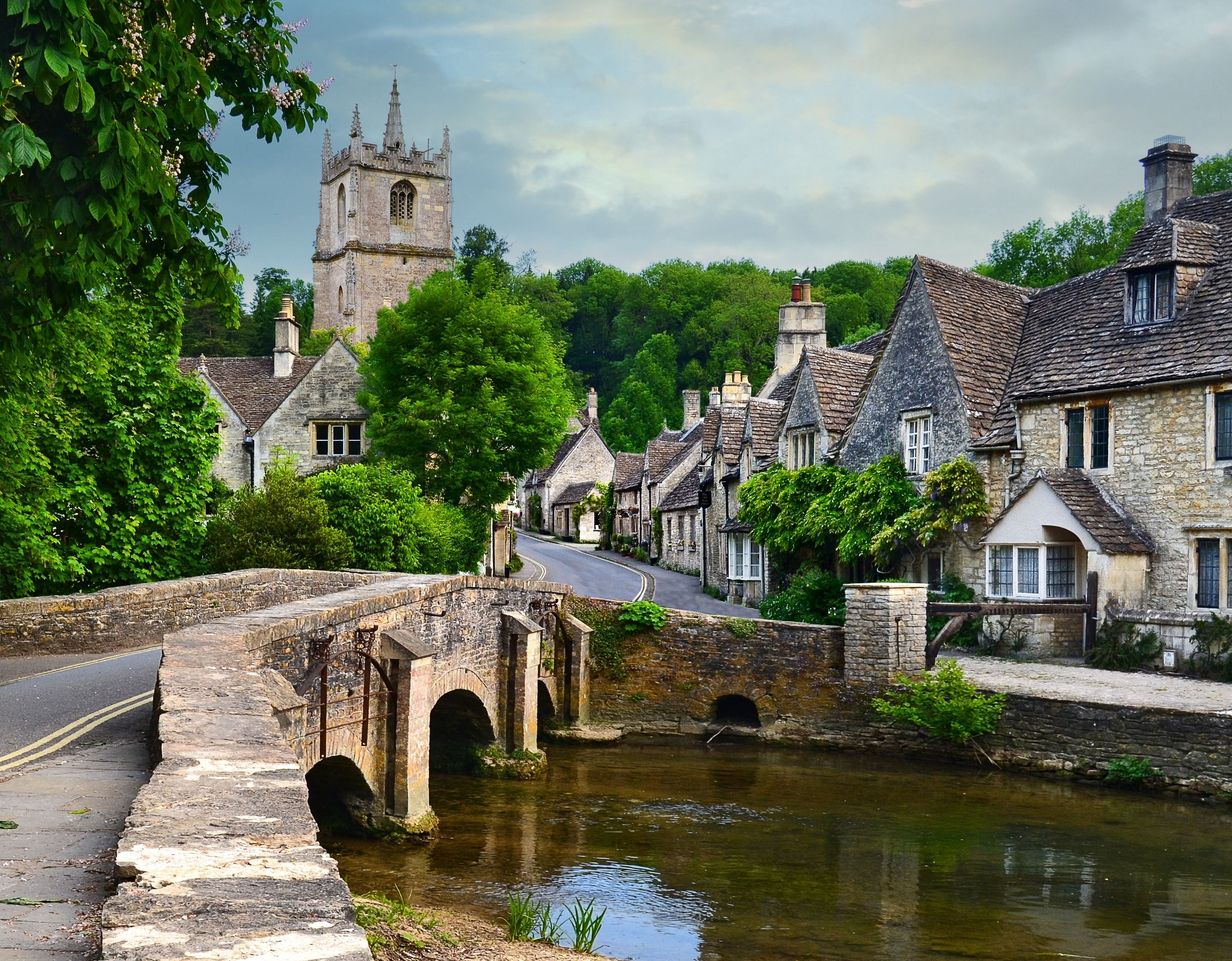
This image of an English village by a river suggests the kind of place and culture (like the village of Cure Hardy in Chapter 4 of THS) that keeps pulling Mark Studdock’s memory and conscience away from his job aspirations at Belbury. This type of place (and its people) are surely the source in Mark’s mind and heart for what he calls “Normal.” And it is this connection with traditional society and the traditional worldview (its cultural, moral, and religious values) that finally strengthens Mark enough to resist the “objectivity” training of Prof. Frost.

DEEPER-DIVE QUESTIONS

1. One of the really curious and funny things about Chapter 15 (in Parts 2 and 3) is the way Wither and Frost are reduced by Merlin (who is now among them at Belbury and fully equipped with the heavenly powers) to a pair of bowing and scraping buffoons. These great leaders and spokespersons for the future of technocratic society and its ideological “science” are almost completely duped about the true identity both of the Tramp and of the real Merlin. What account can you give for this deficiency of intelligence on the part of Wither and Frost? What explains their epistemological blindness? As you ponder this question you might also consider a similar pattern in the following sources: [a.] the inability of the fallen powers, according to Paul, to understand what Jesus was about at the cross (1 Cor. 2:8). [b.] The short-sightedness of the White witch in the Narnia Tales to understand the “deep magic” of Aslan’s willing sacrifice at the stone table. And [c.] The inability of Sauron in Tolkein’s trilogy to foresee that anyone would try to destroy the ring of “power.”

2. As you read through Parts 2, 3, and 5, try to identify places or moments in the action where you can see the powers of the good eldil shining through the actions of Merlin. Where is the Mercurial power of language, wit, and intelligence at work? What about Mars and the capacity for courage in the face of danger? Or Venus and the virtue of charity and the spiritual fruits of agape and kindness? At the same time, watch for the shadow side of the dark eldil in the various attitudes (vices and passions) of envy, anger, or suspicion, that arise among the characters of Belbury. Can you think of any ways that Merlin’s actions might provide a model for how we engage the agents of destruction today?  

3. In Part 4, Mark’s battle with the dark eldil comes to a head in the “objectivity room” when Frost demands that Mark commit an act of sacrilege against the Christian religion by defacing one of its central symbols, a crucifix. Mark is still not a Christian believer; but his conversion toward what is Normal has also been a hard turn away from the wanton abolition of all traditional religious and moral values. In the course of his struggle to resist Frost’s demands, Mark comes to realize that the cross is not just a story; but something that really happened. Furthermore, he realizes that the cross is what, as he puts it, the” crooked” does to the normal and the “straight,” indeed, what Belbury will do to him. He realizes that the man on the cross was the embodiment of what is good, and true, and normal. In the end, even though he knows Frost may kill him, he refuses to enact the defamation; and suddenly Merlin breaks into the room to release Mark from the diabolical training. How does Mark’s battle with Frost over the meaning of the symbol of the cross illuminate what is most deeply at stake in the spiritual battle between the heavenly powers of the Creator (Maleldil) and the dark fallen powers of Belbury?   


[i] Lewis also has Dr. Dimble (in Chapter 13) call these powers “intelligences,” that is, types of creaturely intelligence that are built into creation itself, and are amenable to human beings made in their Creator’s image. Thus, for example, to understand language (Mercury) or love (Venus) or courage (Mars) or grief (Saturn) or joy (Jove) aright is to be faithful and true to the nature of our own creation. But to subvert these, or to misconstrue them for the cause of rebellion and self-centered power (by turning them into their shadows: linguistic trickery, lustful conquest, domineering violence, willful indifference, and mindless debauchery) is to plant the seeds of our own destruction.

THAT HIDEOUS STRENGTH: Chapter 14

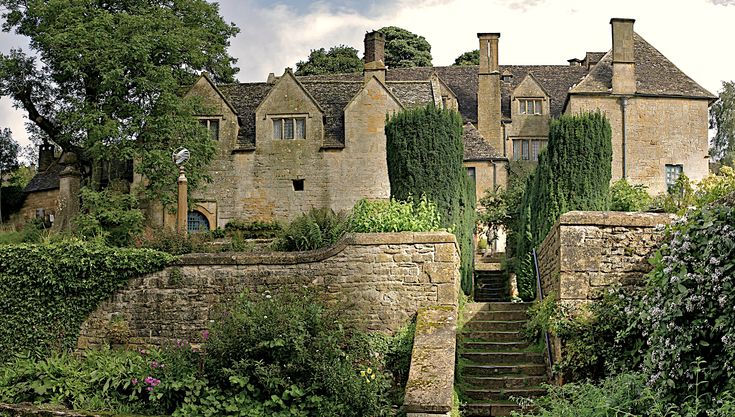
An English manor house and grounds suggests the kind of place–with gardens and stone walls in close proximity with nature–that Lewis describes as the setting for the traditional community of St. Annes. We might imagine Mr. MacPhee at work in his garden, or Camilla and Arthur Denniston standing out on the hill watching the weather and rejoicing in the clouds of an English sky.

“Real Life Is Meeting”

Overview Question

In this chapter, both Jane and Mark move further along the path of what can only be called, in Christian terms, “conversion.” They have come a long way since the beginning of the story. They are both being converted from their earlier formation in the Enlightenment worldview, during their college and professional years; and they are being converted to what we have called (from the beginning of our study) the traditional worldview. The latter also includes what we came in the last chapter to identify with the role of Merlin in Lewis’s story: Merlin the advocate of God’s order of creation in nature, and of Christian marriage, and of English common law with its conservation of basic human rights and freedoms (the 7th law) as these are shaped by biblical faith. All of these are integral parts of the traditional worldview (lifeworld) as it came to expression in England from the Middle Ages onward until it was challenged head-on in the 17th and 18th centuries by the anti-tradition and anti-religious worldview of the Enlightenment.

Jane and Mark are being converted from their former college training and formation; and both are coming to see and appreciate why the traditional worldview (with its inherent lifeworld) holds much that they now want to re-embrace if they can only discover how. But each of them comes to this by a different set of means or mediations. This brings us to our Overview Question for this chapter:

Look carefully at Mark’s “conversion” in Parts 1 and 4 (note Lewis’s use of the term) from Prof. Frost’s deconstruction of all traditional values, and toward what Mark only knows to call the “Normal.” Then, look closely also at Jane’s struggle (in Parts 2 and 5) first with Mother Dimble’s traditional ways about marriage, and then with her own licentious fantasies, until she turns in the garden (after her talk with Ransom) toward the “presence” of God. Based on your observations, try to identify the means by which each of them is helped along this path of conversion. What kinds of things are involved in each of their cases (e.g., mentors, memories, conscience, innate or instinctual longings or repulsions, Scripture, and other traditional echoes). By what means from within the traditional worldview are Jane and Mark drawn into the orbit of God’s further influence and healing? 

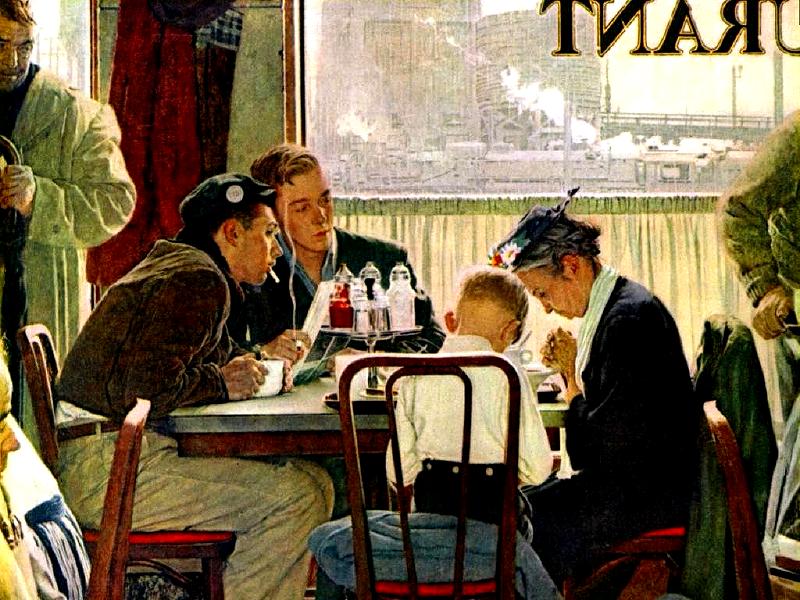
Norman Rockwell’s painting, Saying Grace (1951), though set in America, reflects the place of religious faith in mid-twentieth century English culture as well. The deep biblical roots of the Christian religion were still visible in public life but were beginning to be pressed to the margins and to become a novelty.

DEEPER-DIVE QUESTIONS

1. The title of this chapter may hold a clue to the importance of several “minor” characters at this point in the story, characters whose impact we might be inclined to ignore unless we understand the deeper significance of the conversion that is taking place in both Jane and Mark. For example, in Parts 1 and 4, Mark is introduced to the Tramp—Frost’s and Wither’s false Merlin—whom they hope will help them advance their plans to combine ancient magic with modern technocratic controls. During Mark’s sentry duty, however, he finds that he is able to bond with the Tramp in a way that is more grounded in common humanity than he had ever achieved in his efforts to join the inner ring of power with Frost and Wither.  Similarly, Jane is at first put off by Mother Dimble and Ivy Maggs because they represent a kind of storied traditional role for women and marriage to which Jane has been averse; but then she begins to discover that they are part of something that is much deeper and truer to real life than her habitual feminist ideas have led her to believe. Why is it that these “common people,” with their uneducated and even uncouth ways (the Tramp), embody the promise of meeting real life in a deeper and truer way? What is the source of this real life that Jane and Mark are meeting in these common people?

2. In the middle of the chapter, Part 3, we find a brief digression on the fate of Mr. Bultitude, the bear. Lewis goes to some lengths (as he always does in his descriptions of the bear) to notice how Mr. Bultitude’s way of processing information is not the same as that of a human being. Mr. Bultitude does things by instinct, not by moral choice, reflective deliberation, or conscience. This echoes Lewis’s traditional sense of the hierarchy among animals, humans, and angels (an echo of his love for the “triadic” thinking of the Middle Ages[i]). The result of this triadic thinking is to highlight, by contrast and comparison, the specifically human task of being human. How do the innate limitations of Mr. Bultitude’s instinctual behaviors help to clarify the specifically self-reflective and moral nature of the choices and loyalties that are now required of Mark and Jane if they are to complete their conversions and become fully “human” in the traditional sense?

3. All along the way in our study of THS, since we began early last August, we have tried to evaluate the relevance of Lewis’s insights regarding the cultural battles of his time (the mid-1940s) with the cultural and political battles of our own. With only three chapters after this one left to consider, this may be a good time to take an interim inventory. Here are some of the major discoveries that we have made along the way so far. Consider briefly how each one of these may find a counterpart in the events and agencies of our own day.

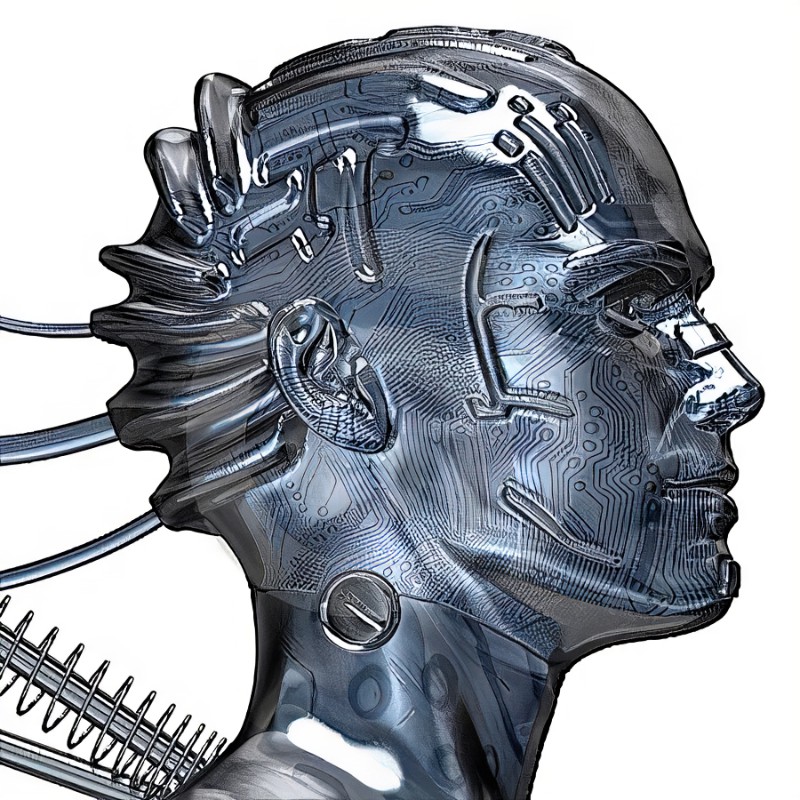
A high-tech image of a head suggests the kind of technocratic vision of the future promoted by the NICE. This has only grown and become more lurid and explicit since Lewis’s day among groups like the WEF and the “transhumanism” movement.

a. In Chapter 2, the faculty and Feverstone discuss how their ideology will spread through all the institutions of society—including education, politics, science, business, the press, etc. (cf., the neo-Marxist Long March Through the Institutions). Where is this sort of thing taking place today?

b. Also in Chapter 2, we saw how Busby and Mark and others endorse a kind of “applied science” which is really a mask for their social ideology and a way to gain control both of society and academia, for example, by rejecting traditional scientists such as William Hingest (who still require empirical evidence to support their claims). Where have we seen this sort of thing today?

c. In Chapter 6, Mark caves in to the NICE and assumes the role of an “activist journalist,” writing propaganda articles that whitewash the NICE for public consumption. What are the primary arms of activist journalism today, and on what stories have they practiced this kind of white washing? Are there any news agencies today that practice traditional journalism?

d. In Chapter 7, Jane discovers that she has held a view of marriage and sexuality that is centered, like her Enlightenment worldview, on the freedom of the individual self (self-expression, self-definition, self-indulgence). This has led her to regret her marriage to Mark, and to be vulnerable to adulterous thoughts. Where do we see this self-centered view of sexuality and even of marriage in our culture today?

e. In Chapter 8, Filostroto proclaims to Mark his vision for a future technocratic society where people are programmed by technology, and where human beings achieve a kind of immortality through artificial intelligence. Where do we see this kind of ideology at work today?

f. In Chapter 10, the NICE take control of Edgestow as the four stages of cultural revolution come full circle with the declaration of emergency powers. At the same time, normal people become jaded against their fellow citizens in a kind of mass formation which allows them to “stay under the radar,” protect themselves and their own jobs, while they “go along in order to get along.” Where have we seen this sort of thing at work today?

g. In Chapter 11, Jane goes with other members of the St. Anne’s community to look for Merlin, and they all find themselves shaken awake by the nominal degree of their own faith when they have to face some kind of real spiritual power or danger. Where have we seen, in recent events, the awakening of faith as a result of coming face to face with the denial of human rights and basic freedoms, including the freedom of religion and conscience under God?

h. In Chapter 13, Ransom explains to Merlin why God will only work to set things right by working through human beings who are willing to be his partners in the work of restoration (the 7th law). Where in our political debates today do we find this concern to preserve the role of human conscience and agency under God? And where do we find this calling either manipulated (made to serve a prior state agenda), rejected, or simply absent from the discussion of how to restore and renew society?


[i] C. S. Lewis, The Discarded Image (Cambridge, 1964) pp. 56-57, 71-72.

FOURTH SUNDAY OF ADVENT 2022, Week 4: You Ain’t Goin’ Nowhere and the Wedding Banquet of the Lamb

Saint Nicholas of the Dowry, Graphite drawing by Craig Gallaway, copyright 2011. Saint Nicholas is famous for his affirmation of marriage and for his support of young women who could not afford a dowry. In some cases, it seems, he was all that stood between them and a life on the streets.

Some might think it odd for Deb and me to choose an old Bob Dylan song, about the challenges of getting married, to celebrate the birth of our Lord and his purpose to restore the good order of creation. But then, in the Bible, there are few things that need restoration more than God’s good gifts of marriage and sexuality. And there is something in the very structure of Dylan’s song that echoes what the Bible has to say about this—how our incarnate Lord, born at Bethlehem to be both King and Bridegroom, wants to restore the order of marriage in his kingdom. [i]

We learn from the Apostle Paul and others that Jesus is the true bridegroom of his people, the church, and that he has suffered much to make the church his bride (Ephesians5:21-32). The epistle to the Hebrews tells us that, “He was tempted in every way as we are, yet without sin,” and this is why “he is able to sympathize with our weaknesses.” (Hebrews 4:15). Paul tells us that he was “obedient even unto death on a cross . . . and so God has highly exalted him and given him the name that is above every other name, Lord” (Philippians 2:8-11). And Hebrews again speaks of how “He endured the cross for the joy set before him, and then sat down by the throne of God,” (Hebrews 12:2) from whence he now reigns, “until God has put everything in order under his authority” (1 Corinthians 15:20-28).

This is the basic biblical narrative of the incarnate Son of God, from the time of his birth, through his faithful life and death, his resurrection and sending of his Spirit, and on now with his people, the church, toward the time when the great restoration will be fulfilled. And this is the narrative of our lives as well, if we have joined our lives to the living reality of his, by faith. For we are called to live our lives in him, and this means to follow him in the way of faithfulness and, yes, in the way of sacrifice. Paul puts it like this in Ephesians 5.

“Husbands love your wives, as Christ loved the church, and gave himself for it . . . so that it might be holy and without blame” (verses 25-27). “Wives, be subject to your own husbands as to the Lord” (verse 22).

In this way, Paul calls wives to exemplify what every Christian, including husbands and the unmarried, are called to do (cf., Romans 12:1-2). And he calls husbands to imitate the faithfulness of Christ, so that they may encourage and strengthen their wives in the pattern of life (in Christo) to which all people are called, again including the unmarried. We are all called to imitate the greatest Bridegroom of all, in the power of his Spirit, so that our lives may become whole and strong in him.

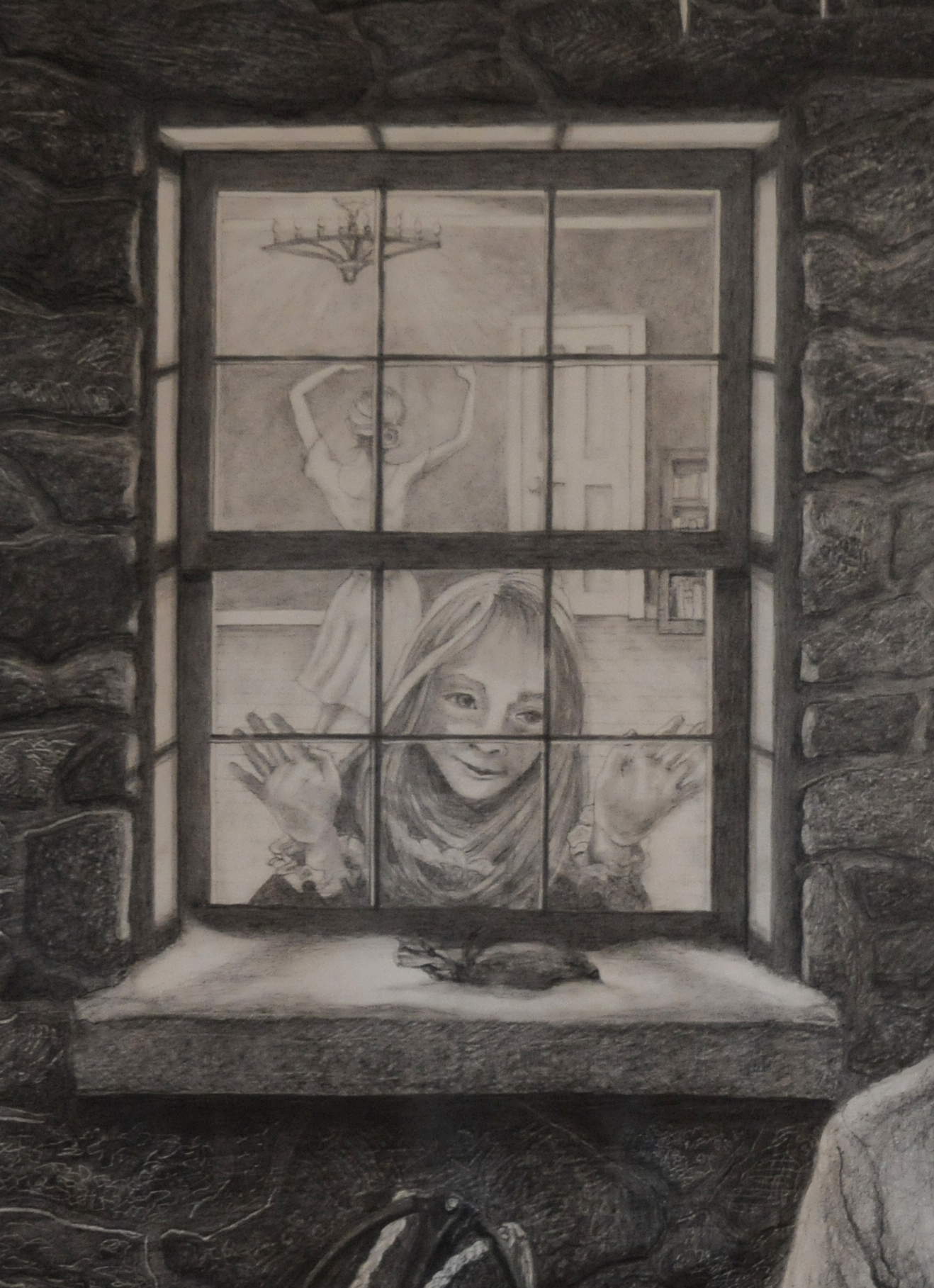
Saint Nicholas of the Dowry, detail, Graphite drawing by Craig Gallaway, copyright 2011. A younger sister looks out the window where Nicholas stands, having left a bag of gold on the windowsill. (In some early accounts, he would have dropped the gold down the chimney, or secretly left it inside the house.) Her older sister dances in the background because she has hope now to marry. My drawing no doubt makes their accommodations look more convenient than they would have been.

Of course, there are ramifications that ring out into our lives from this narrative. For example, we must not make an idol of sex–that is, to give it more power in our lives than it is due–unless we want to become confused about its real purpose. The degradations that result from idolatry are what Paul has in mind in Romans 1:18ff. Also, we should recognize that marriage has several purposes—mutual help, comfort, the procreation of life, and the preservation of chastity (Genesis 1-2, 1 Corinthians 7)—not all of which are focused on sex. If we are to follow our Lord, and live in his Spirit, we must be ready to take up the larger and wider callings that come with being good wives and husbands, as well as good neighbors and members of his bride, the church. Whether in our own personal lives, or in our corporate life together as his people, eros must be governed by agape. [ii]

But what, then, does all of this have to do with an old Bob Dylan song about a prospective bridegroom who is struggling to manage his inner fears, temptations, and doubts as he anticipates the arrival of his wedding day? Will he bolt and run, for fear of failure in the challenges of married life ahead? Or will he “get his mind off of wintertime” and rejoice in the arrival of his bride? Will he listen to the siren voices of romantic wanderlust, and travel to some distant place, or will he “pick up his money and pack up his tent” and look forward to the coming of his bride? What did Jesus do? What is he doing now?

By the third verse of Dylan’s song, we discover what our protagonist has decided to do. He will stay and embrace the covenant of marriage, with all that it entails. He plants his feet on solid ground and calls for the instruments of creativity and provision (perhaps also of procreativity): “Buy me a flute and a gun that shoots, I won’t accept no substitutes.” He intends now to honor his bride, like the Bridegroom is doing. He will fight for her against the enemy’s opposing forces, even if some of his own troops are weary or lagging. [iii] And he will “climb that hill no matter how steep,” so that he may rejoice in the joy set before him.

Thus, with the scriptural narrative ringing in our ears, we know what our Lord, our Bridegroom, has done (in his faithful life, death, and resurrection) and is doing (in the presence and power of his Spirit) in anticipation of the great day when his faithfulness will be fulfilled, when we too shall rise like him from the dead, and there shall be a new heaven and a new earth, and there shall also be a great wedding banquet for the Lamb and for us.

Can you hear, as Deb and I do, his voice echoing beyond our own as we sing about the place of our marriage in his New Creation purpose and care?

Ooo wee, ride me high, tomorrow’s the day my bride will arrive.

O Lord, are we gonna fly, down in that easy chair.


[i] Deb and I aren’t saying that Dylan intended or foresaw all of the biblical allusions that we see reflected in his imagery. But he did become a Christian later in life; and he was always deeply influenced by the Bible, as he once told Paul Stookey.  

[ii] This seems to be the main point of C. S. Lewis’s reflections in The Screwtape Letters, regarding the demonic strategy that uses certain art forms to confuse people about the importance of “being in love,” that is of romantic or erotic passion, as if this were the foundation and purpose of marriage. If the demons win this battle, says Lewis, they also create an excuse for divorce when the level of excitement changes over time. But then, Lewis also portrays, in That Hideous Strength, how the affection of eros can be restored where husband and wife learn to embrace the larger pattern of servant love (agape) and obedience to God. Eros can return as a result of a more caring and wholesome way of life together, not as the goal or purpose of marriage itself.

[iii] Given the culture wars in America today, many of which turn on the definition of sex, gender, and marriage; and given the strong rhetoric of “hate speech” that has been cast against Christians for trying to uphold, much less to recommend the covenant of marriage as a source for sexual healing in our culture; Paul’s discussion of spiritual warfare (Ephesians 6) just after his instructions regarding marriage (Ephesians 5) does not seem at all accidental. In any event, to promote the Christian practice of marriage in our present culture will be a spiritual battle, to be sure; but one that the church must accept with a whole heart.  

SECOND SUNDAY OF ADVENT 2022: The Bleak Midwinter and the Coming of the Servant

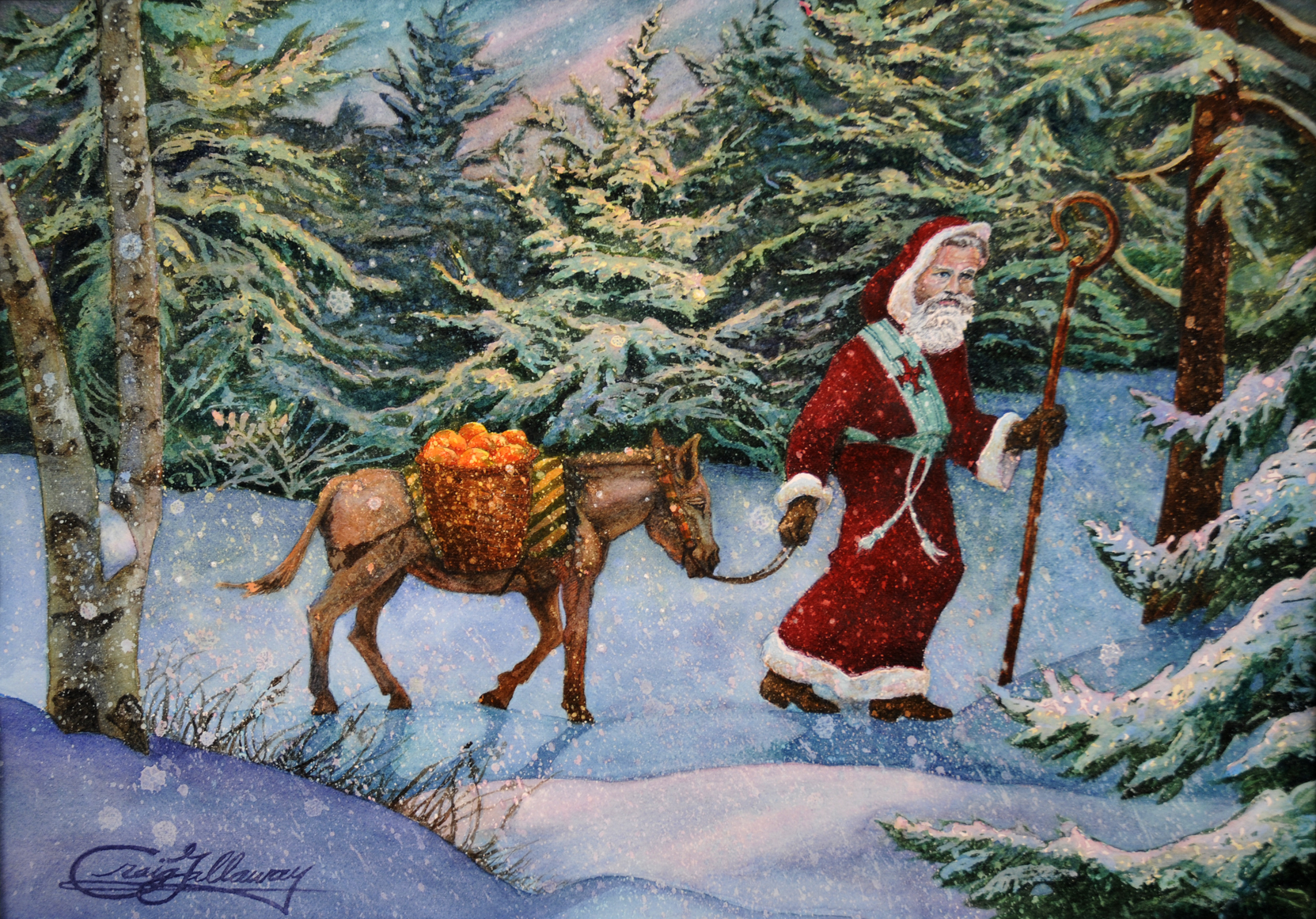
Saint Nicholas of the Oranges, Watercolor by Craig Gallaway, copyright 2009. This painting reminds us that St. Nicholas, following in the Spirit of his Lord, was renowned for his servant ministry to others, including his effort to provide citrus fruit for the sailors of Myra who suffered from scurvy as a result of long Mediterranean voyages.

In the Bleak Midwinter, original poem by Christina Rosetti (1872), melody by Gustav Holst (1906), arrangement for guitar and cello by Craig and Deborah Gallaway (2021) based on the arrangement of the song for James Taylor’s album, At Christmas (2006).

As we prepare for the Christmas holidays during this Advent season, and some of us plan perhaps to take some time off from our regular schedule of life and work, are we also aware how our Lord’s incarnation has redefined the world in which we live and work?

The Apostle Paul addresses this question when he describes Jesus’s incarnation as the complete reversal of the fall of man in the Garden of Eden. When the Son of God came into the world, unlike our first parents, Adam and Eve, he “did not consider equality with God as something to be grasped, but he emptied himself and became a servant, and was born in human likeness” (Philippians 2:6-11). Likewise, later on in his ministry with his disciples, Jesus took a towel and a bowl of water and, in the manner of a common servant, he washed their feet, calling them to be servants as well (John 13:1-20).

And so, the incarnate Word came into the world to reverse the whole history of false pride, jealousy, envy, and vanity that ruled from Adam, to Cain and Abel, to Joseph and his brothers, right down to Jesus’s own disciples, who vied with each other for places of status and prestige, and also of course in our world today. “He was obedient even unto death on the cross,” Paul says, and so “God has exalted him and given him the name that is above every name . . . Lord.” The result is that our lives can be restored in him. Paul says simply, “Have this mind in you which was also in Christ Jesus.”

But what does it look like in practice when our lives are restored in the image and power of the Son of God? Surely part of the answer must be that there is no job too “small” or “menial” for us to do. In a world that is habitually conscious of status and rank, we are called to serve in any and every way that is needed. This has perhaps a special relevance during the holiday season, when it can be all too easy to leave some tasks to others. But Paul calls us “not to think more highly of ourselves than we ought to think,” and to bring our gifts (whatever they may be: shepherd or wise man, doctor or dishwasher) into the service of the Lord; and above all to “offer him our hearts,” as Christina Rosetti’s poem expresses it. These are themes that Paul went over again and again in nearly every one of his letters, suggesting just how important and challenging this kind of restoration can be (Romans 12:5-21; compare 1 Cor. 12; Eph. 4).  

There is much, no doubt, that many of us are still learning about serving in this transforming way of humility as we seek to live truly in the power of the risen Christ and in the fruits of his Spirit. But there is a second, and perhaps even more difficult implication of the incarnation for our lives and work.

Snow Dance, watercolor by Craig Gallaway, copyright 2010. Based on C. S. Lewis’s Narnia Tales, The Silver Chair. The children were held captive in a cave below ground until they escaped into the open air to join the dance of creation with the other free peoples of Narnia.


Our Lord’s servant ministry also sets us free from the need to base our identities on what we do. Because we live our lives in him, we are not defined by which gifts we are given, or what job we have. Our work should never become an idol, vying to control our life when our true Lord would free us for the life of new creation. This is especially significant in this day and time. It is a “bleak midwinter” indeed, when companies in every sector of our economy are requiring their workers to embrace ideas and actions that do not honor the Lord of all creation. But being a servant does not mean agreeing to do whatever anyone asks us to do. We have only one Lord; and he is the one who sets the terms of our service (Romans 12:11).

I realize that I am raising what must be for some of us a very difficult set of problems. Deb and I understand this difficulty personally because, though we are retired now, we had to deal with this at one point in Craig’s career as the editorial director of a major religious publisher. But Paul seems to know and understand this territory as well. For, after describing the gifts in Romans 12:3-6, he goes on to describe in more detail how we are to use them. “Love must be genuine,” he says. “Hate what is evil; stick fast to what is good” (Romans 12:9). Perhaps some of us will have to sever ties with a particular job or company because they demand that we “conform to the pattern of this fallen world.” But Paul also says that we should do good to everyone, even to our enemies, because this sometimes has the effect of winning them over (Romans 12:10-18). Therefore, some of us may be able to stay at a compromised job because the Lord is using us to change things.

And then Paul goes on to call us to use the “ruling authorities” who are given by God to restrain evil (Romans 13:1-5). The court system in America today is often serving as a last bastion of protection for our freedom of religious and moral conscience under God. Above all, Paul keeps his own mind grounded in the presence of the risen Christ (who, he says, is even now “praying for us,” Romans 8:34), and in the power of the Spirit (who “intercedes” for us, 8:26), and on the goal of new creation itself. This is what gives him (and us) a calm confidence, no matter what difficulties arise, that nothing can separate us from the love of God in Jesus Christ (Romans 8:22-39).

And so, as strange as it might seem to a secular observer of “Xmas,” we celebrate Advent and Christmas by rejoicing in the freedom that our Lord brings into our lives to serve him openly, generously, and without pride, envy, or fear of losing our position in a dark and embattled world. For he has broken the power of those fears and passions, first in his own faithful life and death, and then in his resurrection and the sending of his Spirit to work powerfully among us.

Heaven could not hold him, while the earth was stained.

Heaven and earth will shine again, when he comes to reign.[1]

____________________________________________________

  1. Some readers may notice that Deb and I have changed the words to Christina Rosetti’s original second stanza. This is because the original words–“Heaven and earth will flee away when he comes to reign”–do not reflect the full scriptural promise of new creation. Was this a slip by Rosetti into the artistic idealism of the romantic movement of which she was part? Did she not realize that Jesus was born physically, and suffered physically, and was raised physically, in order to be the first born from the dead (Col. 1:18) and to restore the material world? Or was she referring only to the cleansing stage of judgement day, to which both Paul and Peter refer (1 Cor. 3:10-15; 2nd Peter 3:4-13). 

THAT HIDEOUS STRENGTH: Chapter 13

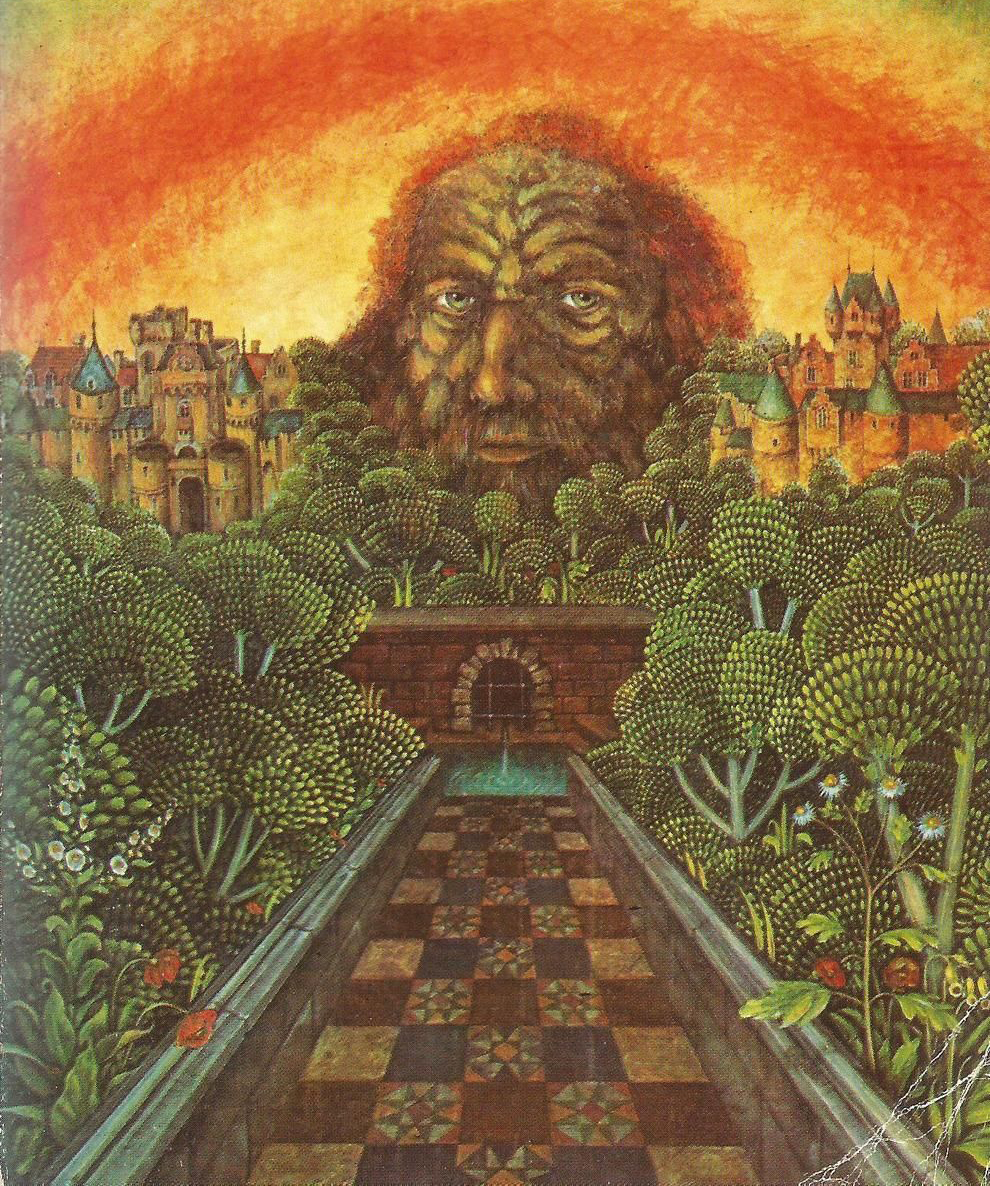
An image of Merlin’s countenance hovering above Merlin’s Well in Bragdon Wood evokes the cultural legacy of King Arthur and Logres for which Merlin himself stands. This image was the cover art for
the 1983 Pan Books edition of THS.

THEY HAVE PULLED DOWN DEEP HEAVEN ON THEIR HEADS 

Overview Question

This is the first of three chapters (along with Chapters 15 and 16) which clarify in one way or another who Merlin is, and what is his special role in the spiritual battle between St. Anne’s and Belbury. Chapter 15 will show how Merlin is equipped by the heavenly powers to undertake the battle. And Chapter 16 will show the destructive results for Belbury of Merlin’s engagement, like live video of an ongoing battle. In this chapter, however, we discover why God has chosen to use Merlin in the first place. Why doesn’t God just send down the heavenly powers themselves to destroy Belbury? Why wait for a man of ancient Logres and work through him?

This aspect of God’s strategy is announced most clearly in Part 5 of the chapter when Ransom explains to Merlin why God will not break the “Seventh Law” by allowing the planetary powers to work directly on the earth. As Ransom explains, “They will work only through man.” And then he goes on to explain why Merlin is precisely the sort of man that God needs for the job. One who is a Christian and committed to the ancient “natural” order of creation, yet also one who is a penitent and knows the ways of sinful man.

There is much in Ransom’s longer explanation that is simply part of Lewis’s fairytale (for example, his travels in space, and Merlin’s travel through time, as we saw in Chapter 9). These do not require a literal or concrete interpretation. But the principle of the Seventh Law, of God’s choosing to work only through a human agent, is another matter. Overview Question

Given what you have already learned about the traditional worldview and its understanding of human nature (for example in the portrayal of Mark’s struggle with his own vanity until he finally calls out to God for help) why would God refuse to produce a spiritual victory by divine fiat rather than requiring the obedient response and practiced discipline of faithful human beings who turn to him for help? Why won’t God break the Seventh Law?


An ancient ruin deep in an old forest evokes the fictional setting in THS of Merlin’s Well and Bragdon Wood. The real history of the ancient Celts and Druids is, however, consistent with the Christian and biblically grounded portrayal that Lewis provides of Merlin, Arthur, and Logres in the 5th and 6th centuries. (See, for example, Peter Berresford Ellis, The Druids.)

Deeper-Dive Questions

1. In Parts 1 and 3, Merlin and Ransom and the people of St. Anne’s must “vet” each other as to their respective bona fides—that is, they must test and prove to each other their allegiance to the right side. They do this by asking and answering questions that ferret out the principles upon which each of them takes their stand. In this way, Merlin discovers that Ransom is in fact the Pendragon, the heir of King Arthur and the realm of Logres; and Ransom discovers that Merlin is a Christian who affirms the gifts and disciplines of faithful marriage as well as the biblical tradition of God’s creation and providence. Similarly, the search party (upon their return and surprise at finding Ransom and Merlin together) are finally convinced of Merlin’s good faith when the Director vouches for his loyalty to the Christian essence of Logres (which Dr. Dimble had long wondered about and hoped for).

In this light, our own question about the bond between Merlin and St. Anne’s must be equally probing: To what group or tradition do these principles (King Arthur, Logres, the Bible, Christianity, faithful marriage, etc.) correspond in the cultural and spiritual battles that we face and fight today, and that Lewis faced and fought in post-war England? What is it that Merlin stands for (along with the people of St. Anne’s) in the battle against the dark spiritual forces of the NICE?

2. Part 2 of Chapter 13 gives us another peek into the troubled lifeworld of those at Belbury who hold the modern worldview. While discussing their strategy for working with the tramp (their false “Merlin”) Wither and Frost are drawn into a set of sniping and threatening remarks toward each other. What is it about the modern worldview (with its conception of the individual, the “freedom” of the individual, and “universal” reason) that seems to provide the perfect seedbed for this kind of combative and divisive social atmosphere?

3. In Part 4, Dr. and Mrs. Dimble discuss the effect of Merlin on the people at St. Anne’s and speculate about how Merlin’s influence will affect the whole course of their battle with the NICE. Dr. Dimble notes Merlin’s ancient and intimate connection with nature in contrast to the modern view of nature as a machine, and even more in antipathy toward Belbury’s desire to change, alter, and work against nature (the anti-nature posture that we have noted before). And then Dimble observes how everything in the cultural and political atmosphere seems to be polarizing, “coming to a point,” as he puts it: “Good is always getting better and bad is always getting worse.” Then Mrs. Dimble sees how this is like the biblical portrayal of judgement when the “wheat is separated from the chaff.” Where in the polarizing events of our own time do you see such a separation between good and evil taking place, and what other biblical grounds can you suggest for advocating this view of our own cultural, political, and spiritual battles, especially right now as the midterm elections pressure everyone to make the “terrible choice” (Mrs. Dimble’s reference to Browning).   

4. In Part 5, Ransom defines for Merlin what will be the necessary tools and methods by which the battle with the dark eldil can be won, but only if Merlin will submit to the part he has to play. At the same time, Ransom also clearly and forcefully rejects certain other tools and methods that Merlin finds more congenial to his tastes and confidence. Thus, Ransom rejects Merlin’s acquaintance with ancient natural magic and remedies because they are no longer “lawful,” and because they are merely earthly in scope. Something more powerful is needed. Also, Ransom rejects the resort to national, global, or ecclesial authorities because they are already tainted with the same evil infection and anyway, they also do not possess the necessary kind of power to defeat the dark powers.

Instead, according to Ransom, what is needed is a human being, a Christian and a penitent, who is willing to be invaded by the powers of heaven in order not only to withstand the evil influences of the dark eldil, but also to draw them out into the light where they will have to face the ultimate consequences of their own choices. What is needed is a person who is willing to have his own heart changed in this way so he can be used by heaven in the wider world to expose and defeat the dark powers, and to help establish under God’s rule the good community of the restored creation. How does this definition of Merlin’s role expand and fill in the principles we have already noted regarding the tradition of Arthur and Logres, the Bible and Christian marriage? Is there a political, spiritual, and cultural tradition in our own time (as well as in Lewis’s time) that embraces these same basic principles and commitments? If so, what is it? And what would it take to recover it today?

THAT HIDEOUS STRENGTH: Chapter 12

A striking image of a large bear reminds me that Mr. Bultitude, though subdued by Dr. Ransom’s Adam-like understanding of the animals (Genesis 1-2) is still an animal by nature. He is not a human being. Nor is he something to be trifled with or presumed upon as the animals are in the vivisection lab at Belbury. (Image from PixelsTalk.net)

WET AND WINDY NIGHT 

Overview Question

This is another whirlwind chapter with numerous sub-plots moving around each other: Jane, Dimble, and Arthur are still out searching for the elusive Merlin. Wither has his own people searching as well, but they are on a false trail. Meanwhile, Frost is trying to train Mark in the ambitions of the NICE but Mark is changing inside and only feigns his full devotion. At the same time, the people back at St. Anne’s have a conversation with MacPhee and Dr. Ransom about the nature of their animals (Mr. Bultitude and the cat) in contrast to the emotions and virtues that shape a human life. And back at Belbury, the leaders are welcoming the tramp (thinking they have captured the real Merlin) while Mark barely escapes another demonic attack of vanity by engaging in a kind of desperate elementary prayer. So much going on; but is there a thread that ties it all together?   

For me, the clue comes with the different images and ideas set forth in this chapter about what it means to be human, especially regarding the role of emotion and virtue in the constitution of a truly human life. On the one hand, we have Frost’s insistence to Mark (echoing closely the first principles of the modern worldview) that the “objectivity” of the NICE requires ridding oneself of all emotional (that is “merely chemical”) attachments that might keep one from pursuing a line of experiment no matter where it leads. And, on the other, we have Ransom’s insistence, in the discussion about Mr. Bultitude, that what makes a human being fully and truly human is precisely the emotional capacities (virtues) for intentional friendship that lead ultimately to Love (charity, agape).

These two opposing visions of the place of emotion and virtue in human life clearly represent the two worldviews (modern and traditional) with which we have been working from the beginning. And they lead to our Overview Question for this week:

What are the two views of emotion and virtue that are expressed by Frost and Ransom, and how does this contrast help to clarify what is at stake in practical terms by choosing to commit one’s mind and heart to one vision or the other?

As you think about this question, it may also be helpful to remember Lewis’s statement (in the Preface of THS) that his modern fairytale has behind it the same point he was trying to make in The Abolition of Man: The modern conception of “objectivity” (which defines poetry and emotion as purely “subjective”) has created “men without chests,” that is, men whose hearts and minds are no longer shaped by the virtues and emotions that arise from the biblical story and worldview. As Lewis also knew, he was affirming the traditional view of the passions (the evil thoughts/demons of pride, vanity, greed, impurity, etc.) which impair human reason and cut us off from a true perception of reality and nature. See also, John MacMurray, Reason and Emotion, and Alasdair MacIntyre, After Virtue, which also examine the importance of emotion and virtue for the formation of human nature, freedom, and reason.

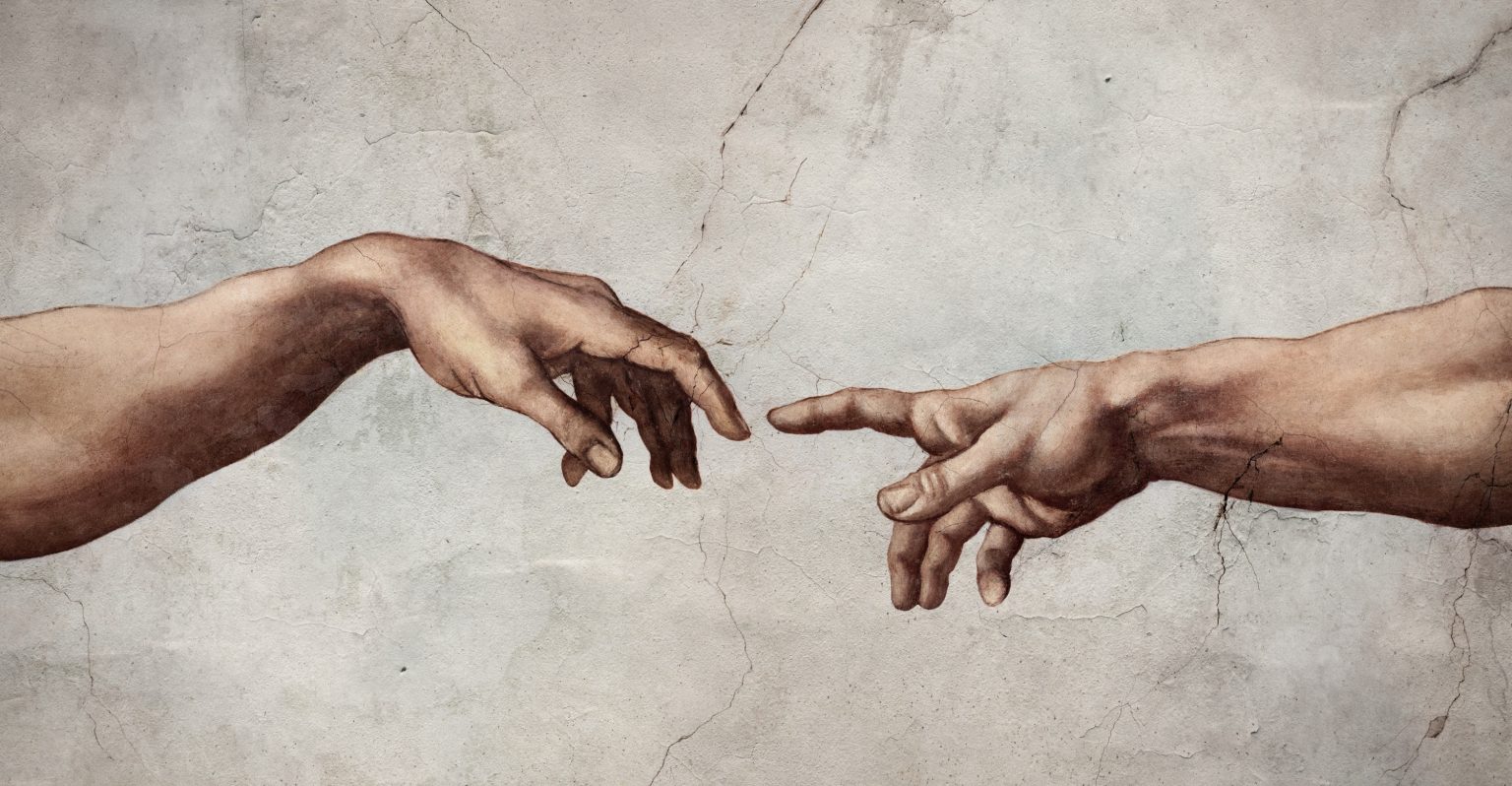
Detail from Michael Angelo’s Sistine Chapel painting of the Creation of Adam. The frescos of the Chapel portray the larger story from Genesis 1-2 of the creation of man, male and female, in God’s image.

DEEPER-DIVE QUESTIONS

1. Frost’s modern view of “objectivity” (stripped of all traditional emotional values) is directly counter to the biblical and classical view which claims that the virtuous life—far from interfering with reason, or objectivity, or the accurate perception of nature—actually connects us to them. Frost’s account of reason and objectivity, note well (and by his own reckoning) readily leads to the most horrific experiments and treatment of other human beings that would formerly (under the traditional worldview) have been considered unthinkable (e.g., genocide). Where in the world of contemporary “politicized” science are we seeing a similar break with the traditional values of religion and virtue combined with an anti-nature” or “anti-reality” agenda?

2. In his conversation with MacPhee about the difference between animals and humans, Dr. Ransom alludes to the biblical and traditional hierarchy of being: mineral, vegetable, animal, human, and angelic. Furthermore, in keeping with his sources (Genesis 1 and classical cosmology, see Lewis’s The Discarded Image) Ransom locates our human calling specifically between the animal and the angelic. Like the animals, we have sensation (the sensitive soul), but like the angels we also have understanding and reason (the rational soul). Thus, according to Ransom, human beings are created and called to embody not only appetites and sensations (like animals) but also intentional virtues such as friendship and charity. To be truly human, then, contrary to Frost’s vision of technocratic man, is precisely to embrace a certain shaping of our emotional life centered in Christ and rejecting the evil passions.  How does this conversation bring out the very different conception of human nature, reason, and emotion in the traditional worldview at St. Anne’s? And how does Mrs. Dimble’s self-discipline to control her own anxieties, earlier in this section, demonstrate the task?    

3. In Part 6, Wither and Frost welcome to Belbury the tramp, whom they suppose to be the real Merlin.  There is a great irony at work here in Lewis’s portrayal of Wither and Frost (the enlightened elite) being strung along by an ordinary and unsophisticated vagrant who is himself driven by little more than his sensate (animal) appetites. But this is, perhaps, part of Lewis’s hidden point. For this downtrodden human being has a kind of natural shrewdness that neither Wither nor Frost can penetrate. For all of their pretense to elite knowledge about the technocratic “man” of the future, they are completely duped by their present quarry. How does the tramp, in this regard, register points for the traditional view of nature and human nature over against the modern?

4. In the 7th and final Part of Chapter 12, Mark goes through a terrible gauntlet of temptation and resistance. He has discovered how evil are the leaders at Belbury, and he wants to escape their clutches. And yet, God help him, he cannot stop himself from feeling pulled again and again by the fallen power of his own vanity, his desire to be someone important in the inner ring of NICE. This terrible juggernaut culminates in Mark’s brief but earnest prayer, “Oh don’t, don’t let me go back into it.” After which, the room is suddenly cleansed and he simply goes to sleep. How does all of this illustrate the role of human emotion and the human will in response to God’s provision to which Ransom has earlier alluded?   

THAT HIDEOUS STRENGTH: Chapter 11

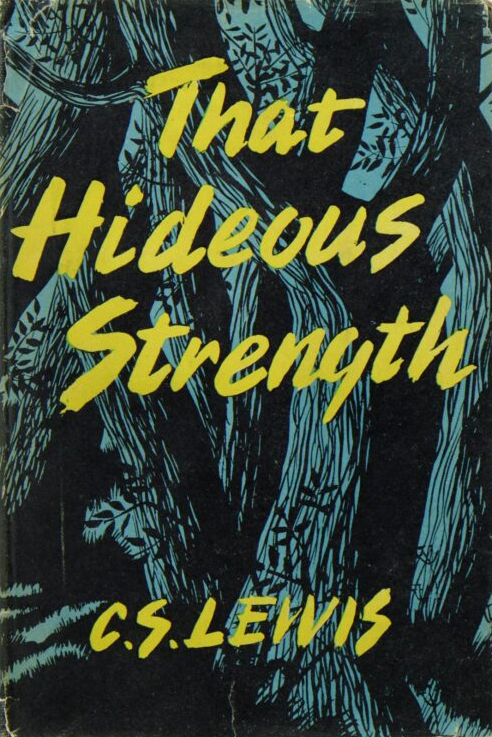
First published in 1945, the original dust cover for That Hideous Strength evokes something of what it feels like to walk into a shadowy forest at night. And that, of course, is what the opening scene of chapter 11 is all about. “I can’t see a thing,” said Jane.

BATTLE BEGUN 

Overview Question

In this chapter, Belbury and St. Anne’s are both seeking to strengthen their sources of strategic knowledge (“military intelligence” one might say) in order to undermine and defeat the other side. Belbury hopes to capture Jane and make use of her clairvoyance to reveal the plans of their as yet unlocated and unidentified enemies. St. Anne’s hopes to find Merlin in case he will be on their side, but also to try to stop him from helping the NICE if that is his inclination. Neither side is omniscient; but each uses very different methods to try to achieve their goals. Overview Question:

Based on what you already know about these two groups of people, as well as what you learn in this chapter (especially Frost’s speech to Wither toward the end of Part 2), how would you characterize the different goals of each group, and how are these goals consistent with the very different methods that each group uses?

The following quotation from Lewis’s The Screwtape Letters (Letter VIII) should also help with considering this question in greater depth. (Screwtape, the senior devil, is speaking to Wormwood, his understudy.)  

“To us a human is primarily food; our aim is the absorption of its will into ours, the increase of our own area of selfhood at its expense. But the obedience which the enemy demands of men is quite a different thing . . . He really does want to fill the universe with a lot of loathsome little replicas of himself . . . not because he has absorbed them but because their wills freely conform to His. We want cattle who can finally become food; He wants servants who can finally become sons.” (emphasis added)


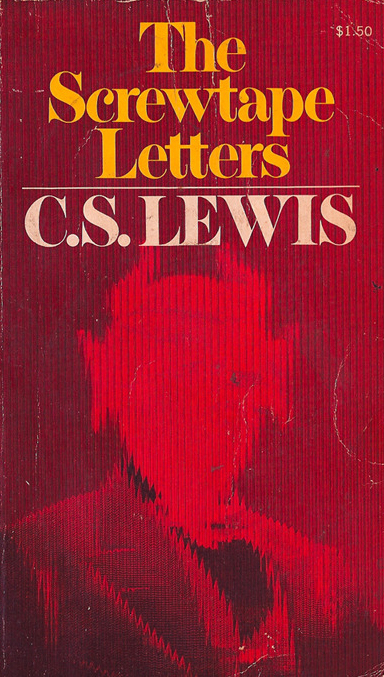
Cover art for the 1961 edition of The Screwtape Letters.

DEEPER-DIVE QUESTIONS

1. As Jane, Dr. Dimble, and Arthur Denniston look for Merlin in the fields and woods at night, each of them begins to realize that, up to now, their ideas and beliefs about Merlin, or King Arthur, or the ancient Druids, or even about the Christian God and religion in the modern world, have often been either theoretical and abstract (Dimble) or shallow and poorly informed (Jane). Now they are about to encounter something in person, and it all looks very different. What parallels can you find in the culture wars of America today among some groups or individuals for this kind of awakening to the deeper reality and seriousness of faith and religion, and to the possibility that one might have to sacrifice something, even to give one’s life, in order truly to serve the good cause of God? Have you yourself felt or experienced this kind of sharpening of religious focus? 

2. Continuing a theme that we saw in Chapter 10, the leaders at Belbury believe they can use coercive techniques to manipulate Mark into doing their will (to bring Jane to Belbury). And yet there are signs of a kind of myopia or blindness built into their worldview, in particular their view of “man” (in this case Mark and others). What signs of this blindness can you detect in the chapter, and why do you think these types of ideological blindness are particularly endemic to the modern worldview?

3. In Part 3, after being arrested, Mark goes through another series of realizations and reactions about himself and Belbury; but he seems unable to sort it all out. As the narrator informs us, Mark is a materialist. He has no absolute reference point for moral judgement; and yet his conscience is still functioning at a level high enough to allow him to realize that he has been a fool to trust the people of NICE (Wither, Feverstone, Curry, Frost). He even has a momentary picture of his own corruption and villainy in the ways he has treated Jane and other friends from the past. According to the narrator, what is missing from Mark’s worldview that might have allowed him to understand his own foolish behavior more fully, more deeply? What is it in his current lifeworld that has blocked him from acquiring these other insights?