
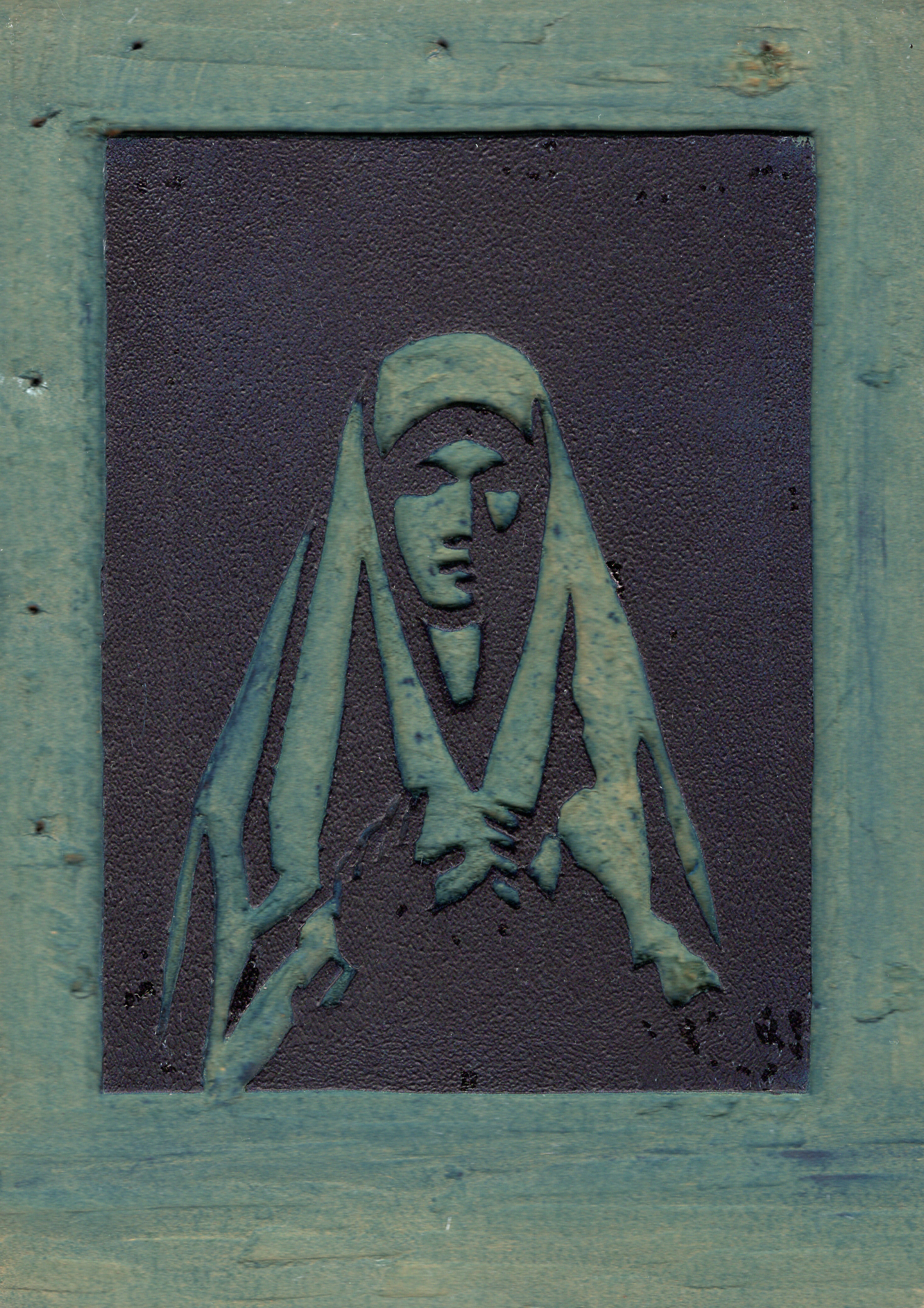
“BE IT UNTO ME, O LORD, ACCORDING TO THY WILL.”
When the angel Gabriel came to Mary to announce that she would give birth to a very special son, Mary already knew and loved the ancient Scriptural story of the covenant and the promise of which he spoke; and thus, though initially startled by his appearing, she came quickly to see why he called her “favored one.” Her son would become the promised King of Israel in the line of David (that is, the Messiah, Christos). And he would fulfill the promise that God made to Abraham (Genesis 12:1-3): “All the nations of the earth shall be blessed in you.” Given this background, we may find it only reasonable, an almost predictable response, that Mary would answer Gabriel, “Be it unto me according to what you have said.” But then we would miss the chain of difficulties, warnings, and dangers that the angel’s message brought into Mary’s life. Her faithfulness was never untested.
For one thing, the angel’s message put Mary’s approaching marriage in jeopardy. How would she explain this unprecedented pregnancy? Matthew’s gospel is candid about Joseph’s initial misgivings. We know that Joseph eventually stood faithfully with Mary as her husband; but she did not have assurances of this when she first embraced Gabriel’s life-altering news. And yet, in this way, Mary also gave her own marriage back to God, the Creator of marriage itself. She did not make an idol of it or bend it into some other shape that would come between her and her Maker. Her marriage would be a place where God’s purpose to restore the world, to restore the faithfulness of marriage as well, would be at home.
Then, after Jesus’s birth at Bethlehem, Mary and Joseph took their son to have him circumcised at the Temple in Jerusalem (Luke 2:22-35). And there, meeting Simeon, Mary faced another fierce test of faith. For though Simeon confirmed Jesus’s identity as the promised King whose reign would bless the whole world; he also warned Mary that her son would be a cause of division and conflict in Israel and that “a sword will pierce your own heart as well.” Yet here again, Mary did not pull back. She did not make an idol of her own or her son’s future safety by grasping at security. How “normal” that sort of family-anxiety would have been. Instead, she offered her life and waited to see how God’s promise would yet unfold. Did she foresee clearly or fully how Jesus would defeat the fear of death and the stubborn idols of anxiety and avarice at the cross, in his resurrection, and with the gift of his Spirit? No, surely not, at least not as yet; but she put her faith in the God whose promise to Abraham was to restore the world, and whose covenant was now focused somehow in this Son to whom she had so recently given birth.
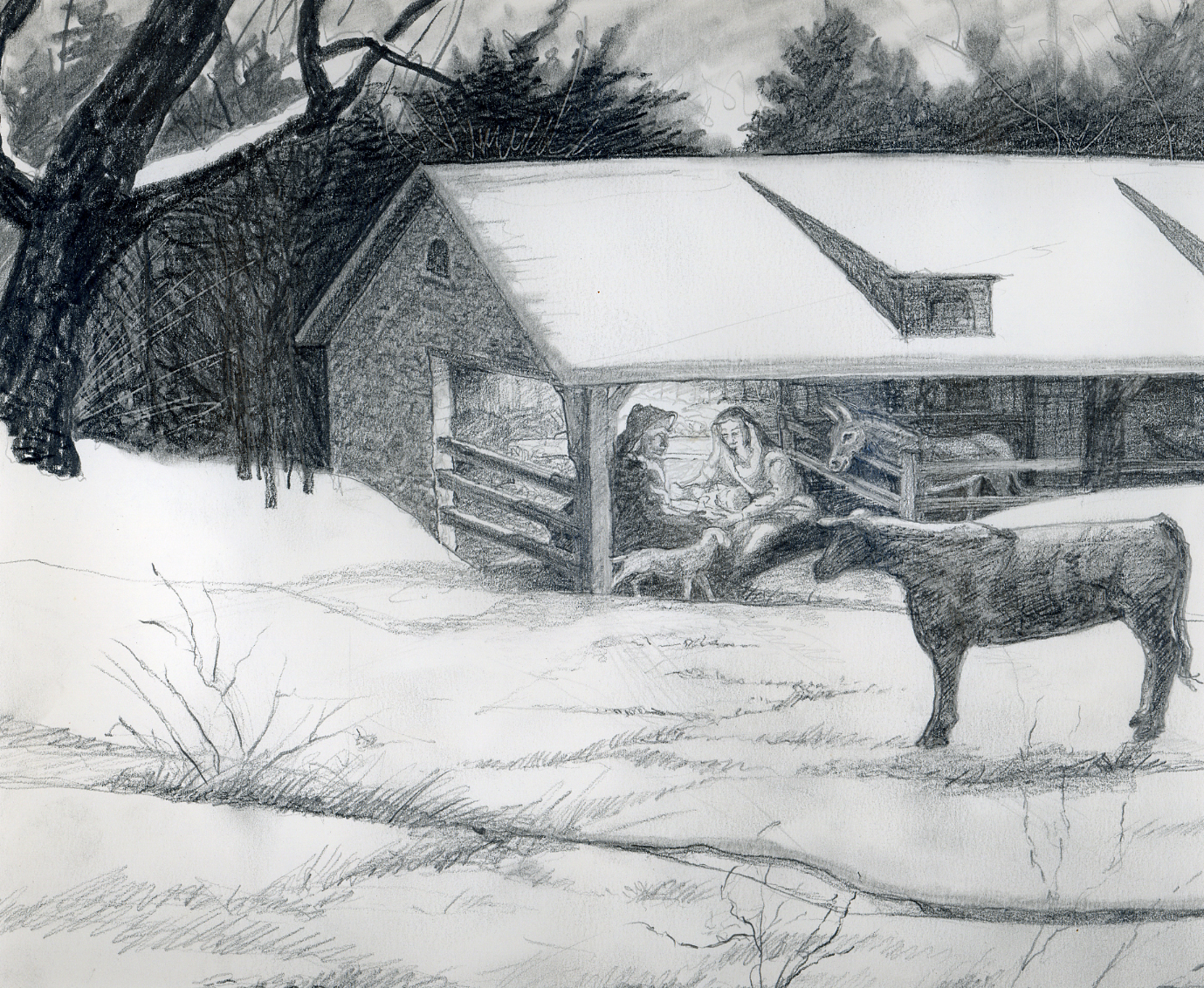
And then there came the Magi, the three wise men from the East, who brought gifts to honor the King whose birth even the stars of heaven bore witness. They came by way of power-hungry Herod. They departed Bethlehem wisely by another route. They were warned in a dream, as Joseph was warned by an angel: Herod, the existing authority of state in Jerusalem, would kill the child if he could find him. And so, Mary and Joseph became a kind of outlaws, running away to Egypt until Herod did his worst and finally died. They were not against the government or the state in principle. They had, after all, come to Bethlehem to participate in the census for the purpose of taxation. But neither would they make an idol of the government. If the government set itself up against the purpose and promise of God, they would not cooperate. They would not obey. Afterall, the government was given to serve God’s purposes, not the other way around.
And so, when Mary responded, “Be it unto me according to what you have said,” she did the most basic thing of all: she placed herself in obedience to the One true God of Israel, the God of Abraham, and David, the Creator of the universe, her Creator. She placed her whole life into God’s hands—her marriage, her hopes for a family, her future security and safety, her social standing and political influence. And though we have an advantage over Mary, at least at that early stage in her life—for we look back on Jesus’s birth from the other side of his faithful life and death, his victorious resurrection, and the sending of his Spirit with power—yet we are also very much like her and Joseph. For we also look forward through the haze of challenging personal, moral, social, and political trials and temptations to the ultimate fulfillment of our Lord’s promise to restore the whole world, and our own lives as well.
Mary no doubt came to know more fully in her life what the apostle Paul would later describe as the general pattern of life for all Christians, what we sometimes too readily soft pedal or skirt around, that we must be prepared to suffer and do battle, and yes to “groan,” as we make our way toward the fulfillment of the new creation. Indeed, Paul describes our calling with great clarity and spirit (Romans 12:1-2): “In view of the mercies of God,” he says, “present your bodies as a living sacrifice . . . that you may prove what is the good, acceptable, and perfect will of God.” Thus, in our own time and place, like Mary, we also can say with growing faith and hope, “Be it unto me, O Lord, according to thy will.”
 Faith and the Arts