FOURTH SUNDAY OF ADVENT 2022, Week 4: You Ain’t Goin’ Nowhere and the Wedding Banquet of the Lamb

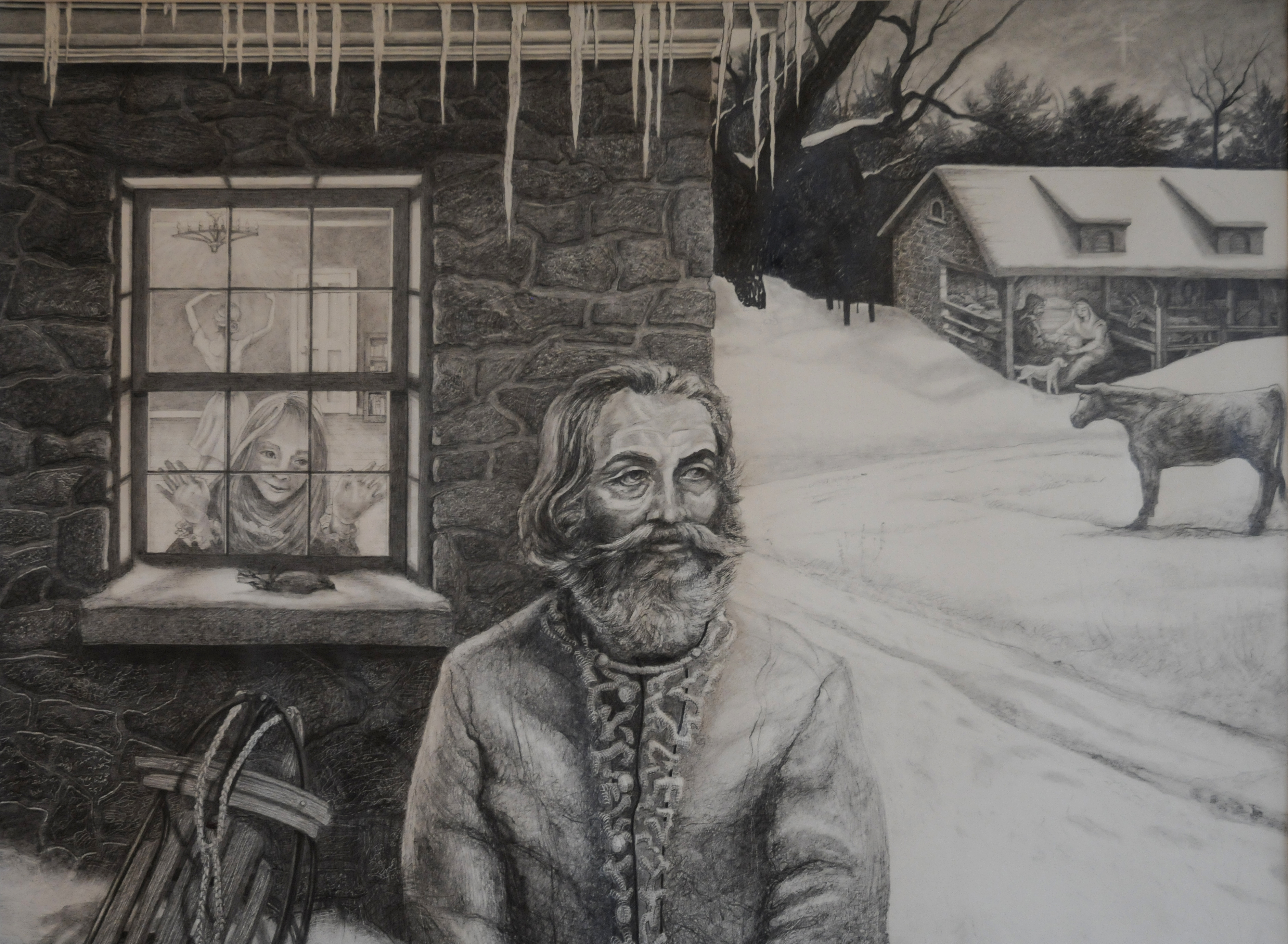
Saint Nicholas of the Dowry, Graphite drawing by Craig Gallaway, copyright 2011. Saint Nicholas is famous for his affirmation of marriage and for his support of young women who could not afford a dowry. In some cases, it seems, he was all that stood between them and a life on the streets.

Some might think it odd for Deb and me to choose an old Bob Dylan song, about the challenges of getting married, to celebrate the birth of our Lord and his purpose to restore the good order of creation. But then, in the Bible, there are few things that need restoration more than God’s good gifts of marriage and sexuality. And there is something in the very structure of Dylan’s song that echoes what the Bible has to say about this—how our incarnate Lord, born at Bethlehem to be both King and Bridegroom, wants to restore the order of marriage in his kingdom. [i]

We learn from the Apostle Paul and others that Jesus is the true bridegroom of his people, the church, and that he has suffered much to make the church his bride (Ephesians5:21-32). The epistle to the Hebrews tells us that, “He was tempted in every way as we are, yet without sin,” and this is why “he is able to sympathize with our weaknesses.” (Hebrews 4:15). Paul tells us that he was “obedient even unto death on a cross . . . and so God has highly exalted him and given him the name that is above every other name, Lord” (Philippians 2:8-11). And Hebrews again speaks of how “He endured the cross for the joy set before him, and then sat down by the throne of God,” (Hebrews 12:2) from whence he now reigns, “until God has put everything in order under his authority” (1 Corinthians 15:20-28).

This is the basic biblical narrative of the incarnate Son of God, from the time of his birth, through his faithful life and death, his resurrection and sending of his Spirit, and on now with his people, the church, toward the time when the great restoration will be fulfilled. And this is the narrative of our lives as well, if we have joined our lives to the living reality of his, by faith. For we are called to live our lives in him, and this means to follow him in the way of faithfulness and, yes, in the way of sacrifice. Paul puts it like this in Ephesians 5.

“Husbands love your wives, as Christ loved the church, and gave himself for it . . . so that it might be holy and without blame” (verses 25-27). “Wives, be subject to your own husbands as to the Lord” (verse 22).

In this way, Paul calls wives to exemplify what every Christian, including husbands and the unmarried, are called to do (cf., Romans 12:1-2). And he calls husbands to imitate the faithfulness of Christ, so that they may encourage and strengthen their wives in the pattern of life (in Christo) to which all people are called, again including the unmarried. We are all called to imitate the greatest Bridegroom of all, in the power of his Spirit, so that our lives may become whole and strong in him.

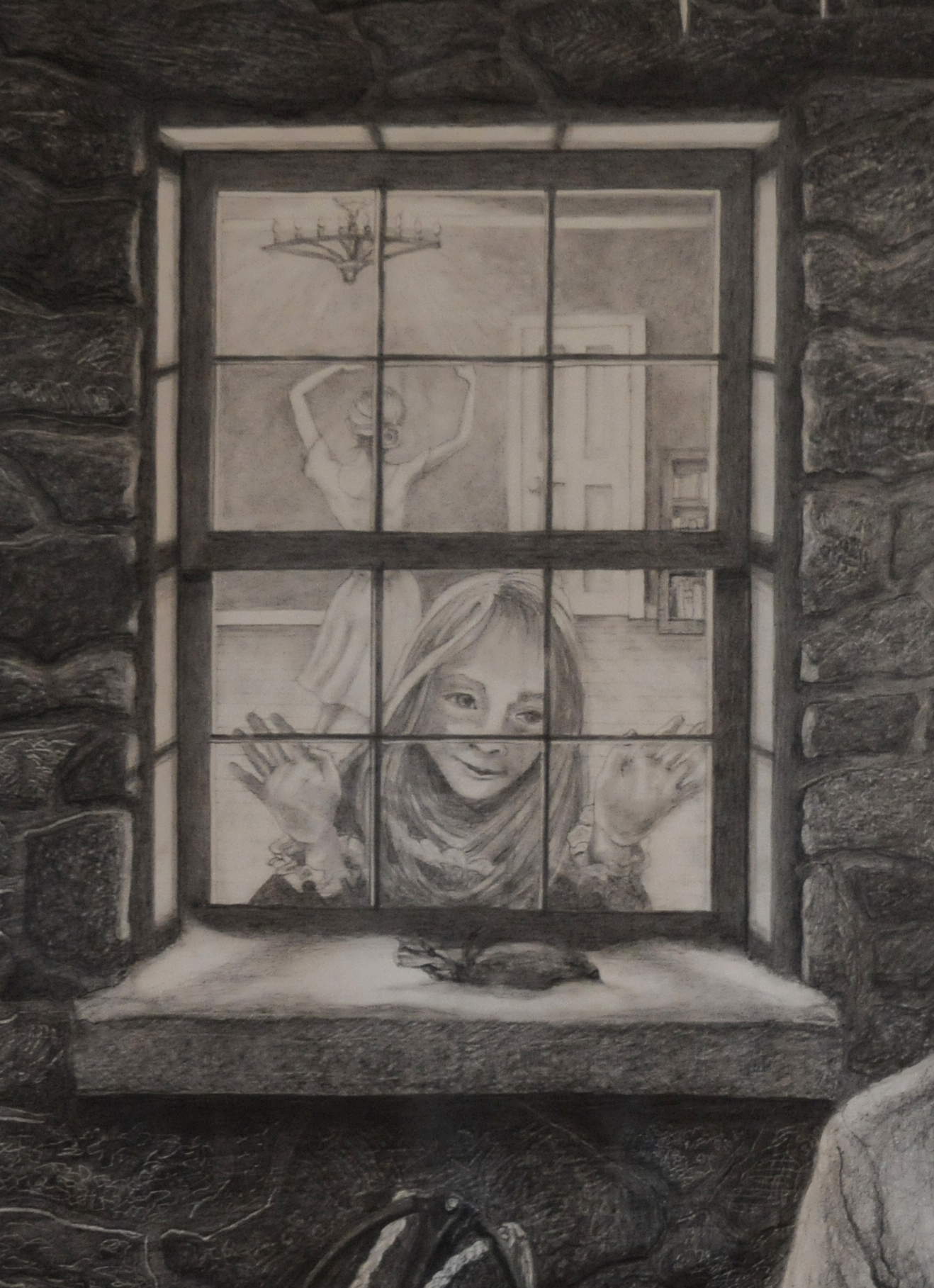
Saint Nicholas of the Dowry, detail, Graphite drawing by Craig Gallaway, copyright 2011. A younger sister looks out the window where Nicholas stands, having left a bag of gold on the windowsill. (In some early accounts, he would have dropped the gold down the chimney, or secretly left it inside the house.) Her older sister dances in the background because she has hope now to marry. My drawing no doubt makes their accommodations look more convenient than they would have been.

Of course, there are ramifications that ring out into our lives from this narrative. For example, we must not make an idol of sex–that is, to give it more power in our lives than it is due–unless we want to become confused about its real purpose. The degradations that result from idolatry are what Paul has in mind in Romans 1:18ff. Also, we should recognize that marriage has several purposes—mutual help, comfort, the procreation of life, and the preservation of chastity (Genesis 1-2, 1 Corinthians 7)—not all of which are focused on sex. If we are to follow our Lord, and live in his Spirit, we must be ready to take up the larger and wider callings that come with being good wives and husbands, as well as good neighbors and members of his bride, the church. Whether in our own personal lives, or in our corporate life together as his people, eros must be governed by agape. [ii]

But what, then, does all of this have to do with an old Bob Dylan song about a prospective bridegroom who is struggling to manage his inner fears, temptations, and doubts as he anticipates the arrival of his wedding day? Will he bolt and run, for fear of failure in the challenges of married life ahead? Or will he “get his mind off of wintertime” and rejoice in the arrival of his bride? Will he listen to the siren voices of romantic wanderlust, and travel to some distant place, or will he “pick up his money and pack up his tent” and look forward to the coming of his bride? What did Jesus do? What is he doing now?

By the third verse of Dylan’s song, we discover what our protagonist has decided to do. He will stay and embrace the covenant of marriage, with all that it entails. He plants his feet on solid ground and calls for the instruments of creativity and provision (perhaps also of procreativity): “Buy me a flute and a gun that shoots, I won’t accept no substitutes.” He intends now to honor his bride, like the Bridegroom is doing. He will fight for her against the enemy’s opposing forces, even if some of his own troops are weary or lagging. [iii] And he will “climb that hill no matter how steep,” so that he may rejoice in the joy set before him.

Thus, with the scriptural narrative ringing in our ears, we know what our Lord, our Bridegroom, has done (in his faithful life, death, and resurrection) and is doing (in the presence and power of his Spirit) in anticipation of the great day when his faithfulness will be fulfilled, when we too shall rise like him from the dead, and there shall be a new heaven and a new earth, and there shall also be a great wedding banquet for the Lamb and for us.

Can you hear, as Deb and I do, his voice echoing beyond our own as we sing about the place of our marriage in his New Creation purpose and care?

Ooo wee, ride me high, tomorrow’s the day my bride will arrive.

O Lord, are we gonna fly, down in that easy chair.


[i] Deb and I aren’t saying that Dylan intended or foresaw all of the biblical allusions that we see reflected in his imagery. But he did become a Christian later in life; and he was always deeply influenced by the Bible, as he once told Paul Stookey.  

[ii] This seems to be the main point of C. S. Lewis’s reflections in The Screwtape Letters, regarding the demonic strategy that uses certain art forms to confuse people about the importance of “being in love,” that is of romantic or erotic passion, as if this were the foundation and purpose of marriage. If the demons win this battle, says Lewis, they also create an excuse for divorce when the level of excitement changes over time. But then, Lewis also portrays, in That Hideous Strength, how the affection of eros can be restored where husband and wife learn to embrace the larger pattern of servant love (agape) and obedience to God. Eros can return as a result of a more caring and wholesome way of life together, not as the goal or purpose of marriage itself.

[iii] Given the culture wars in America today, many of which turn on the definition of sex, gender, and marriage; and given the strong rhetoric of “hate speech” that has been cast against Christians for trying to uphold, much less to recommend the covenant of marriage as a source for sexual healing in our culture; Paul’s discussion of spiritual warfare (Ephesians 6) just after his instructions regarding marriage (Ephesians 5) does not seem at all accidental. In any event, to promote the Christian practice of marriage in our present culture will be a spiritual battle, to be sure; but one that the church must accept with a whole heart.  

THIRD SUNDAY OF ADVENT 2022: Some Children See Him and the Messiah’s Single Family

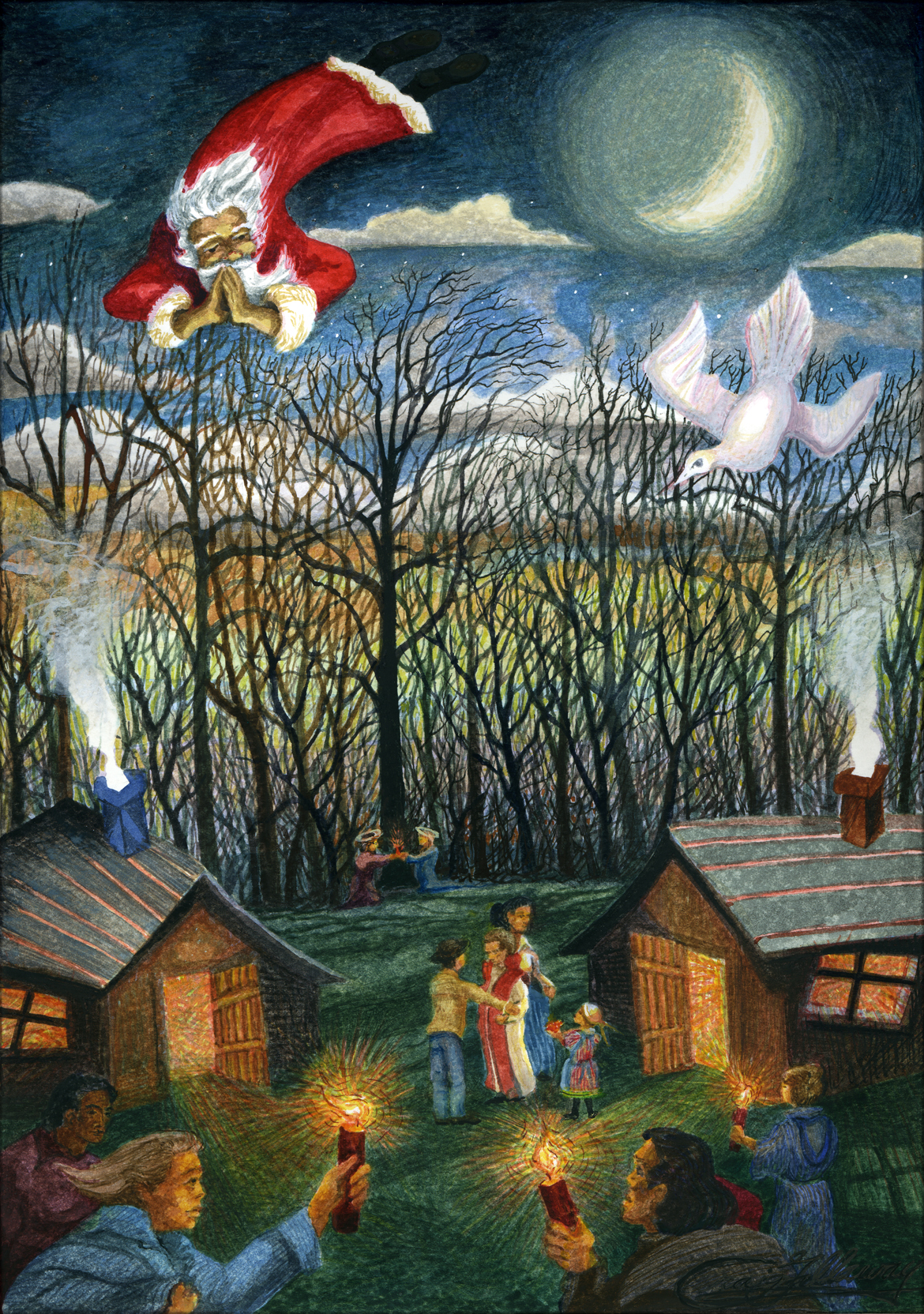
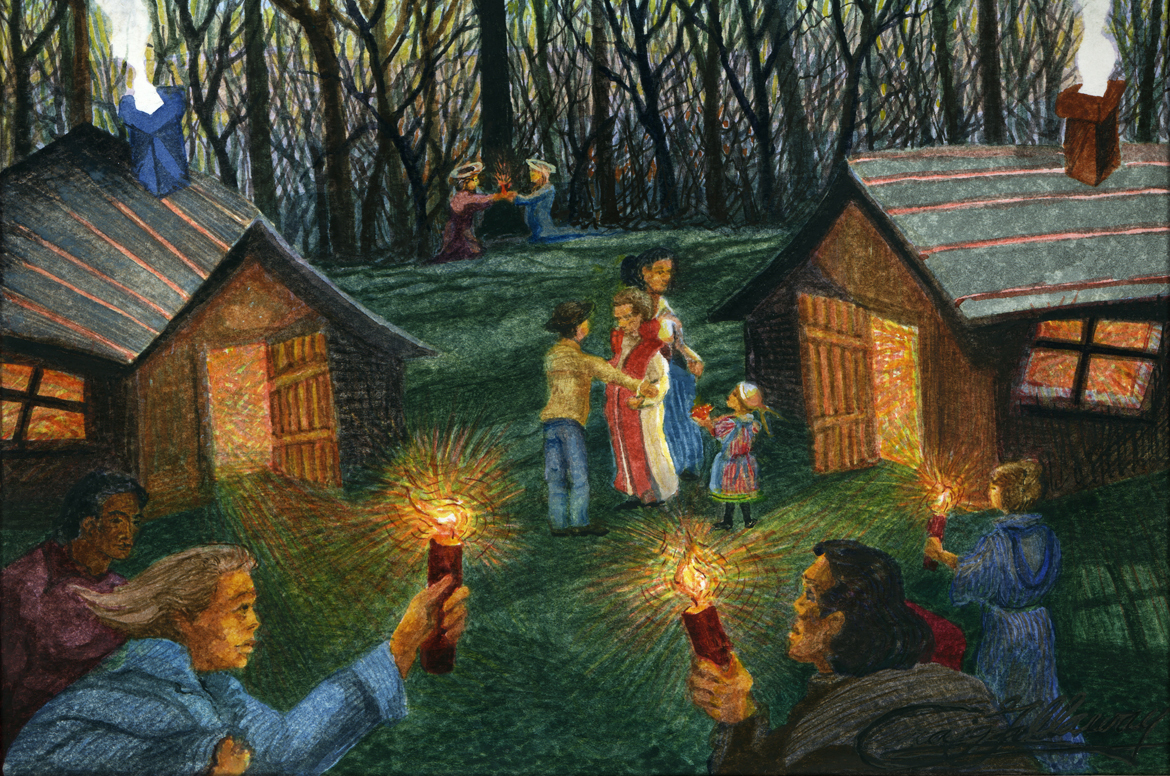
Saint Nicholas Praying for the Recovery of His Tradition, Watercolor by Craig Gallaway, copyright 2008. In this painting we see people of different races and ages seeking the light of Christ which brings them together as one family of faith. This also reflects the Apostle Paul’s vision of the Messiah’s single family.

In his letters to the Christians in Galatia and in Rome, the Apostle Paul explained with great energy why the coming of the Messiah into the world, “to give himself for our sins and to deliver us from the present evil age” (Galatians 1:4), leaves no room for ethnic divisions, jealousy, or strife within the single family of God’s people. Indeed, according to Paul, God’s purpose from the beginning, as in the covenant promise to Abraham, has been to make one family of his people across all national (that is, ethnic) and cultural boundaries. Jesus confirmed this promise in his “great commission” (Matthew 28:18-20). And so, Paul declares with great boldness:

“For you are all children of God, through faith, in the Messiah, Jesus. You see, every one of you who has been baptized into the Messiah has put on the Messiah. There is no longer Jew or Greek; there is no longer slave or free; there is no ‘male and female’; you are all one in the Messiah, Jesus. And if you belong to the Messiah, you are Abraham’s family. You stand to inherit the promise.” (Galatians 3:26-28)  

This was radical stuff in the strictly stratified culture of ancient Rome. It is radical stuff today. The church so aligned with its Lord (then and now), like Jesus at the beginning of his ministry, rejects Satan’s temptation to seek power by exploiting the nations (the ethne, Matthew 4:8-11). And like a city set on a hill, the church thereby demonstrates the power of his resurrection, the beginning of the new creation, his victory at the cross over the fallen powers, including the power of race itself where this has become disordered and abused. But what then does it look like as we live this life of new creation in our risen Lord and in his Spirit–where he is putting everything back in order, where there is neither Jew nor Greek, where race itself literally does not divide us?  

In our current culture wars in America today, there are primarily two opinions about how to deal with issues of race and ethnicity. In order to avoid using merely partisan tags and labels, we may think of these in terms of two major leaders who speak for these two views, Robert Woodson and Ibram Kendi.[i] In Kendi’s view, using the ideas of Critical Race Theory (CRT), the topic of race itself must be the primary focus for improving race relations. We must, therefore, divide people into groups according to their skin color, and judge them as oppressors (if white) or as victims (if black or, perhaps, people of color). No room here for differences among individuals based on traits of character, moral choice, or personal behavior. Then, we should proceed by creating government programs that favor the black victims and restrict or penalize the white oppressors.

In other words, according to Kendi’s view, we must follow a strategy that is exactly opposite of Paul’s view, as well as being opposed to the practices of Martin Luther King, Jr., who called Americans to judge one another “not by the color of their skin, but by the content of their character.” Kendi, by contrast, regards the principle of “colorblindness” itself as a pillar of racism because it does not force the collective pre-judgement (what I would call the racial profiling!) demanded by CRT and the concept of “systemic racism.”

From the other side, Robert Woodson warns America that Kendi’s approach only creates division, envy, animosity, victim mentality, and lust for power. Indeed, Woodson regards CRT as a form of racism more insidious than the old-fashioned type of the KKK which was obvious on the face of it. Moreover, by focusing on race as an end in itself (as the CRT, DEI, ESG, and other government and corporate programs are now doing), we only make matters worse for the very people we say we are trying to help. The “race hustle,” as Woodson calls it, has a terrible history of failure. In the fifty years or so since the welfare state was created by LBJ’s “Great Society” programs, some 42 trillion dollars have been spent. Seventy percent of this went to operating costs for the government’s own overhead, not to recipients. And the inner cities have only gotten worse in every area of basic measurement (single-parent families, illegitimate birth rates [now 70%, up from 20% in the mid 1960s], educational outcomes, low income, neighborhood blight, violence, etc.).

Saint Nicholas Praying for the Recovery of His Tradition (Detail), watercolor by Craig Gallaway, copyright 2008. The title of this painting refers to the tradition (the “handing on”) of St. Nicholas. But Nicholas himself stood, as he knew, in the tradition of Jesus, born to Mary and Joseph, who kneel together in the background. And all of this reminds us that our Lord has chosen to mediate his new creation purpose through the ministry and participation of his pilgrim people, of which we too are a part.

By contrast, says Woodson, we should follow the guidance of Scripture, and focus instead on three basic things: 1. the grace of God extended to all people, all of whom are sinful, 2. the gifts and purpose that God has for every individual person, and 3. the goal of unity in a colorblind congregation, community, and society. Thus, Woodson champions leaders of every color, especially in the black community, who have become mentors for the people in their own neighborhoods. Such local, grass roots leaders demonstrate how to be responsible for one’s own life, and to succeed with discipline and dignity, even when there are still others around (including the CRT group and the white supremacists, strange bedfellows!) who insist on pre-judging people by the color of their skin. He calls these mentoring exemplars “Josephs,” for the role they play in leading the whole country toward healing, wholeness, and “a more perfect union.” As a result, the Woodson Center, in contrast to the welfare state, has a long history of major and sometimes miraculous success participating in the transformation of individuals, neighborhoods, and communities.[ii]

The difference between these two visions could not be more pronounced.[iii] One is highly idealistic, self-righteous, and brooks no dissent from its agenda, requiring a kind of “group think” from everyone, and ready to cancel or censor those who don’t toe the line. The other is realistic, recognizing that people are not perfect, that we are in fact sinful; but that we make progress by taking measured steps grounded in faith and moral tradition as we make our way toward “a more perfect union.” And only one of these visions is consistent with Paul’s vision of how the incarnate, crucified, and risen King, Jesus the Messiah, is restoring his people, even now, by the power of his Spirit, putting everything back into the proper order of creation, and building the new creation that is yet to be fulfilled.

The song that Deb and I are sharing this week, Some Children See Him, also follows Paul’s vision of the Messiah’s single family–making our way together in him on the road of new creation. Each verse of the song portrays children who imagine the baby Jesus as a member of their own ethnic group (though of course, historically, Jesus was not a member of any of the groups mentioned). Each verse shows, moreover, how our Lord’s life, his love, and his power, nonetheless, reach children (and people) in every group. And then, still ringing with Paul’s vision, the emphasis on groups stops, and we stand individually before Christ himself. In the light of his holy Light, we affirm our ethnic and racial heritages, to be sure; but we do not let them become an idol, separating us from him or from each other. Rather, we hear his own invitation through the music of jazz musician, Alfred Burt, and the words of Wihla Hutson:   

O lay aside each earthly thing.

And with thy heart as offering,

Come worship thou the infant King.

Tis love that’s born tonight.[iv] 


[i] Robert Woodson is a veteran of the Civil Rights Movement, who pulled away from that movement when he saw it turning into what he came to call the “race hustle” of the welfare state. He saw black and white elites growing wealthy by creating expensive programs that signaled their own virtue but did little to change conditions for the people they were supposed to help. In this assessment, Woodson is the protégé of Thomas Sowell. For further reading, see Robert Woodson, The Triumphs of Joseph: How Todays Community Healers Are Reviving Our Streets and Neighborhoods. Ibram Kendi is one of the more prominent academic teachers of contemporary neo-Marxist ideas about race, based on the concept of “systemic racism” and the methods of Critical Race Theory. For further reading, see Ibram Kendi, How to Be an Antiracist, and Stamped: Racism, Antiracism, and You.

[ii] Woodson’s vision, following Paul and the Bible, does not ignore or demean our different ethnic heritages—the things that make us ethnically and culturally different from each other: for example, food, fashion, music, and even many of the elements that shape the way we worship God. But neither does he see why different groups should be forced by an academic or a government program to adopt the same cultural style, customs, congregation, or neighborhood. Rather, Woodson affirms the approach of Paul in Romans 14. We should leave room for our cultural differences (Paul’s word is adiaphora, that is, non-essentials). We should in fact honor these in our own and in each other’s lives. But we don’t have to force everyone into a single style. Thus, we may be different in our ethnic heritages without shame or guilt, and also united in our love for the living God who knows each of us from our mother’s womb and has a unique plan for each of us in his new creation.

[iii] The mention of two visions invites a further reference to the work of Thomas Sowell. Sowell has done as much as anyone on the planet to document with hard empirical evidence the ideas and actual results of the two visions we are examining. See Thomas Sowell, A Conflict of Visions: Ideological Origins of Political Struggles, and The Vision of the Anointed: Self-Congratulation as a Basis for Public Policy.

[iv] I take Hutson’s reference to “earthly things” here to mean precisely the ethnic and racial differences (adiaphora) that distinguish us culturally from one another in comparison to the unity that we have in Christ our Lord as fellow sinners made alive in the Spirit and making our way together with the single family of God toward the fulfillment of the new creation.

THAT HIDEOUS STRENGTH: Chapter 13

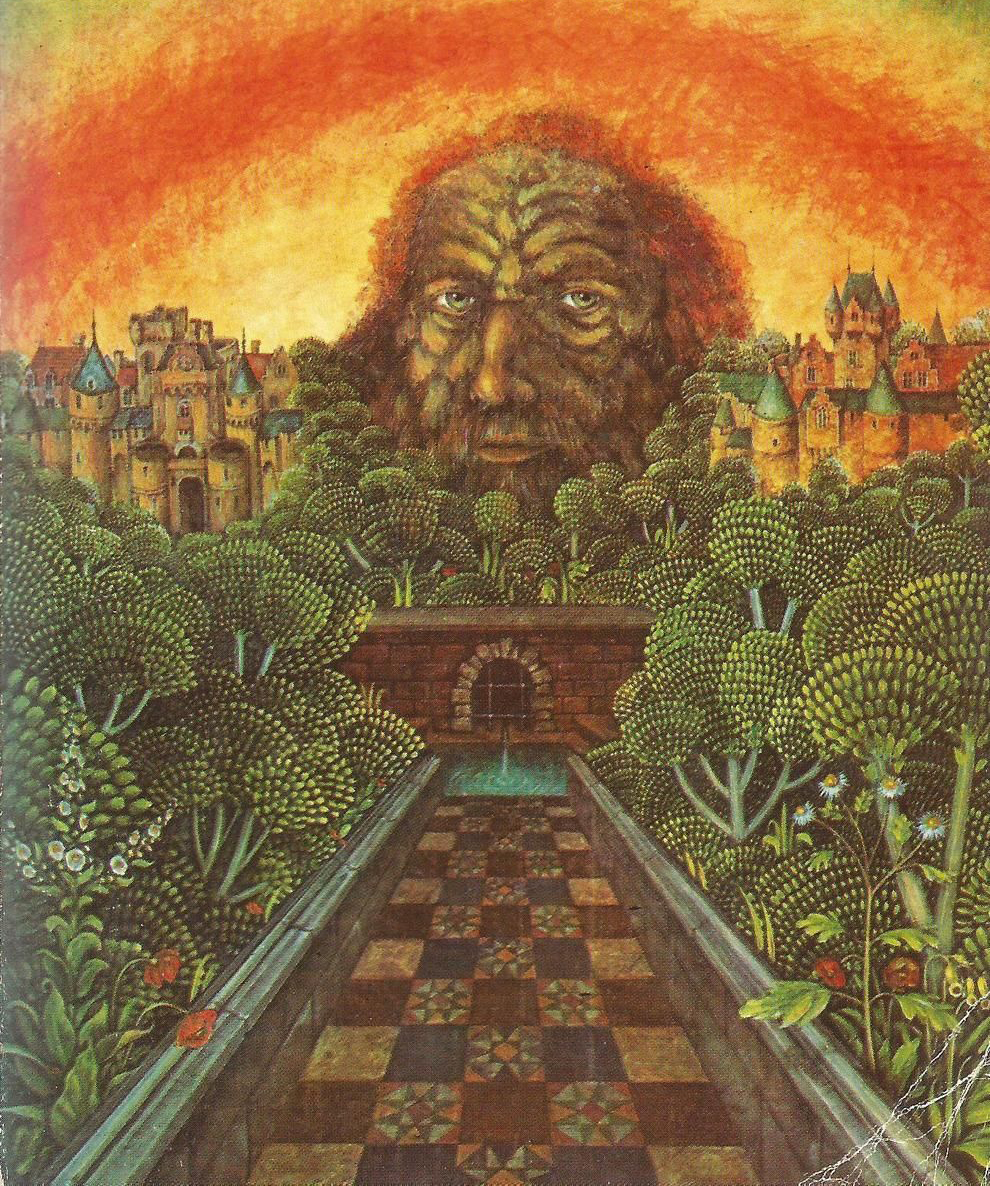
An image of Merlin’s countenance hovering above Merlin’s Well in Bragdon Wood evokes the cultural legacy of King Arthur and Logres for which Merlin himself stands. This image was the cover art for
the 1983 Pan Books edition of THS.

THEY HAVE PULLED DOWN DEEP HEAVEN ON THEIR HEADS 

Overview Question

This is the first of three chapters (along with Chapters 15 and 16) which clarify in one way or another who Merlin is, and what is his special role in the spiritual battle between St. Anne’s and Belbury. Chapter 15 will show how Merlin is equipped by the heavenly powers to undertake the battle. And Chapter 16 will show the destructive results for Belbury of Merlin’s engagement, like live video of an ongoing battle. In this chapter, however, we discover why God has chosen to use Merlin in the first place. Why doesn’t God just send down the heavenly powers themselves to destroy Belbury? Why wait for a man of ancient Logres and work through him?

This aspect of God’s strategy is announced most clearly in Part 5 of the chapter when Ransom explains to Merlin why God will not break the “Seventh Law” by allowing the planetary powers to work directly on the earth. As Ransom explains, “They will work only through man.” And then he goes on to explain why Merlin is precisely the sort of man that God needs for the job. One who is a Christian and committed to the ancient “natural” order of creation, yet also one who is a penitent and knows the ways of sinful man.

There is much in Ransom’s longer explanation that is simply part of Lewis’s fairytale (for example, his travels in space, and Merlin’s travel through time, as we saw in Chapter 9). These do not require a literal or concrete interpretation. But the principle of the Seventh Law, of God’s choosing to work only through a human agent, is another matter. Overview Question

Given what you have already learned about the traditional worldview and its understanding of human nature (for example in the portrayal of Mark’s struggle with his own vanity until he finally calls out to God for help) why would God refuse to produce a spiritual victory by divine fiat rather than requiring the obedient response and practiced discipline of faithful human beings who turn to him for help? Why won’t God break the Seventh Law?


An ancient ruin deep in an old forest evokes the fictional setting in THS of Merlin’s Well and Bragdon Wood. The real history of the ancient Celts and Druids is, however, consistent with the Christian and biblically grounded portrayal that Lewis provides of Merlin, Arthur, and Logres in the 5th and 6th centuries. (See, for example, Peter Berresford Ellis, The Druids.)

Deeper-Dive Questions

1. In Parts 1 and 3, Merlin and Ransom and the people of St. Anne’s must “vet” each other as to their respective bona fides—that is, they must test and prove to each other their allegiance to the right side. They do this by asking and answering questions that ferret out the principles upon which each of them takes their stand. In this way, Merlin discovers that Ransom is in fact the Pendragon, the heir of King Arthur and the realm of Logres; and Ransom discovers that Merlin is a Christian who affirms the gifts and disciplines of faithful marriage as well as the biblical tradition of God’s creation and providence. Similarly, the search party (upon their return and surprise at finding Ransom and Merlin together) are finally convinced of Merlin’s good faith when the Director vouches for his loyalty to the Christian essence of Logres (which Dr. Dimble had long wondered about and hoped for).

In this light, our own question about the bond between Merlin and St. Anne’s must be equally probing: To what group or tradition do these principles (King Arthur, Logres, the Bible, Christianity, faithful marriage, etc.) correspond in the cultural and spiritual battles that we face and fight today, and that Lewis faced and fought in post-war England? What is it that Merlin stands for (along with the people of St. Anne’s) in the battle against the dark spiritual forces of the NICE?

2. Part 2 of Chapter 13 gives us another peek into the troubled lifeworld of those at Belbury who hold the modern worldview. While discussing their strategy for working with the tramp (their false “Merlin”) Wither and Frost are drawn into a set of sniping and threatening remarks toward each other. What is it about the modern worldview (with its conception of the individual, the “freedom” of the individual, and “universal” reason) that seems to provide the perfect seedbed for this kind of combative and divisive social atmosphere?

3. In Part 4, Dr. and Mrs. Dimble discuss the effect of Merlin on the people at St. Anne’s and speculate about how Merlin’s influence will affect the whole course of their battle with the NICE. Dr. Dimble notes Merlin’s ancient and intimate connection with nature in contrast to the modern view of nature as a machine, and even more in antipathy toward Belbury’s desire to change, alter, and work against nature (the anti-nature posture that we have noted before). And then Dimble observes how everything in the cultural and political atmosphere seems to be polarizing, “coming to a point,” as he puts it: “Good is always getting better and bad is always getting worse.” Then Mrs. Dimble sees how this is like the biblical portrayal of judgement when the “wheat is separated from the chaff.” Where in the polarizing events of our own time do you see such a separation between good and evil taking place, and what other biblical grounds can you suggest for advocating this view of our own cultural, political, and spiritual battles, especially right now as the midterm elections pressure everyone to make the “terrible choice” (Mrs. Dimble’s reference to Browning).   

4. In Part 5, Ransom defines for Merlin what will be the necessary tools and methods by which the battle with the dark eldil can be won, but only if Merlin will submit to the part he has to play. At the same time, Ransom also clearly and forcefully rejects certain other tools and methods that Merlin finds more congenial to his tastes and confidence. Thus, Ransom rejects Merlin’s acquaintance with ancient natural magic and remedies because they are no longer “lawful,” and because they are merely earthly in scope. Something more powerful is needed. Also, Ransom rejects the resort to national, global, or ecclesial authorities because they are already tainted with the same evil infection and anyway, they also do not possess the necessary kind of power to defeat the dark powers.

Instead, according to Ransom, what is needed is a human being, a Christian and a penitent, who is willing to be invaded by the powers of heaven in order not only to withstand the evil influences of the dark eldil, but also to draw them out into the light where they will have to face the ultimate consequences of their own choices. What is needed is a person who is willing to have his own heart changed in this way so he can be used by heaven in the wider world to expose and defeat the dark powers, and to help establish under God’s rule the good community of the restored creation. How does this definition of Merlin’s role expand and fill in the principles we have already noted regarding the tradition of Arthur and Logres, the Bible and Christian marriage? Is there a political, spiritual, and cultural tradition in our own time (as well as in Lewis’s time) that embraces these same basic principles and commitments? If so, what is it? And what would it take to recover it today?

THAT HIDEOUS STRENGTH: Chapter 12

A striking image of a large bear reminds me that Mr. Bultitude, though subdued by Dr. Ransom’s Adam-like understanding of the animals (Genesis 1-2) is still an animal by nature. He is not a human being. Nor is he something to be trifled with or presumed upon as the animals are in the vivisection lab at Belbury. (Image from PixelsTalk.net)

WET AND WINDY NIGHT 

Overview Question

This is another whirlwind chapter with numerous sub-plots moving around each other: Jane, Dimble, and Arthur are still out searching for the elusive Merlin. Wither has his own people searching as well, but they are on a false trail. Meanwhile, Frost is trying to train Mark in the ambitions of the NICE but Mark is changing inside and only feigns his full devotion. At the same time, the people back at St. Anne’s have a conversation with MacPhee and Dr. Ransom about the nature of their animals (Mr. Bultitude and the cat) in contrast to the emotions and virtues that shape a human life. And back at Belbury, the leaders are welcoming the tramp (thinking they have captured the real Merlin) while Mark barely escapes another demonic attack of vanity by engaging in a kind of desperate elementary prayer. So much going on; but is there a thread that ties it all together?   

For me, the clue comes with the different images and ideas set forth in this chapter about what it means to be human, especially regarding the role of emotion and virtue in the constitution of a truly human life. On the one hand, we have Frost’s insistence to Mark (echoing closely the first principles of the modern worldview) that the “objectivity” of the NICE requires ridding oneself of all emotional (that is “merely chemical”) attachments that might keep one from pursuing a line of experiment no matter where it leads. And, on the other, we have Ransom’s insistence, in the discussion about Mr. Bultitude, that what makes a human being fully and truly human is precisely the emotional capacities (virtues) for intentional friendship that lead ultimately to Love (charity, agape).

These two opposing visions of the place of emotion and virtue in human life clearly represent the two worldviews (modern and traditional) with which we have been working from the beginning. And they lead to our Overview Question for this week:

What are the two views of emotion and virtue that are expressed by Frost and Ransom, and how does this contrast help to clarify what is at stake in practical terms by choosing to commit one’s mind and heart to one vision or the other?

As you think about this question, it may also be helpful to remember Lewis’s statement (in the Preface of THS) that his modern fairytale has behind it the same point he was trying to make in The Abolition of Man: The modern conception of “objectivity” (which defines poetry and emotion as purely “subjective”) has created “men without chests,” that is, men whose hearts and minds are no longer shaped by the virtues and emotions that arise from the biblical story and worldview. As Lewis also knew, he was affirming the traditional view of the passions (the evil thoughts/demons of pride, vanity, greed, impurity, etc.) which impair human reason and cut us off from a true perception of reality and nature. See also, John MacMurray, Reason and Emotion, and Alasdair MacIntyre, After Virtue, which also examine the importance of emotion and virtue for the formation of human nature, freedom, and reason.

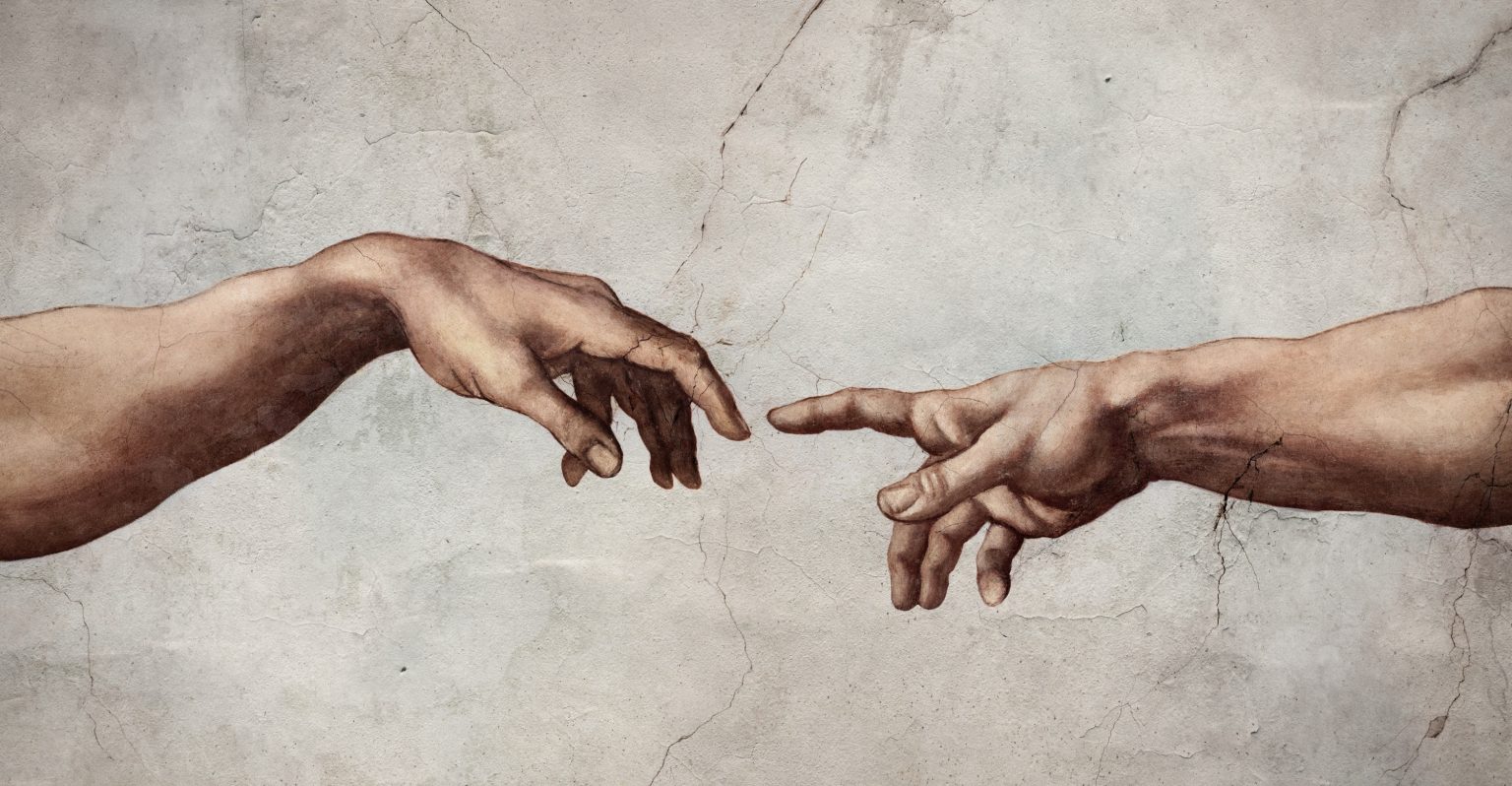
Detail from Michael Angelo’s Sistine Chapel painting of the Creation of Adam. The frescos of the Chapel portray the larger story from Genesis 1-2 of the creation of man, male and female, in God’s image.

DEEPER-DIVE QUESTIONS

1. Frost’s modern view of “objectivity” (stripped of all traditional emotional values) is directly counter to the biblical and classical view which claims that the virtuous life—far from interfering with reason, or objectivity, or the accurate perception of nature—actually connects us to them. Frost’s account of reason and objectivity, note well (and by his own reckoning) readily leads to the most horrific experiments and treatment of other human beings that would formerly (under the traditional worldview) have been considered unthinkable (e.g., genocide). Where in the world of contemporary “politicized” science are we seeing a similar break with the traditional values of religion and virtue combined with an anti-nature” or “anti-reality” agenda?

2. In his conversation with MacPhee about the difference between animals and humans, Dr. Ransom alludes to the biblical and traditional hierarchy of being: mineral, vegetable, animal, human, and angelic. Furthermore, in keeping with his sources (Genesis 1 and classical cosmology, see Lewis’s The Discarded Image) Ransom locates our human calling specifically between the animal and the angelic. Like the animals, we have sensation (the sensitive soul), but like the angels we also have understanding and reason (the rational soul). Thus, according to Ransom, human beings are created and called to embody not only appetites and sensations (like animals) but also intentional virtues such as friendship and charity. To be truly human, then, contrary to Frost’s vision of technocratic man, is precisely to embrace a certain shaping of our emotional life centered in Christ and rejecting the evil passions.  How does this conversation bring out the very different conception of human nature, reason, and emotion in the traditional worldview at St. Anne’s? And how does Mrs. Dimble’s self-discipline to control her own anxieties, earlier in this section, demonstrate the task?    

3. In Part 6, Wither and Frost welcome to Belbury the tramp, whom they suppose to be the real Merlin.  There is a great irony at work here in Lewis’s portrayal of Wither and Frost (the enlightened elite) being strung along by an ordinary and unsophisticated vagrant who is himself driven by little more than his sensate (animal) appetites. But this is, perhaps, part of Lewis’s hidden point. For this downtrodden human being has a kind of natural shrewdness that neither Wither nor Frost can penetrate. For all of their pretense to elite knowledge about the technocratic “man” of the future, they are completely duped by their present quarry. How does the tramp, in this regard, register points for the traditional view of nature and human nature over against the modern?

4. In the 7th and final Part of Chapter 12, Mark goes through a terrible gauntlet of temptation and resistance. He has discovered how evil are the leaders at Belbury, and he wants to escape their clutches. And yet, God help him, he cannot stop himself from feeling pulled again and again by the fallen power of his own vanity, his desire to be someone important in the inner ring of NICE. This terrible juggernaut culminates in Mark’s brief but earnest prayer, “Oh don’t, don’t let me go back into it.” After which, the room is suddenly cleansed and he simply goes to sleep. How does all of this illustrate the role of human emotion and the human will in response to God’s provision to which Ransom has earlier alluded?   

THAT HIDEOUS STRENGTH: Chapter 11

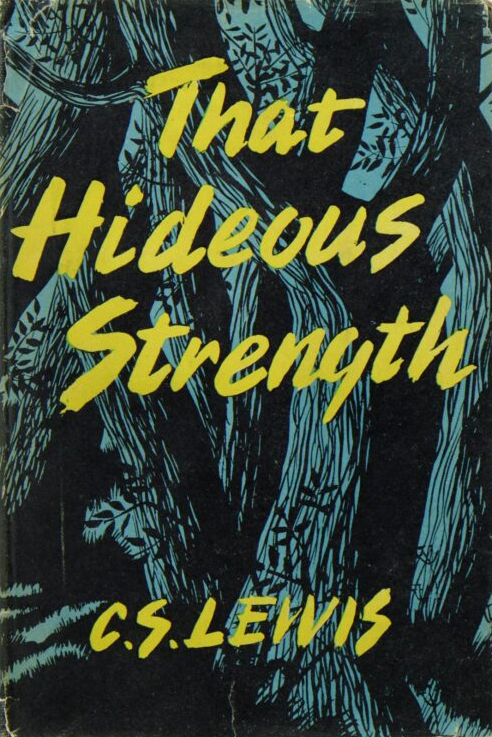
First published in 1945, the original dust cover for That Hideous Strength evokes something of what it feels like to walk into a shadowy forest at night. And that, of course, is what the opening scene of chapter 11 is all about. “I can’t see a thing,” said Jane.

BATTLE BEGUN 

Overview Question

In this chapter, Belbury and St. Anne’s are both seeking to strengthen their sources of strategic knowledge (“military intelligence” one might say) in order to undermine and defeat the other side. Belbury hopes to capture Jane and make use of her clairvoyance to reveal the plans of their as yet unlocated and unidentified enemies. St. Anne’s hopes to find Merlin in case he will be on their side, but also to try to stop him from helping the NICE if that is his inclination. Neither side is omniscient; but each uses very different methods to try to achieve their goals. Overview Question:

Based on what you already know about these two groups of people, as well as what you learn in this chapter (especially Frost’s speech to Wither toward the end of Part 2), how would you characterize the different goals of each group, and how are these goals consistent with the very different methods that each group uses?

The following quotation from Lewis’s The Screwtape Letters (Letter VIII) should also help with considering this question in greater depth. (Screwtape, the senior devil, is speaking to Wormwood, his understudy.)  

“To us a human is primarily food; our aim is the absorption of its will into ours, the increase of our own area of selfhood at its expense. But the obedience which the enemy demands of men is quite a different thing . . . He really does want to fill the universe with a lot of loathsome little replicas of himself . . . not because he has absorbed them but because their wills freely conform to His. We want cattle who can finally become food; He wants servants who can finally become sons.” (emphasis added)


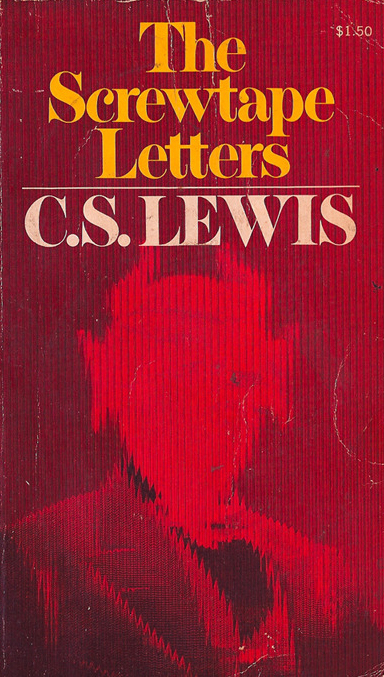
Cover art for the 1961 edition of The Screwtape Letters.

DEEPER-DIVE QUESTIONS

1. As Jane, Dr. Dimble, and Arthur Denniston look for Merlin in the fields and woods at night, each of them begins to realize that, up to now, their ideas and beliefs about Merlin, or King Arthur, or the ancient Druids, or even about the Christian God and religion in the modern world, have often been either theoretical and abstract (Dimble) or shallow and poorly informed (Jane). Now they are about to encounter something in person, and it all looks very different. What parallels can you find in the culture wars of America today among some groups or individuals for this kind of awakening to the deeper reality and seriousness of faith and religion, and to the possibility that one might have to sacrifice something, even to give one’s life, in order truly to serve the good cause of God? Have you yourself felt or experienced this kind of sharpening of religious focus? 

2. Continuing a theme that we saw in Chapter 10, the leaders at Belbury believe they can use coercive techniques to manipulate Mark into doing their will (to bring Jane to Belbury). And yet there are signs of a kind of myopia or blindness built into their worldview, in particular their view of “man” (in this case Mark and others). What signs of this blindness can you detect in the chapter, and why do you think these types of ideological blindness are particularly endemic to the modern worldview?

3. In Part 3, after being arrested, Mark goes through another series of realizations and reactions about himself and Belbury; but he seems unable to sort it all out. As the narrator informs us, Mark is a materialist. He has no absolute reference point for moral judgement; and yet his conscience is still functioning at a level high enough to allow him to realize that he has been a fool to trust the people of NICE (Wither, Feverstone, Curry, Frost). He even has a momentary picture of his own corruption and villainy in the ways he has treated Jane and other friends from the past. According to the narrator, what is missing from Mark’s worldview that might have allowed him to understand his own foolish behavior more fully, more deeply? What is it in his current lifeworld that has blocked him from acquiring these other insights? 


THAT HIDEOUS STRENGTH: Chapter 10

This is the cover art for the 1960 edition of That Hideous Strength from Pan Books in London. The artwork by S. R. Boldero suggests the devastation of Edgestow as refugees flee from homes and buildings that have been destroyed by rioting. The Saracen’s head hovers in the background.

THE CONQUERED CITY  

Overview Question

In this chapter, the efforts of NICE to take over and control the town of Edgestow and surrounding villages has reached a crescendo. The “stages of cultural revolution” (demoralization, destabilization, crisis, new normal) that we observed earlier in Mark Studdock as an individual (see Chapters 5 and 6) have now reached the level of “mass formation” for the people of Edgestow as a whole. And yet, due to the nature of these dynamics, not everyone is being affected or responding to the trouble in the same way or at the same time. This brings us to our Overview Question for this chapter:

What are the different ways that people at Edgestow are responding to the troubles stirred up by the NICE? What explanation can you give for these differences? Try to identify at least two different sub-groups. Also, what parallels for these differences can you identify in recent cultural and political events of American society?

As you ponder this question, you may find it useful to revisit our earlier discussion (in the general Introduction) of the “Stages of Cultural Revolution” as described by Yuri Bezmenov, and of “Mass Formation” as described by Mattias Desmet. Neither of these models is difficult to understand in itself; and both cast a good deal of light on the kinds of psychological and social dynamics that Lewis portrays among the people of Edgestow. Both also help clarify the cultural dynamics at work in society today.

“What struck Mark deeply was the almost complete absence of indignation among the speakers, or even of any distinct sympathy with the refugees.”

DEEPER-DIVE QUESTIONS

1. In Part 1, the leaders at Belbury (Wither and Fairy Hardcastle) continue with their efforts to manipulate Mark so they can force him to bring Jane to Belbury. They seem confident that they can pull this off, given their view of Mark’s nature, by framing him for the murder of Prof. Hingest. At times they seem to be succeeding. And yet, as we work through the chapter as a whole, we find Mark at other times responding in ways they do not predict. Indeed, by the end of the Part 3, he almost responds to Dimble’s offer to help him leave the NICE; but then he settles back again into his double-minded ways. What account would you give of this inner conflict in Mark so unforeseen by the NICE? 

2.  In Part 2, Mark makes his second attempt (this time successful) to escape from Belbury. He goes to Edgestow to look for Jane; but first he encounters a continuous flow of refugees leaving their homes under Emergency Regulations. In a local pub he overhears other residents (not yet displaced) discussing how the refugees must have brought this on themselves. He goes home and finds Jane gone but an envelope addressed to Mrs. Dimble. By the end of this part, despite having just run away from Belbury, Mark is thinking of himself as a victim of the Dimble’s interference, and of how nice it is (all things considered) to be part of NICE. What kinds of resources or practices, and what view of the world would Mark and the people of Edgestow need in order to avoid being sucked into this powerful mass formation?   

3. In Part 3, Mark has gone to Northumberland College to confront Dr. Dimble about the whereabouts of Jane. But here, Mark meets someone for the first time who is clearly not under the influence of the NICE; and, indeed, Dimble stands in direct and forceful opposition to everything that the NICE represents. Lewis leaves several clues in this part and at the beginning of Part 4, as to the sources of Dr. Dimble’s strengths and virtues in this regard. Why and how is Dimble able to stand for what is good and true despite Mark’s adoption of the “victim” and “shaming” mentality. What practices and sources can you identify that help Dimble take this stand, even though he clearly struggles at times?  

4. In Part 4, back at St. Anne’s, and based on Jane’s dreams, Ransom is putting together a team to go out and look for Merlin, though no one can yet be sure which side Merlin will take. One thing is clear, however, those who go must be in a relationship of obedience to Maledil. On this basis, Jane can go; and MacPhee cannot. Why does MacPhee’s lack of obedience leave him less suited than Jane to face the unknown forces of spiritual warfare? What strengths or virtues are enhanced simply by placing oneself under the obedience?

5. Extra Credit: In Part 4, Ransom talks about Merlin, Logres, and the “parachronic” (alongside time) state, a state where time is suspended in some way that allows the influence of ancient figures upon current life. Can you think of anything in the sphere of human experience today where something like this influence of character and principle across time really does take place? (This question is a first stab at an important issue that we will come back to in later chapters.)    

THAT HIDEOUS STRENGTH: Chapter 9

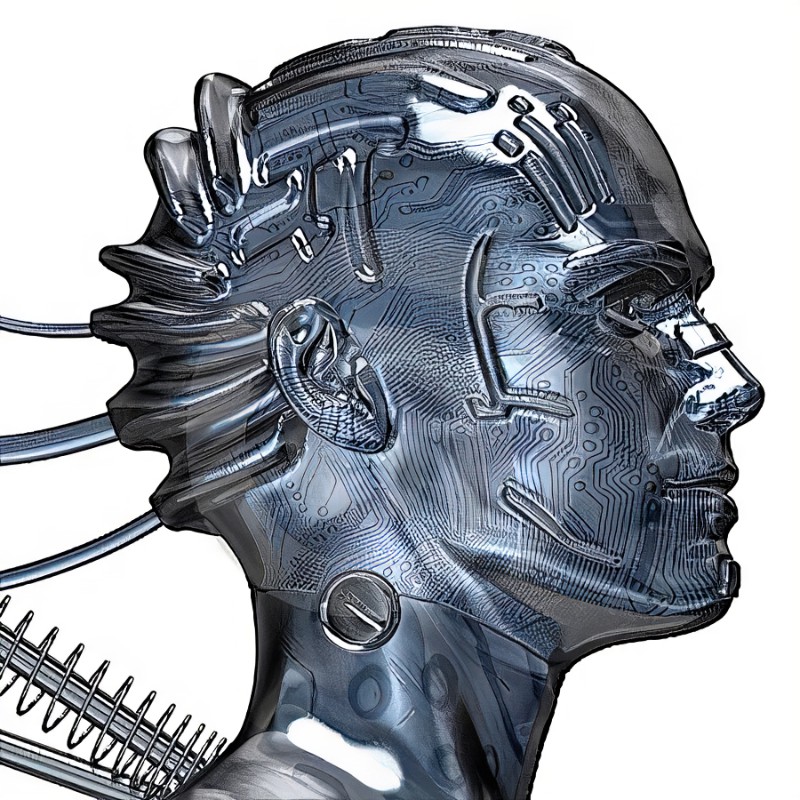
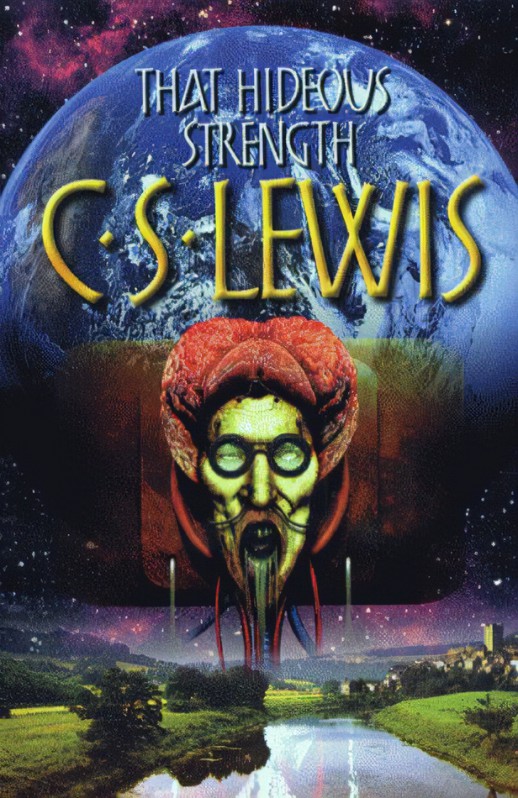
Cover illustration for Harper Collins January 2000 edition of That Hideous Strength. The image is a depiction of the grotesque head of Alcasan (an experiment in artificial intelligence) hoovering over the peaceful and natural landscape of the fictional town of Edgestow.

THE SARACEN’S HEAD

Overview Question

In this chapter we come at last, more directly and in greater detail, to the most challenging elements of Lewis’s science fiction fairytale. Indeed, now that we are about halfway through the novel, one of our primary tasks going forward will be to try to discern where the science fiction and fairytale end in Lewis’s story, on the one hand, and where the reality of spiritual forces at work in human life begins, on the other.

For my part, I will say from the outset that I think Lewis intends for his readers to regard the bodiless head experiment, with which the chapter begins and is titled, as well as the descriptions of Ransom’s space travels, which come later in this chapter (as well as in the earlier volumes of the trilogy) as science fiction. He does not want us to get tied up in knots trying to figure out if or how these things might really have happened.[1] The real question we must answer in order to understand their role in the story is what they represent.

Similarly, the idea of a bodily return of Merlin, the 5th century Druid, to 20th century England is, I feel sure, of allegorical importance and meaning. This does not mean that Merlin never existed (in Lewis’s own view) nor that he is of less importance in the modern setting of THS. The real question again is: What does the return of Merlin represent? What is it that the figure of Merlin brings into this story about a battle for the soul of England in the twentieth century that is of critical importance to what the story itself is trying to tell us? This, then, leads to our Overview Question for this week, focusing first on the eldil:  

If we are not really asked to believe in Ransom’s space travel and his meetings on other planets with the so-called eldil, nor per se in the dark eldil who inhabit our planet and control Belbury, then what do these eldil and their planets represent in the real world and spiritual experience of human beings on planet earth? 

In order to answer this question, you will need to call upon your knowledge of Scripture and of the history of Christian thought regarding the identity and role of angelic beings? Where do the good angels dwell? What do they do? What is their role in relation to human beings? What stories from Scripture can you recall that provide insight into any of these questions? And for the dark eldil: Who is the devil? By what names is he known? What are the demons? What are the fallen powers of which Paul writes? And what, according to Scripture, are the aims and methods of all of these dark creatures in the fallen world? How do they operate?

I don’t imagine that all of you will have lengthy responses to all of these questions. It isn’t a subject that many Christians today have spent much time studying. But the questions should, at any rate be familiar to you. And the answers you give can be measured against Lewis’s portrayal of the eldil, which is filled with biblical allusion as well as with the medieval allegories of the virtues and the planets (see also his, Discarded Image). We shall also, by the way, refer to Lewis’s Screwtape Letters for additional help with his views on this subject.  

______________________________________________

[1] Just as Dante knew there was no opening in the ground near Florence leading down to hell, and John Bunyan knew there was no actual city of Vanity Fair, Lewis employs the classical and medieval imagery of the planets as an allegory related to the human experience of virtue, temptation, and vice. 

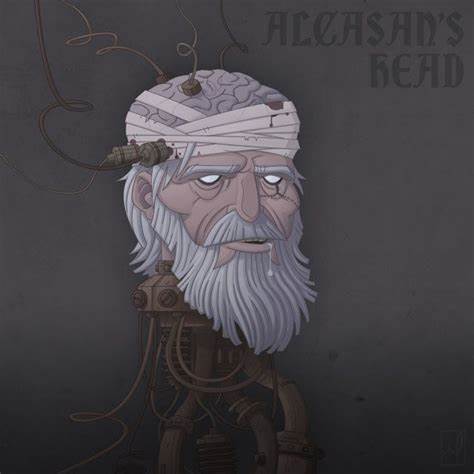
Another illustration of “Alcasan’s Head,” this one by artist, M. S. Corley.

DEEPER-DIVE QUESTIONS

1. The chapter opens with Jane’s most vivid dream yet, this time of Mark getting sick and fainting when he is forced to bow with Filostroto and Straik before the disembodied head (see the end of Chapter 8). Then in Part 2, when Mark wakes up the next morning at Belbury, he is full of disgust for what he has seen; yet afraid of what will happen to him if he does not cooperate and bring Jane to Belbury. How does the narrator (Lewis) account for this double-mindedness in Mark which finally leaves him unable to break away from Belbury even though he wants to? What would need to change in Mark’s worldview and lifeworld practices in order for him to become the kind of person that can stand up to Belbury?

2. In Part 3, Mr. McPhee, the household skeptic at St. Anne’s, tells Jane about Ransom’s story of space travel and meeting with the eildils on other planets, as well as the role of the dark eldils on earth (see also the first two volumes of the trilogy). But MacPhee is a strict empiricist, despite his own religious heritage that he seems to respect but does not embrace (his Scottish Presbyterian uncle). He will not believe in anything that cannot be proven by strict adherence to observable (physically measurable) evidence. How does this empiricism make MacPhee a great asset to the cause at St. Anne’s, yet leave him sadly shorthanded when it comes to understanding or dealing with the spiritual powers?

3. In Part 4, the council at St. Anne’s comes together to discuss the reality-status of the head in Jane’s dream. We saw in the last chapter, and now again in this one, how the head represents a desire at Belbury to achieve immortality through artificial intelligence and thus to give the NICE technological power and control over society and the world. What analogs for this kind of technocratic vision can you identify in American society and the world today? How widespread is this phenomenon? 

4. At the end of Part 4, and in part 5 of Chapter 9, Ransom and Dimble wrestle further with the question of Merlin’s role in everything that is happening. They can’t seem to make up their minds about whether the Merlin they know from the Arthurian legend would come back today as a representative of the powers of coercive black magic and the dark eldils (such as Morgan Le Fay with her corrupting passions run amok) or as a representative of something much closer to the Christian view of nature and of man’s role in creation. Ransom is sure, however, that Belbury’s interest in Merlin is under the power of the dark eldil and, therefore, has to do with black coercive magic. He is also clear, moreover, that the good eldil will not use coercive power to accomplish the goals of Maleldil. What does this tell us about the methods and the goals of the good eldil? And why is Ransom so concerned about the danger of combining the technocratic vision at Belbury with the old dark powers of the passions and the fallen angels? What would be an example of this dreadful and destructive combination today?

5. Extra Credit: Given what you have learned about the importance of free participation and human partnership in the cause of the good eldil and of the people at St. Anne’s on the Hill, what sense can you make of Camilla’s love for the quotation from Charles William’s poem, Taliesin Through Logres, which portrays how the battle of Badon Hill (in the Arthurian legend) was won by an act of “patience” on the part of the poet Taliesin? Note that Camilla uses this quote to interrupt MacPhee’s interview with Jane: “Fool, All lies in a passion of patience, my Lord’s rule.” How does the quotation sum up the basic traditional worldview of the people at St. Anne’s?  

THAT HIDEOUS STRENGTH: Chapter 8

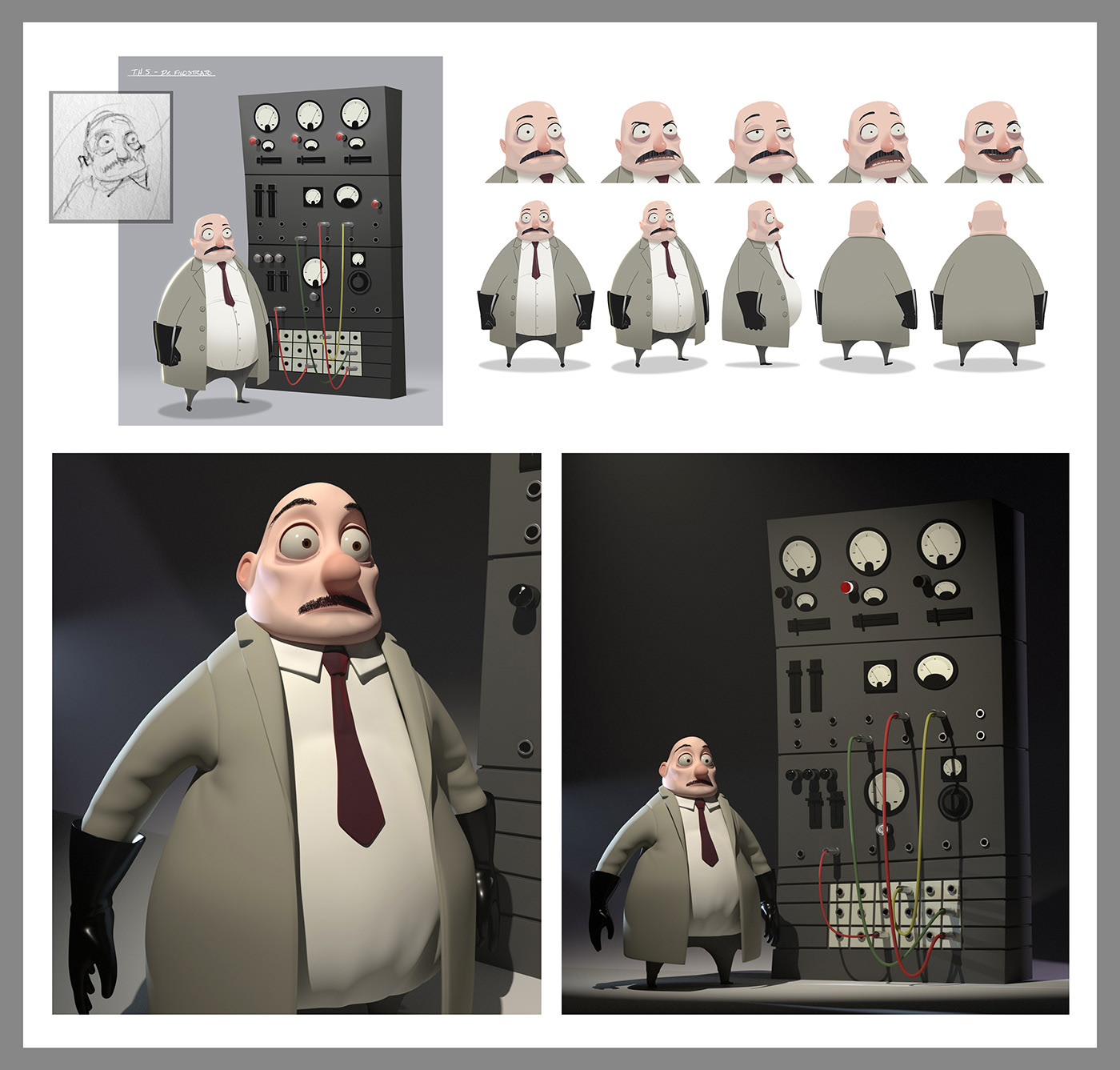
A rather comical illustration for the character of Professor Filostroto in That Hideous Strength by C. S. Lewis. Filostroto, in a grotesque experiment with a disembodied head, hopes to escape the natural order of life and death by creating a form of “immortal” (perpetual) artificial intelligence. Illustration by J. P. Cokes.1

MOONLIGHT AT BELBURY

Overview Question

In this chapter, as Mark and Jane become more involved at Belbury and at St. Anne’s, they begin to uncover some of the deeper implications of the two worldviews that are calling for their allegiance. This concerns especially the concept of nature--that is, the role of the natural world in each worldview. How does the modern worldview at Belbury, with its emphasis on the freedom and reason of the individual (free from moral or religious constraint) affect the way the people at Belbury think about nature, and how they propose to use and interact with it? At the same time, how does the traditional worldview at St. Anne’s, with its emphasis on the religious and moral tradition of the Bible where freedom and reason are constrained by obedience to God (the Creator of nature) redirect this community’s awareness of and interaction with nature along very different lines? Overview Question

What are the differences concerning the role of nature that Mark and Jane encounter at Belbury and at St. Anne’s, and why do these particular differences arise from each of the worldviews? 

As you read through the different parts of the chapter—with the various accounts of Fairy Hardcastle’s sexual deviance, and Filostroto’s vision for a disembodied existence of virtual immortality free from the difficulties of organic nature and the body, and then of Jane’s difficulties adjusting to the rhythms of life at St. Anne’s with gardens, animals, shared chores, and no British class structure—try to reflect on the role of nature in each account. Which of the accounts suggests a cooperation with the order of creation or nature, and which, a rejection of that order? 

It may also be interesting to note here that Lewis, in his book on the Medieval worldview, entitled The Discarded Image, tells of how the moon was regarded as a metaphorical boundary between the heavenly realm (where the angels dwell in heavenly order) and the earthly realm of “nature” (where fallen angels exercise their evil influence). We shall encounter this lunar metaphor more than once in the chapters ahead. In this chapter, lodged as it is both in the title and in Filostroto’s long speech to Mark, it probably is meant to suggest the lunacy that has infected the lifeworld at Belbury.  


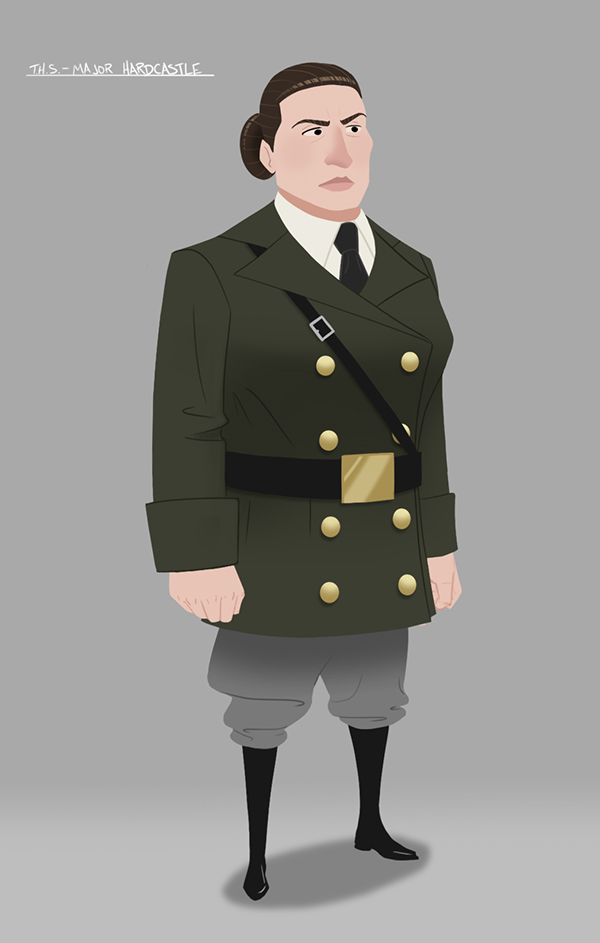
An illustration for the character of Fairy Hardcastle in That Hideous Strength by C. S. Lewis. Fairy is head of the NICE police at Belbury, and uses this position as an outlet for her own controlling and sadomasochistic tendencies. Illustration by J. P. Cokes.1

DEEPER-DIVE QUESTIONS

1. The character of Fairy Hardcastle is a revealing study in the ethical results of the modern worldview at Belbury. Fairy often seems somewhat aloof to the ideological principles of the NICE, and yet Belbury affords her a platform for the controlling and sadomasochistic habits that rule her character. How would you assess the fit between Fairy’s personal formation, especially her sexual proclivities, and the worldview that guides Belbury, especially its view of nature? What parallels can you discern in the attitudes and ideas that dominate the topics of sex and sexuality in American culture today?  

2. After going “home” to St. Anne’s, Jane must get used to a very different social atmosphere at the manor–more easy-going, one might say, more “natural.” Jane has always seen herself as a modern liberated woman, and yet she finds it difficult to accept Ivy Maggs, her former maid, as an equal partner sharing chores in the community. Likewise, she doesn’t quite know what to make of an obedient bear and the other tame animals at large in the house. And she is still wrestling with the Director’s conception of marriage (Chapter 7), which also requires evidently a practice of submission and obedience. What conception of nature is at work at St. Anne’s, and why does it interfere in all of these ways with Jane’s former ideas and habits? 

3. In Part 3 of the chapter, Mark is finally drawn into and made nearly a full participant in the network between the NICE activists who cause riots, the leadership at Belbury who control the local police, and the propaganda media for whom Mark now works. What parallels for this collusion between government authorities, corporate leadership, law enforcement, and media propaganda can you discern in the events of American culture and politics today? 

4. Also in Part 3, Professor Filostroto proclaims to Mark in much greater detail his view of the ultimate goal at Belbury. This goal is to achieve a kind of virtual immortality through disembodied artificial intelligence (of which the experiment with the Head is a rough prototype). And Rev. Straik translates all of this into a contorted interpretation of traditional Christian beliefs and symbols; so that the NICE’s rather gnostic vision of a dis-embodied and immortal virtual existence is proclaimed by Straik as the real meaning of the resurrection and the kingdom of God. One can sense that Mark is both drawn in by this vision, and yet also repelled.  

What parallels for this vision of virtual existence, free from the difficulties of natural life, can you discern in the cultural trends and political battles of 2022? And what do you think should be the genuine Christian response to the various issues involved? (In your answer, consider the role of the body, of sexuality, birth, and the family, and of the inherent difficulties involved in natural life, and the place of these “sufferings” in the development of the Christian virtues.)

______________________________________________________

  1. It may seem odd in a way to use these rather comical illustrations for what are admittedly very dangerous and harmful characters in THS–characters like Filostroto and Fairy Hardcastle. But then Lewis himself wrote with both insight and humor about the motives and short-sightedness of the demonic characters in his Screwtape Letters. So, perhaps there is a place for laughing against the darkness even as we try to take seriously the task of exposing it in our own time. 

THAT HIDEOUS STRENGTH: Chapter 7

If Chapter 6, Fog, focused at length on Mark’s miserable struggle to establish himself at Belbury; Chapter 7, The Pendragon, shifts the focus to Jane and how her self-understanding is challenged and begins to unfold in a wild roller coaster ride of new discoveries about herself and her potential as a human being in a very different kind of community at St. Anne’s.

THE PENDRAGON

Overview Question

From the opening sentence of THS, and scattered throughout the chapters, we encounter various clues concerning Jane’s ideas about marriage and sexuality, and these are always unresolved ideas. In the opening paragraphs of the story, for example, we find Jane struggling with her ideas about romantic love and with the reality of her marriage to Mark in comparison to the high ideals of the marriage rite in the Church of England. Then, when Jane first goes to St. Anne’s, she is caught up in a train of thought about sex and gardens, Freud and female beauty that leaves her rattled and ill-at-ease until, embarrassed and trying to compose herself, she pulls herself together to meet the people she has come to see. And then, clearly, when she finally meets Ransom, the Director of St. Anne’s (aka the Pendragon) she goes into a bewildering spate of emotional reactions that includes overpowering attraction to him as an almost mythical figure of masculinity and, at the same time, a strange disloyalty and indifference to her own husband, Mark. And all of this happens to Jane, of all people–a woman who wants, above all, to be (or at least to appear to be) in full rational control of her own thoughts and passions, and to write a cutting-edge dissertation on John Donne’s “triumphant vindication of the body.”  Overview Question:

Given what you know already about Jane’s worldview and her personal self-image as an independent, rational, egalitarian woman, how would you explain this meltdown in her composure and self-control when she first meets the Pendragon?

Of course, the wild career of Jane’s story in this chapter doesn’t end with her interview. Ransom tries to help her by introducing her to the role of faith, faithfulness, obedience, and submission in religion and in marriage. And when she leaves, she finds that she is indeed beginning to see her own beauty in a very new, though still confused and conflicted, light. And then she is subjected to physical and sexual abuse by Fairy Hardcastle upon her return to Edgestow, before deciding to go straight back to St. Anne’s to seek recovery.  The whole chapter, then, pulls back the curtain on the deep conflict in Jane between her preferred outward self-image, on the one hand, and the inward terrain of a still very disordered and confused though seeking self, on the other. And so, again, how would you explain this? Keep in mind the two worldviews (modern and traditional) and the two lifeworlds, including both the principles and the practices of each, that either prepare the soul or leave it unprepared for various kinds of challenges.


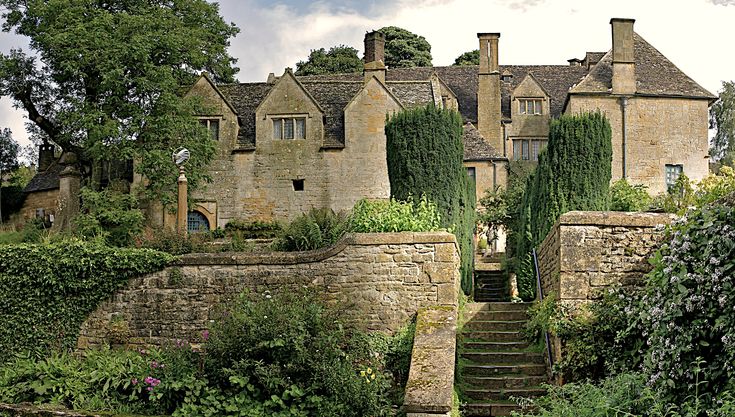
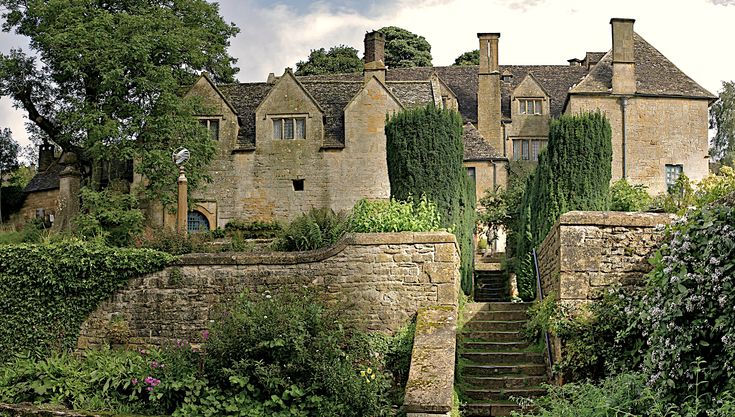
An English manor house that may, in some ways, suggest the kind of place where Jane went to seek help with her troubling dreams. And she found help that both challenged her self-understanding and welcomed her into a new sense of human calling and purpose.

DEEPER-DIVE QUESTIONS

1. “Pendragon” is, of course, the traditional name in the Arthurian legend for the line of kings that descend from King Arthur himself. Jane has not really wanted to meet with this man, this “Director,” also called Ransom and the “Fisher-King.” But her encounter with Prof. Frost in Edgestow, after having seen him first in a troubled dream, has jolted awake her sense of danger. Then, when she does meet with Ransom, she is “undone,” as the narrator tells us in Part 1; and she becomes distracted, giddy, “all power of resistance . . . drained away.” Given what you know about Jane so far (her feminism, her desire for rational control, her distaste for vulnerability, her modern worldview) what do you think could explain this sudden meltdown?

2. In a way, Jane’s conversation with the Director goes from bad to worse. She finds herself attracted to him. She argues with him about the nature of her marriage to Mark and the role of equality in marriage. And then when he tries to explain to her the connection between obedience to God and love for one’s spouse in marriage, she seems to lose herself in a kind of seductive fantasy about Ransom himself, until Ransom tells her to “Stop it.” He then goes on to try to help her understand the role of “obedience” (humility, faithfulness, submission) in romantic or erotic love (Part 2). What does this conversation suggest about the relevance and value of Ransom’s traditional worldview for Jane?

3. When Jane leaves the Director in Part 3, the narrator tells us that she is divided within her own mind and emotions between four different “Janes.” Identify these, and try to explain what each one means in terms of the spiritual journey that Jane now finds herself embarked upon.

4. When she arrives back in Edgestow, Jane is caught up in a riot that has been ginned up by the activists from Belbury. Jane is then taken prisoner for interrogation by Fairy Hardcastle, and subjected to painful physical and sexual abuse. In the turmoil of the riot, Jane manages to escape and to ask some strangers to take her “home” to St, Anne’s.  After this day of wild extremes and emotions—both of deeper good and of really horrible evil—how would you assess Jane’s decision to regard St. Anne’s as her home, rather than her own flat in Edgestow?

THAT HIDEOUS STRENGTH: Chapter 6

Within the space of two chapters (5 and 6) Mark Studdock goes through in microcosm and as an individual all four stages of the neo-Marxist “cultural revolution” described by Yuri Bezmenov. When this occurs at the societal and collective level it may also exhibit the characteristics of “mass formation” described by Matthias Desmet (see Introduction).

FOG

Overview Question

Another way to analyze the content of Chapters 5 and 6 is to evaluate what is happening to Mark as an individual within the framework of Yuri Bezmenov’s “Four Stages of Cultural Revolution” (as described in the Introduction). Given the four stages–1. Demoralization, 2. Destabilization, 3. Crisis, and 4. New Normal–how would you track Mark’s progress through these stages from his first interviews with Wither and Miss Hardcastle, to the job-insecurity that arises from Feverstone, to his frantic effort to regain solid footing with Curry, and finally to his capitulation to what he knows to be the nefarious yet required role of churning out propaganda for the NICE. This will reveal how the stages of Bezmenov’s model appear in the life of one individual; but the wider collective phenomenon will also appear in future parts of Lewis’s story. Overview Question:  

Given the four stages of Bezmenov’s model, try to locate Mark’s “progress” as he makes his way through the difficulties that he faces in Chapters 5 and 6. For example, at what point does he become demoralized, and when does this shift to the more serious stage of being destabilized? At what point does Mark enter a condition of crisis? And when does he finally cave into what is, at least for a period of time, his new normal?  

DEEPER-DIVE QUESTIONS

1.In Part 1, Wither continues to work on Mark with a style of communication that leaves Mark at sea about whether he has a job, or not. At the same time, Mark’s own self-absorbed motives, especially his ambition to be part of the inner circle, make him very vulnerable to this kind of manipulation. Describe the “fit” between Wither’s leadership style and Mark’s personality. What different character traits or virtues might have provided Mark with a means of resistance to Wither’s mechanizations?

2.  Absent the needed character traits to resist, Mark finally caves in and begins to do the bidding of the NICE. He begins to work as a fake news “journalist,” providing the kind of cover, spin, and suppression that are needed to keep the NICE from taking responsibility for their own destructive actions. What parallels can you see between the kinds of problems that the NICE causes, the kinds of articles that Mark writes to cover them, and the events and media coverage that have shaped public opinion in America over the last 5 or 6 years? Try to be specific and think of at least three examples.

3.  In Part 3 of Chapter 6, we meet again the Rev. Straik whose reflections on Jesus and the resurrection typify the role of religion in the modern worldview. What is that role, according to Straik, and where do you see a similar use of religion at work in the political and cultural battles of our time?

4. In part 5, Jane goes into Edgestow and runs into Professor Frost of Belbury, whom she has seen previously only in her dreams (see part 2). The nature of this man’s actions in her dreams, and the atmosphere of his person when she nearly touches him on the street, send a shock of repulsion through her. She hadn’t really wanted to go to St. Anne’s to see the Director, but now her desire to go is urgent. What do these hints suggest about what is happening in Jane’s inner life, quite apart from her initial or deliberative plans?