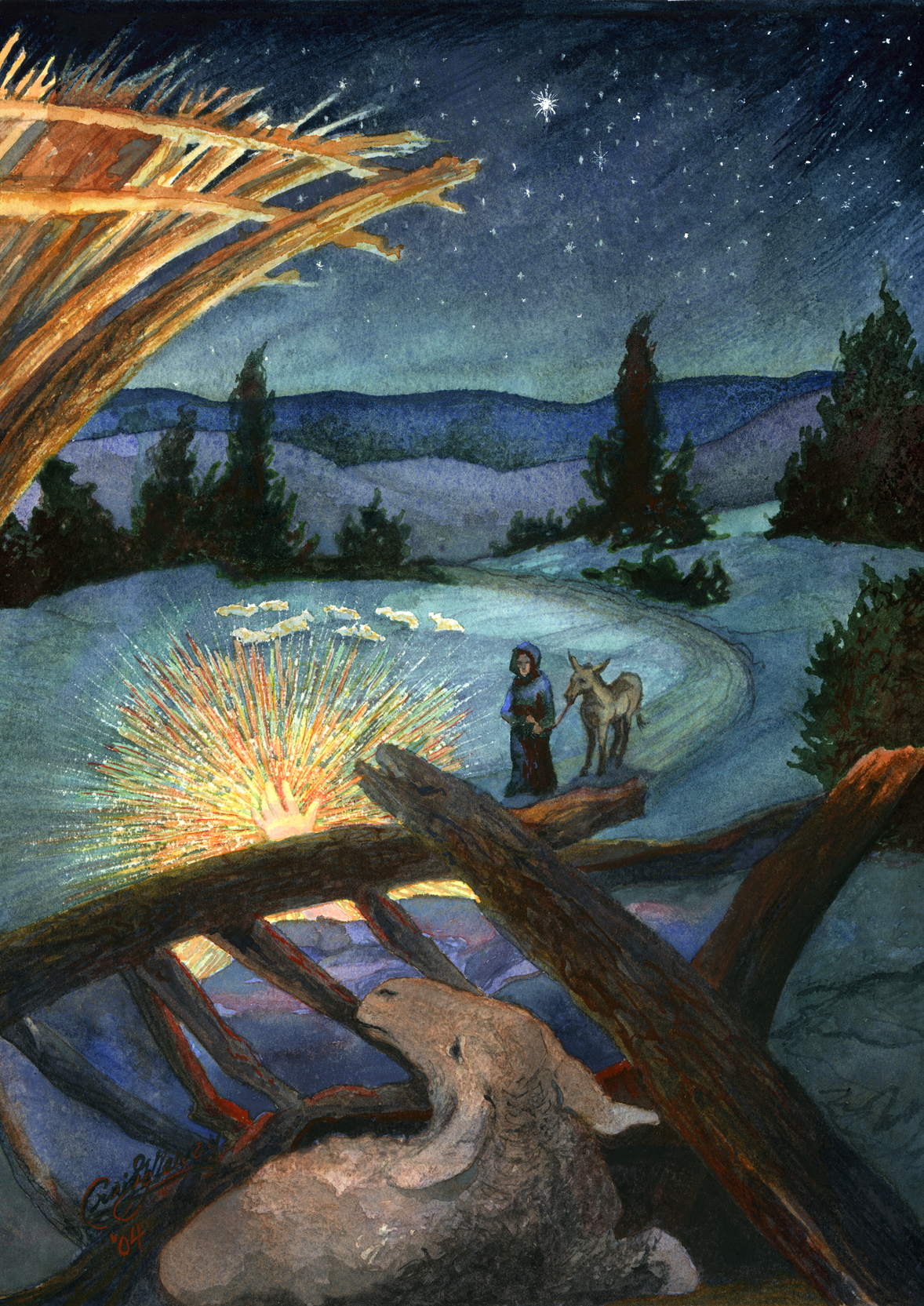
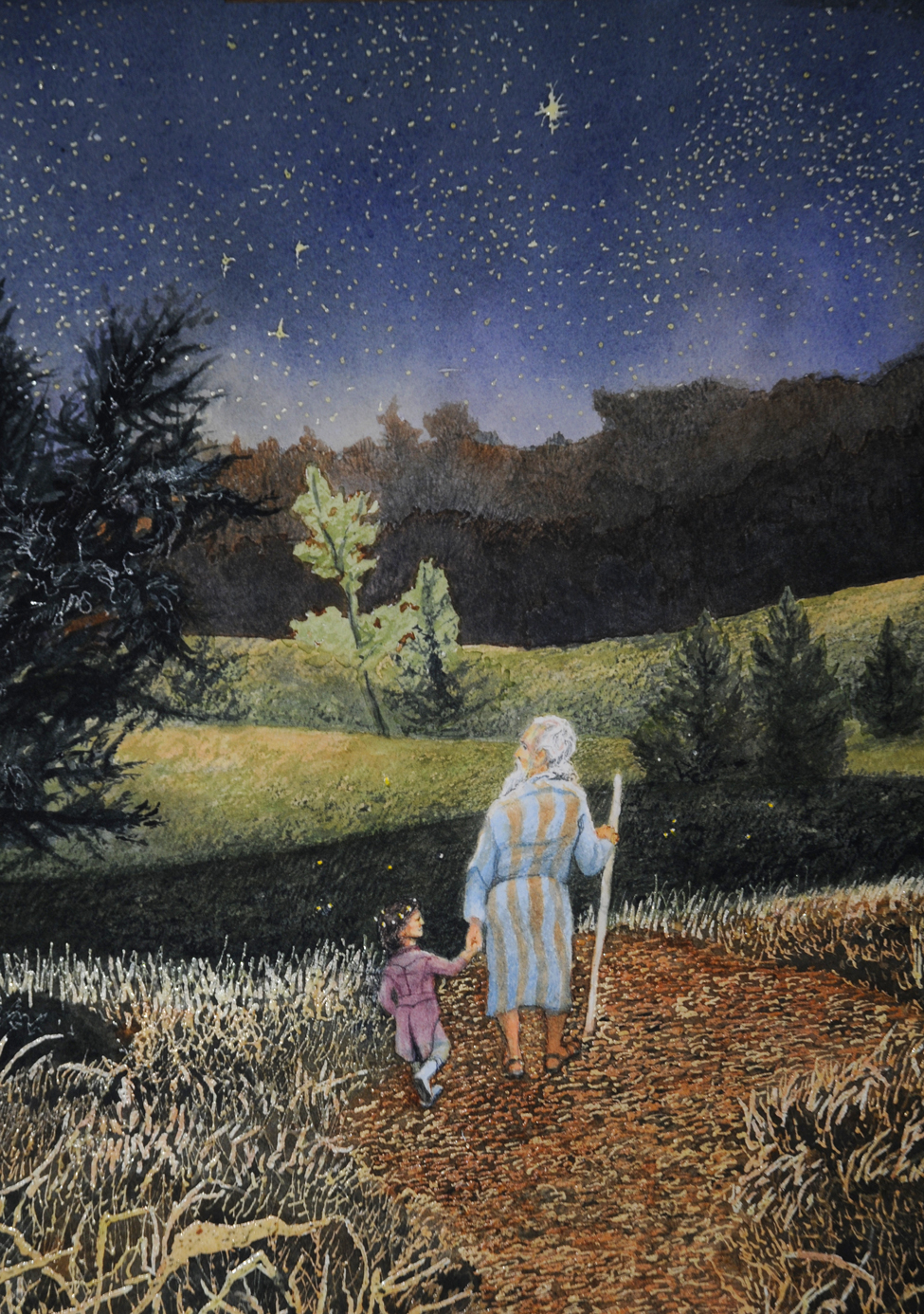
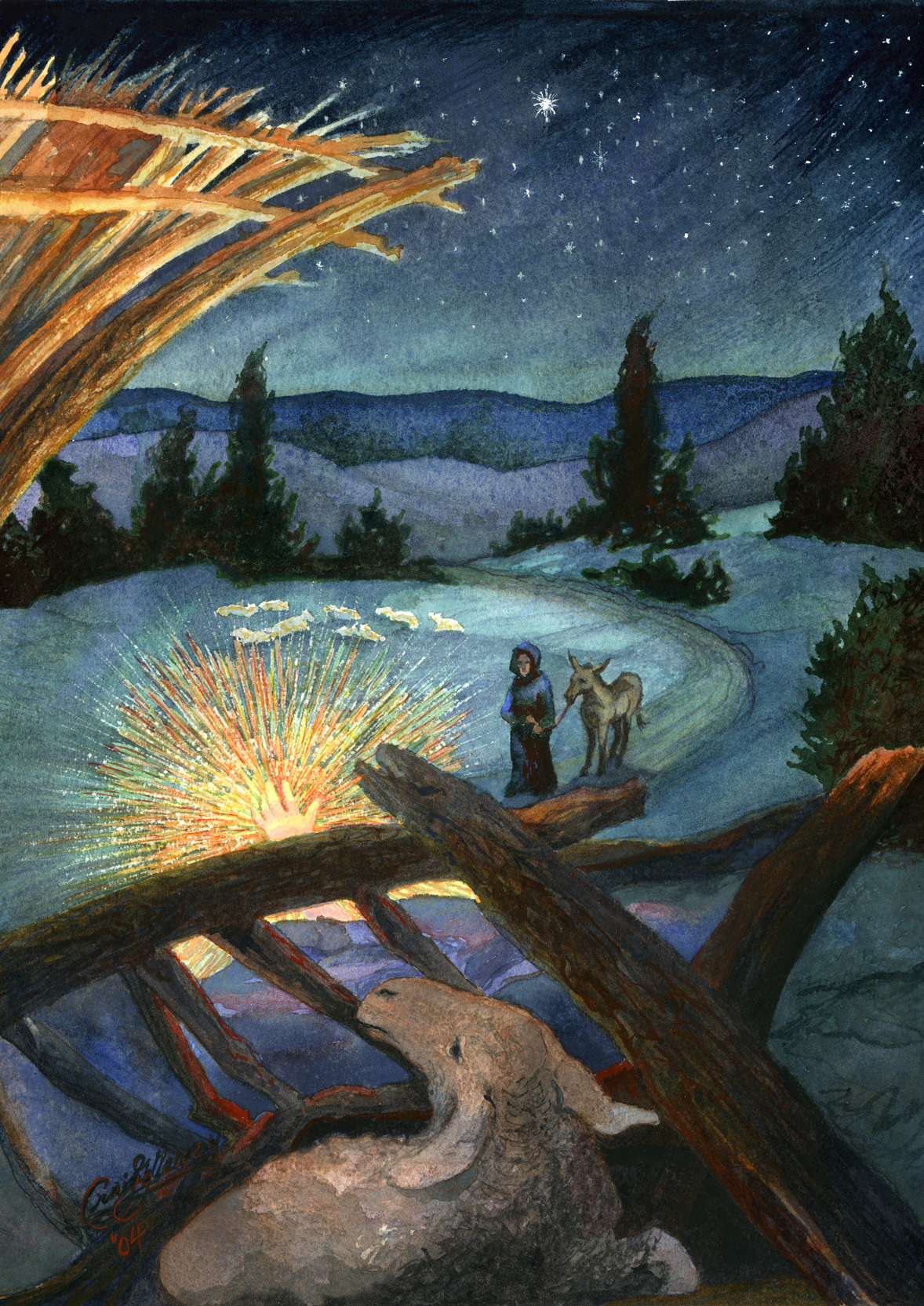
All Creation Is Waiting,” watercolor by Craig Gallaway, copyright 2004. The child is born; but that does not mean his work is done, or his mission complete. “The whole creation waits in eager expectation,” says Paul in Romans 8, for the great day of the Lord which will be, even then, only the end of the beginning. Is that Joseph in the background, bringing a donkey that he and Mary and the baby will need for their flight to Egypt? Even so we find ourselves still on this road of New Creation with our Lord.
It is Christmas Day 2022. We celebrate the anniversary of our Lord’s birth and incarnation. The Son of God has come into the world and, in his own human body, lived an entirely faithful human life. He was faithful even in the face of death; therefore, he has defeated sin, death, and the fallen powers that had disordered and misshapen human life before. And now he is risen and reigning and providing his Spirit to bring his faithful life, death, and resurrection into our lives as well; to deliver us also from all of the fallen powers that continue to try to get their grips into us and the world at large.
Week by week through Advent we have tried to remember some of the essential parts of our lives where his coming has made, and is making, a huge difference in how and why we live as we do in him. For he is still in the process of restoring these and other parts of our lives as we make our way with him toward the day of our own resurrection, the day of judgment, the wedding banquet of the Lamb, and the fulfillment of the New Creation already begun in him and in us. And so we can sing with Charles Wesley’s refrain, “Come thou long expected Jesus . . . born thy people to deliver”:
Deliver us from our “normal” fears and anxieties, as your grace and promise delivered Mary on the eve of your own human birth.
Deliver us from our worries about our status and career, our future security and prestige, as your servant Paul taught us with regard to our gifts, and as your own example showed us with regard to being a servant like you.
Deliver us from the temptation to use ethnic groups or other divisive factions to gain social or political power and to grasp at security and control of others as you and Paul refused to do.
Deliver us from the idolatry of self-absorbed eros and other fanatical appetites or passions, so we may live in the freedom of agape, kindness, gentleness, and self-control in human families and in the kind of community that you are restoring.
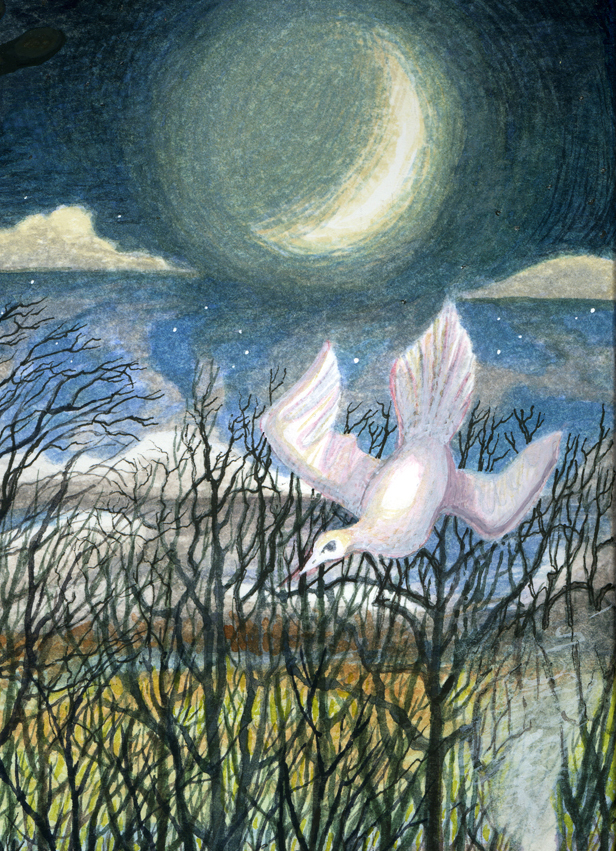
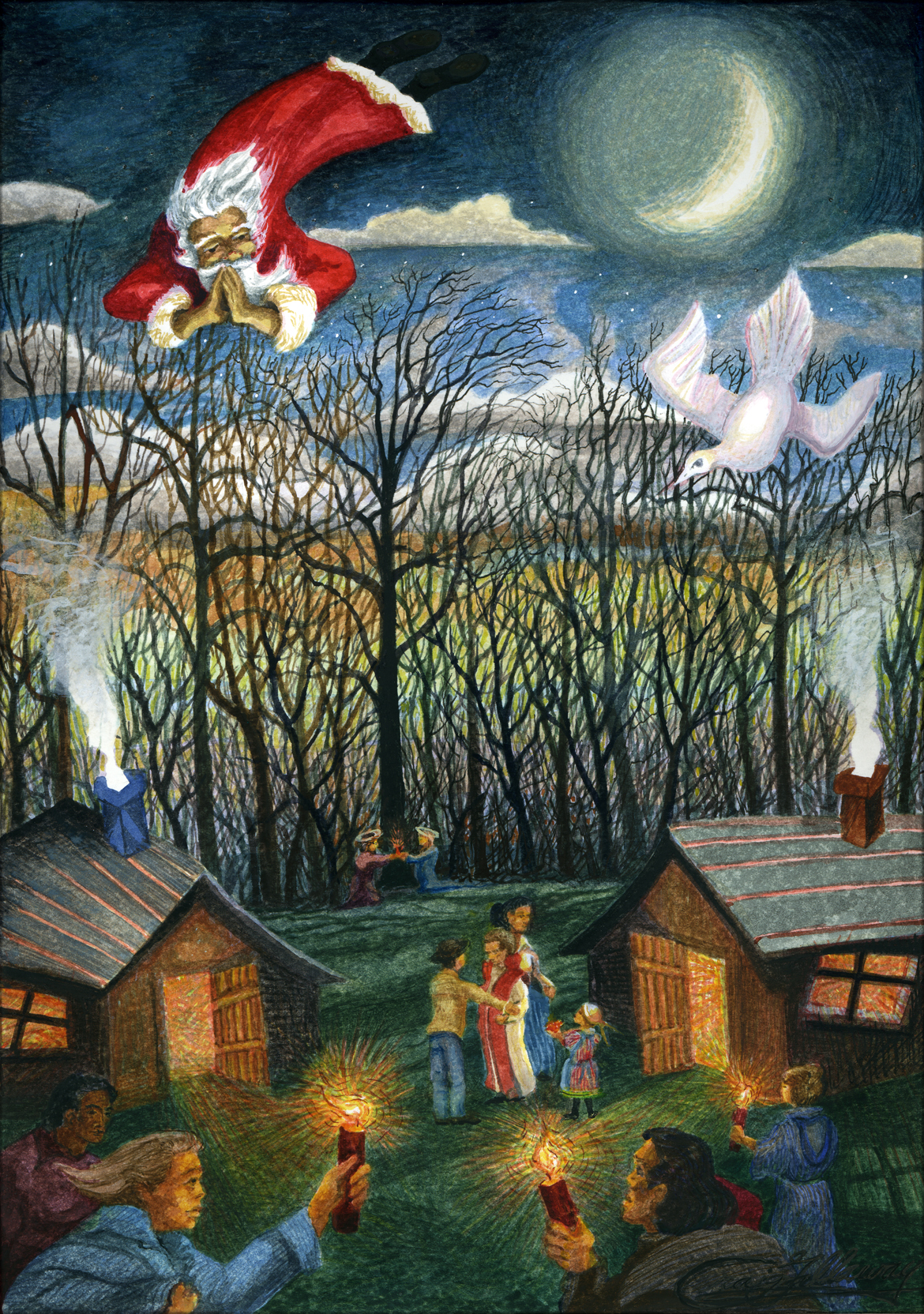
Saint Nicholas Praying for the Recovery of His Tradition, detail of the Spirit, watercolor by Craig Gallaway, Copyright 2005. From the time of Jesus’s baptism, the dove has been a reminder of the role of the Spirit and of the Father in all that Jesus accomplishes. He does not act on his own. He promises the Spirit will come to guide, befriend, comfort, and provide counsel. And he breathes the Spirit into his disciples after his resurrection, just as God breathed into Adam in the original creation.
“For freedom, you have set us free,” your servant Paul tells us (Galatians 5:1), and this means the freedom of life in your Spirit, the freedom to grow up in all of the fruits of your Spirit, to grow up in you:
To Love (agape) – because we are not focused only on our own needs or desires.
To know Joy – because we are no longer bound by the forces to which we once yielded power and control.
To experience Peace – because we are no longer pulled apart by rival “lords” and double-minded agendas.
To learn Patience – because we need to master smaller things before we are put in charge of larger.
To show Kindness and Gentleness – because we have moved beyond the doubts and defenses that once held us in check.
To practice Self-control – because we can do all things through Christ who strengthens us. Yes, in you, we are free.
And so, our fellow Advent pilgrims, Deb and I find ourselves with you at the close of another Advent and Christmas season, at the turning of the year toward a new year with our Lord’s Spirit and help, in the midst of His ongoing recovery and healing of the created order, on this road of New Creation. He has begun what is yet to be fulfilled. We have the first fruits of a great approaching harvest (Romans 8:23), and we must encourage each other not to grow weary “for our work is not in vain” (1 Corinthians 15:58).
Come, thou long-expected Jesus, born to set thy people free
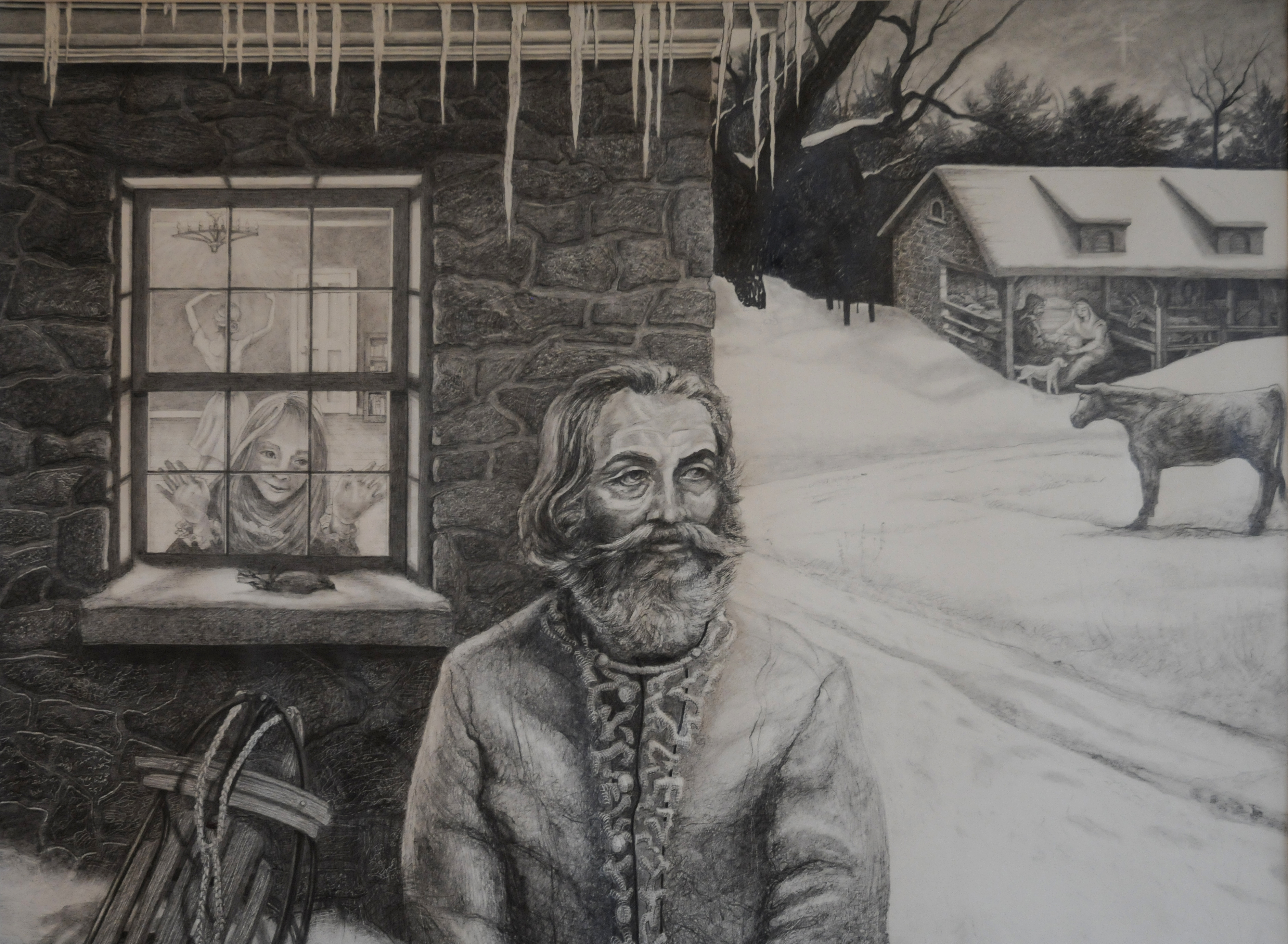
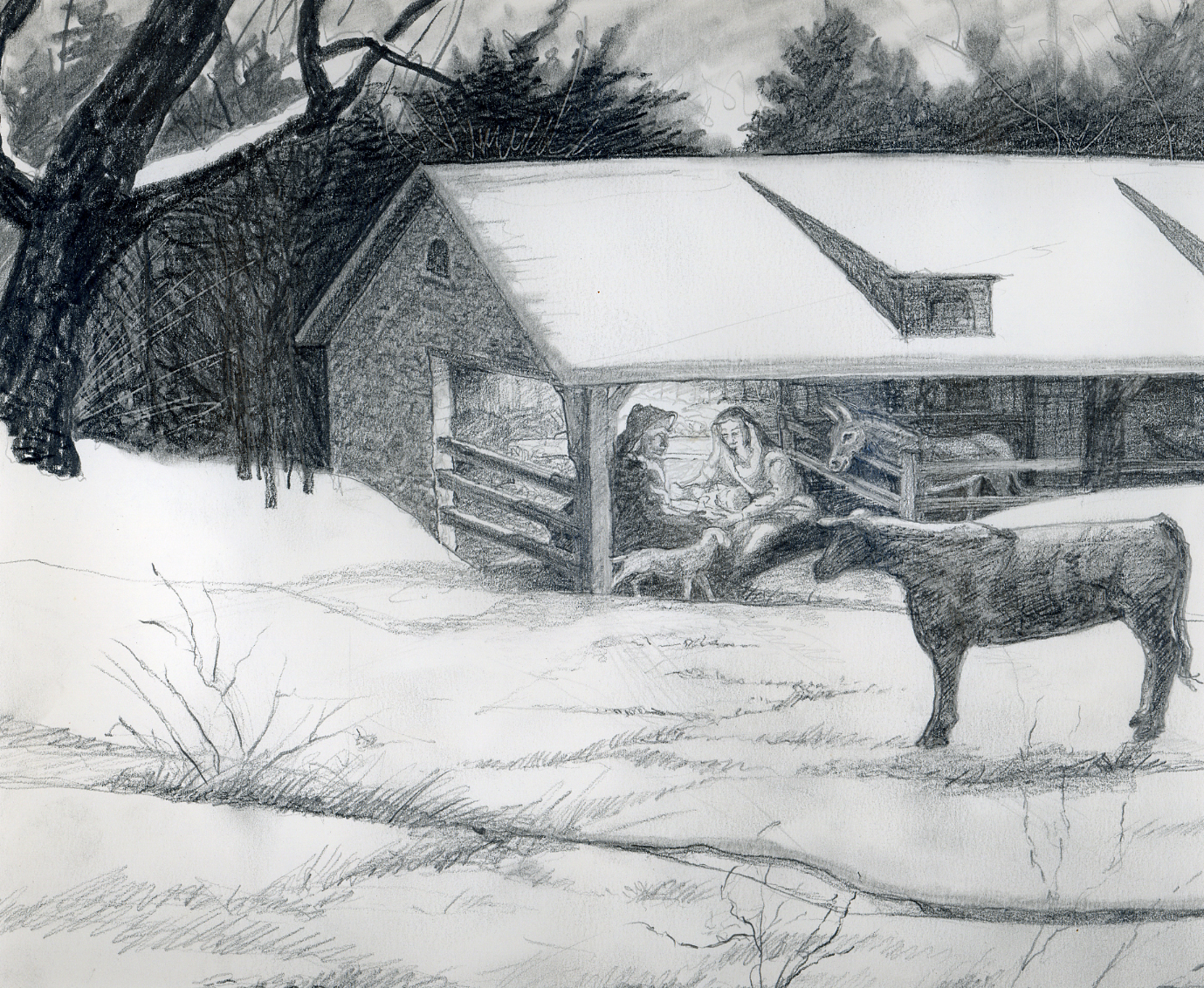
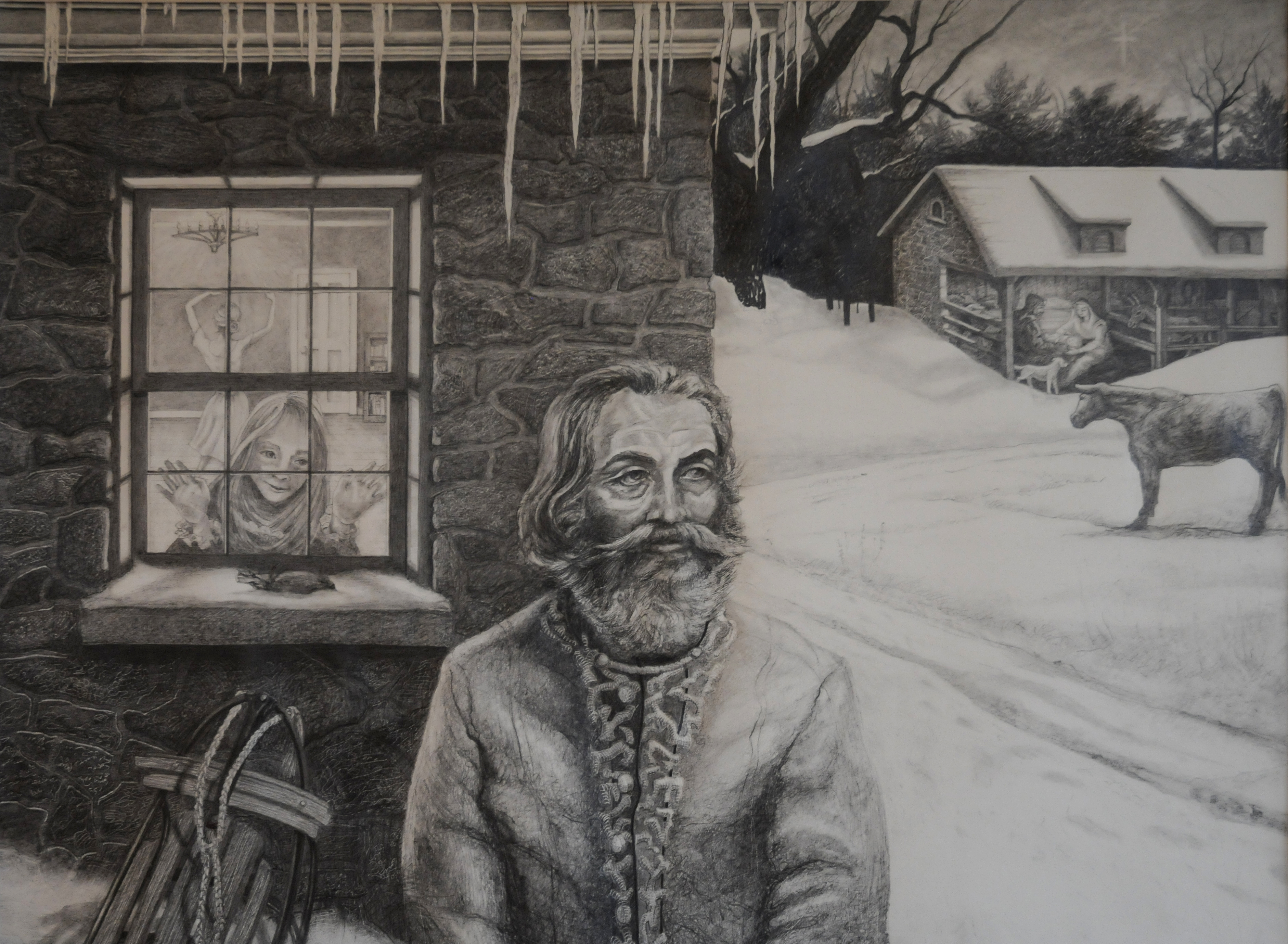
Saint Nicholas of the Dowry, Graphite drawing by Craig Gallaway, copyright 2011. Saint Nicholas is famous for his affirmation of marriage and for his support of young women who could not afford a dowry. In some cases, it seems, he was all that stood between them and a life on the streets.
Some might think it odd for Deb and me to choose an old Bob Dylan song, about the challenges of getting married, to celebrate the birth of our Lord and his purpose to restore the good order of creation. But then, in the Bible, there are few things that need restoration more than God’s good gifts of marriage and sexuality. And there is something in the very structure of Dylan’s song that echoes what the Bible has to say about this—how our incarnate Lord, born at Bethlehem to be both King and Bridegroom, wants to restore the order of marriage in his kingdom. [i]
We learn from the Apostle Paul and others that Jesus is the true bridegroom of his people, the church, and that he has suffered much to make the church his bride (Ephesians5:21-32). The epistle to the Hebrews tells us that, “He was tempted in every way as we are, yet without sin,” and this is why “he is able to sympathize with our weaknesses.” (Hebrews 4:15). Paul tells us that he was “obedient even unto death on a cross . . . and so God has highly exalted him and given him the name that is above every other name, Lord” (Philippians 2:8-11). And Hebrews again speaks of how “He endured the cross for the joy set before him, and then sat down by the throne of God,” (Hebrews 12:2) from whence he now reigns, “until God has put everything in order under his authority” (1 Corinthians 15:20-28).
This is the basic biblical narrative of the incarnate Son of God, from the time of his birth, through his faithful life and death, his resurrection and sending of his Spirit, and on now with his people, the church, toward the time when the great restoration will be fulfilled. And this is the narrative of our lives as well, if we have joined our lives to the living reality of his, by faith. For we are called to live our lives in him, and this means to follow him in the way of faithfulness and, yes, in the way of sacrifice. Paul puts it like this in Ephesians 5.
“Husbands love your wives, as Christ loved the church, and gave himself for it . . . so that it might be holy and without blame” (verses 25-27). “Wives, be subject to your own husbands as to the Lord” (verse 22).
In this way, Paul calls wives to exemplify what every Christian, including husbands and the unmarried, are called to do (cf., Romans 12:1-2). And he calls husbands to imitate the faithfulness of Christ, so that they may encourage and strengthen their wives in the pattern of life (in Christo) to which all people are called, again including the unmarried. We are all called to imitate the greatest Bridegroom of all, in the power of his Spirit, so that our lives may become whole and strong in him.
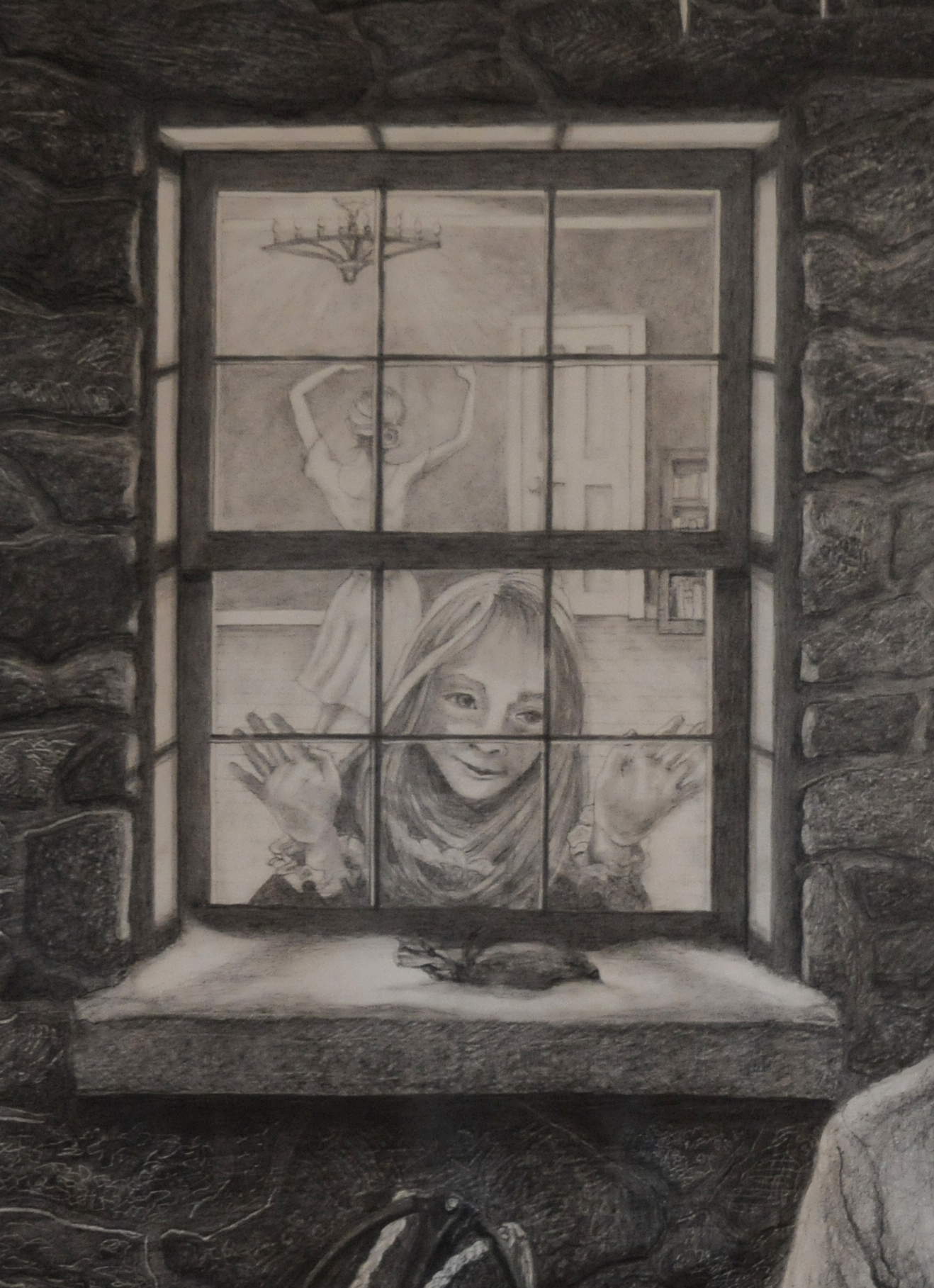
Saint Nicholas of the Dowry, detail, Graphite drawing by Craig Gallaway, copyright 2011. A younger sister looks out the window where Nicholas stands, having left a bag of gold on the windowsill. (In some early accounts, he would have dropped the gold down the chimney, or secretly left it inside the house.) Her older sister dances in the background because she has hope now to marry. My drawing no doubt makes their accommodations look more convenient than they would have been.
Of course, there are ramifications that ring out into our lives from this narrative. For example, we must not make an idol of sex–that is, to give it more power in our lives than it is due–unless we want to become confused about its real purpose. The degradations that result from idolatry are what Paul has in mind in Romans 1:18ff. Also, we should recognize that marriage has several purposes—mutual help, comfort, the procreation of life, and the preservation of chastity (Genesis 1-2, 1 Corinthians 7)—not all of which are focused on sex. If we are to follow our Lord, and live in his Spirit, we must be ready to take up the larger and wider callings that come with being good wives and husbands, as well as good neighbors and members of his bride, the church. Whether in our own personal lives, or in our corporate life together as his people, eros must be governed by agape. [ii]
But what, then, does all of this have to do with an old Bob Dylan song about a prospective bridegroom who is struggling to manage his inner fears, temptations, and doubts as he anticipates the arrival of his wedding day? Will he bolt and run, for fear of failure in the challenges of married life ahead? Or will he “get his mind off of wintertime” and rejoice in the arrival of his bride? Will he listen to the siren voices of romantic wanderlust, and travel to some distant place, or will he “pick up his money and pack up his tent” and look forward to the coming of his bride? What did Jesus do? What is he doing now?
By the third verse of Dylan’s song, we discover what our protagonist has decided to do. He will stay and embrace the covenant of marriage, with all that it entails. He plants his feet on solid ground and calls for the instruments of creativity and provision (perhaps also of procreativity): “Buy me a flute and a gun that shoots, I won’t accept no substitutes.” He intends now to honor his bride, like the Bridegroom is doing. He will fight for her against the enemy’s opposing forces, even if some of his own troops are weary or lagging. [iii] And he will “climb that hill no matter how steep,” so that he may rejoice in the joy set before him.
Thus, with the scriptural narrative ringing in our ears, we know what our Lord, our Bridegroom, has done (in his faithful life, death, and resurrection) and is doing (in the presence and power of his Spirit) in anticipation of the great day when his faithfulness will be fulfilled, when we too shall rise like him from the dead, and there shall be a new heaven and a new earth, and there shall also be a great wedding banquet for the Lamb and for us.
Can you hear, as Deb and I do, his voice echoing beyond our own as we sing about the place of our marriage in his New Creation purpose and care?
Ooo wee, ride me high, tomorrow’s the day my bride will arrive.
O Lord, are we gonna fly, down in that easy chair.
[i] Deb and I aren’t saying that Dylan intended or foresaw all of the biblical allusions that we see reflected in his imagery. But he did become a Christian later in life; and he was always deeply influenced by the Bible, as he once told Paul Stookey.
[ii] This seems to be the main point of C. S. Lewis’s reflections in The Screwtape Letters, regarding the demonic strategy that uses certain art forms to confuse people about the importance of “being in love,” that is of romantic or erotic passion, as if this were the foundation and purpose of marriage. If the demons win this battle, says Lewis, they also create an excuse for divorce when the level of excitement changes over time. But then, Lewis also portrays, in That Hideous Strength, how the affection of eros can be restored where husband and wife learn to embrace the larger pattern of servant love (agape) and obedience to God. Eros can return as a result of a more caring and wholesome way of life together, not as the goal or purpose of marriage itself.
[iii] Given the culture wars in America today, many of which turn on the definition of sex, gender, and marriage; and given the strong rhetoric of “hate speech” that has been cast against Christians for trying to uphold, much less to recommend the covenant of marriage as a source for sexual healing in our culture; Paul’s discussion of spiritual warfare (Ephesians 6) just after his instructions regarding marriage (Ephesians 5) does not seem at all accidental. In any event, to promote the Christian practice of marriage in our present culture will be a spiritual battle, to be sure; but one that the church must accept with a whole heart.
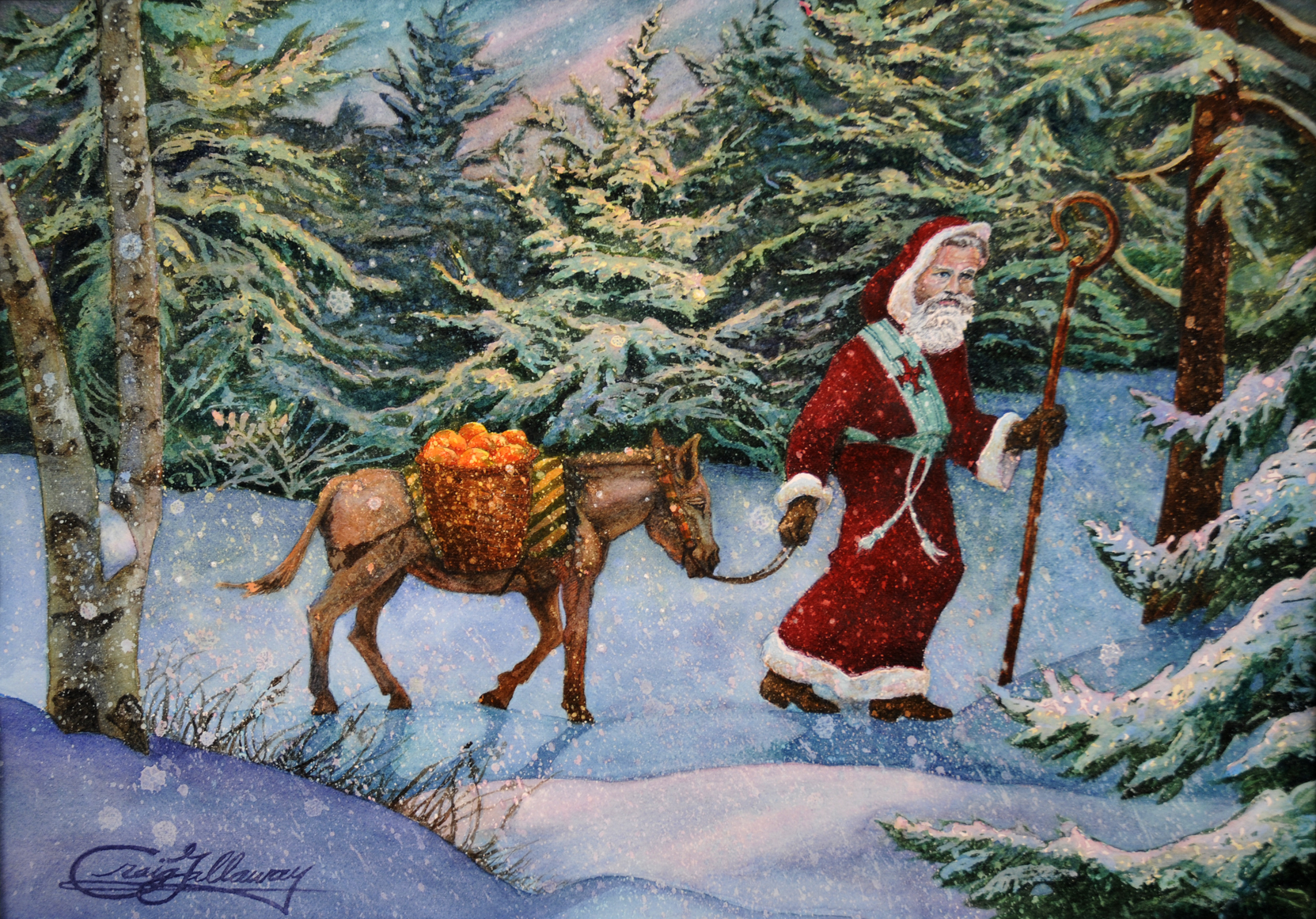
Saint Nicholas of the Oranges, Watercolor by Craig Gallaway, copyright 2009. This painting reminds us that St. Nicholas, following in the Spirit of his Lord, was renowned for his servant ministry to others, including his effort to provide citrus fruit for the sailors of Myra who suffered from scurvy as a result of long Mediterranean voyages. In the Bleak Midwinter, original poem by Christina Rosetti (1872), melody by Gustav Holst (1906), arrangement for guitar and cello by Craig and Deborah Gallaway (2021) based on the arrangement of the song for James Taylor’s album, At Christmas (2006).
As we prepare for the Christmas holidays during this Advent season, and some of us plan perhaps to take some time off from our regular schedule of life and work, are we also aware how our Lord’s incarnation has redefined the world in which we live and work?
The Apostle Paul addresses this question when he describes Jesus’s incarnation as the complete reversal of the fall of man in the Garden of Eden. When the Son of God came into the world, unlike our first parents, Adam and Eve, he “did not consider equality with God as something to be grasped, but he emptied himself and became a servant, and was born in human likeness” (Philippians 2:6-11). Likewise, later on in his ministry with his disciples, Jesus took a towel and a bowl of water and, in the manner of a common servant, he washed their feet, calling them to be servants as well (John 13:1-20).
And so, the incarnate Word came into the world to reverse the whole history of false pride, jealousy, envy, and vanity that ruled from Adam, to Cain and Abel, to Joseph and his brothers, right down to Jesus’s own disciples, who vied with each other for places of status and prestige, and also of course in our world today. “He was obedient even unto death on the cross,” Paul says, and so “God has exalted him and given him the name that is above every name . . . Lord.” The result is that our lives can be restored in him. Paul says simply, “Have this mind in you which was also in Christ Jesus.”
But what does it look like in practice when our lives are restored in the image and power of the Son of God? Surely part of the answer must be that there is no job too “small” or “menial” for us to do. In a world that is habitually conscious of status and rank, we are called to serve in any and every way that is needed. This has perhaps a special relevance during the holiday season, when it can be all too easy to leave some tasks to others. But Paul calls us “not to think more highly of ourselves than we ought to think,” and to bring our gifts (whatever they may be: shepherd or wise man, doctor or dishwasher) into the service of the Lord; and above all to “offer him our hearts,” as Christina Rosetti’s poem expresses it. These are themes that Paul went over again and again in nearly every one of his letters, suggesting just how important and challenging this kind of restoration can be (Romans 12:5-21; compare 1 Cor. 12; Eph. 4).
There is much, no doubt, that many of us are still learning about serving in this transforming way of humility as we seek to live truly in the power of the risen Christ and in the fruits of his Spirit. But there is a second, and perhaps even more difficult implication of the incarnation for our lives and work.
Snow Dance, watercolor by Craig Gallaway, copyright 2010. Based on C. S. Lewis’s Narnia Tales, The Silver Chair. The children were held captive in a cave below ground until they escaped into the open air to join the dance of creation with the other free peoples of Narnia.
Our Lord’s servant ministry also sets us free from the need to base our identities on what we do. Because we live our lives in him, we are not defined by which gifts we are given, or what job we have. Our work should never become an idol, vying to control our life when our true Lord would free us for the life of new creation. This is especially significant in this day and time. It is a “bleak midwinter” indeed, when companies in every sector of our economy are requiring their workers to embrace ideas and actions that do not honor the Lord of all creation. But being a servant does not mean agreeing to do whatever anyone asks us to do. We have only one Lord; and he is the one who sets the terms of our service (Romans 12:11).
I realize that I am raising what must be for some of us a very difficult set of problems. Deb and I understand this difficulty personally because, though we are retired now, we had to deal with this at one point in Craig’s career as the editorial director of a major religious publisher. But Paul seems to know and understand this territory as well. For, after describing the gifts in Romans 12:3-6, he goes on to describe in more detail how we are to use them. “Love must be genuine,” he says. “Hate what is evil; stick fast to what is good” (Romans 12:9). Perhaps some of us will have to sever ties with a particular job or company because they demand that we “conform to the pattern of this fallen world.” But Paul also says that we should do good to everyone, even to our enemies, because this sometimes has the effect of winning them over (Romans 12:10-18). Therefore, some of us may be able to stay at a compromised job because the Lord is using us to change things.
And then Paul goes on to call us to use the “ruling authorities” who are given by God to restrain evil (Romans 13:1-5). The court system in America today is often serving as a last bastion of protection for our freedom of religious and moral conscience under God. Above all, Paul keeps his own mind grounded in the presence of the risen Christ (who, he says, is even now “praying for us,” Romans 8:34), and in the power of the Spirit (who “intercedes” for us, 8:26), and on the goal of new creation itself. This is what gives him (and us) a calm confidence, no matter what difficulties arise, that nothing can separate us from the love of God in Jesus Christ (Romans 8:22-39).
And so, as strange as it might seem to a secular observer of “Xmas,” we celebrate Advent and Christmas by rejoicing in the freedom that our Lord brings into our lives to serve him openly, generously, and without pride, envy, or fear of losing our position in a dark and embattled world. For he has broken the power of those fears and passions, first in his own faithful life and death, and then in his resurrection and the sending of his Spirit to work powerfully among us.
Heaven could not hold him, while the earth was stained.
Heaven and earth will shine again, when he comes to reign.[1]
Some readers may notice that Deb and I have changed the words to Christina Rosetti’s original second stanza. This is because the original words–“Heaven and earth will flee away when he comes to reign”–do not reflect the full scriptural promise of new creation. Was this a slip by Rosetti into the artistic idealism of the romantic movement of which she was part? Did she not realize that Jesus was born physically, and suffered physically, and was raised physically, in order to be the first born from the dead (Col. 1:18) and to restore the material world? Or was she referring only to the cleansing stage of judgement day, to which both Paul and Peter refer (1 Cor. 3:10-15; 2nd Peter 3:4-13).
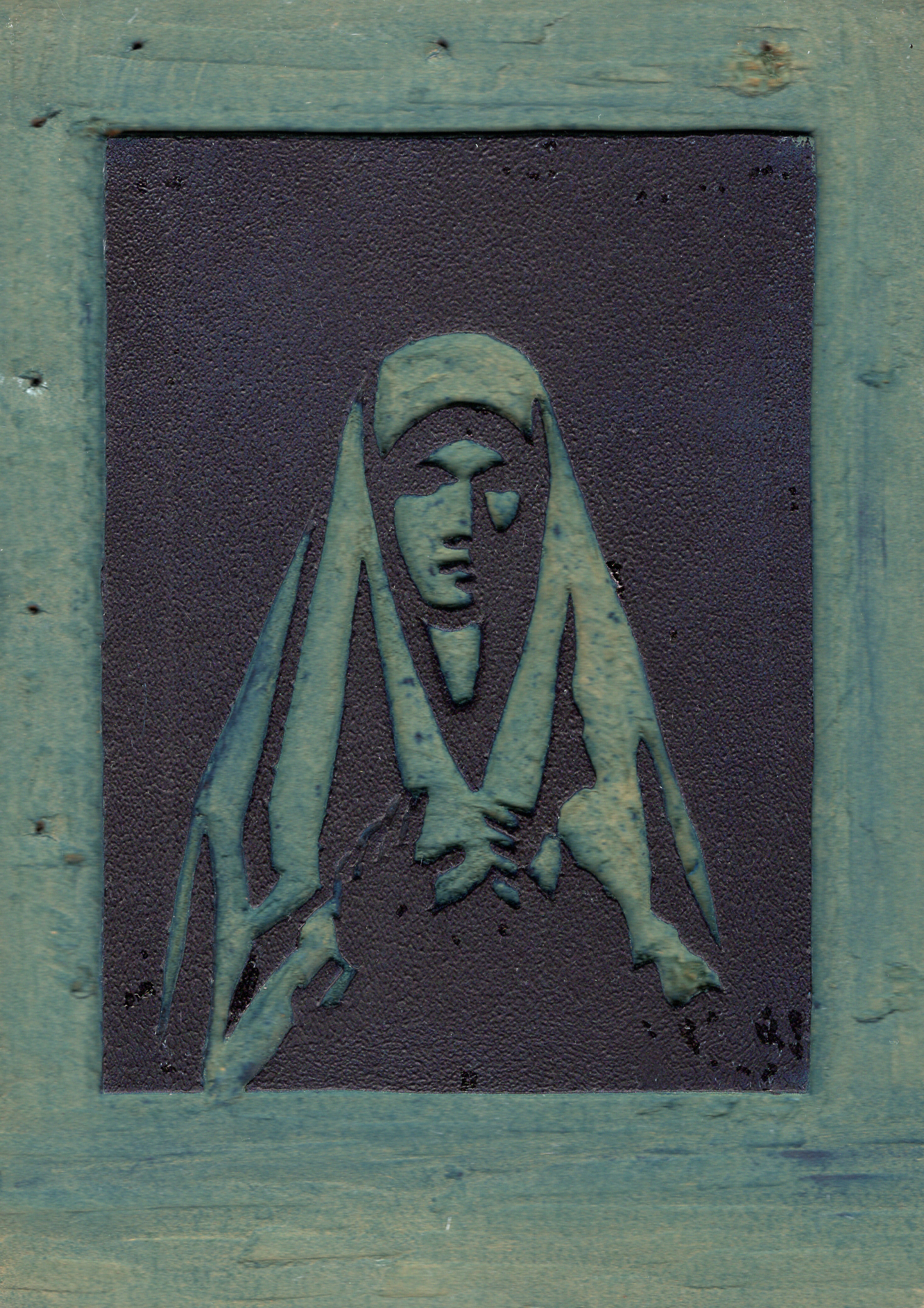
She Kept These Things and Pondered Them in Her Heart, linoleum block print by Craig Gallaway, copyright 2000. After Antonella Da Messina, Virgin Annunciate, 1465. Gabriel’s Message, a 13th century Basque carol paraphrased into modern English (mid 19th century) by the Anglican priest Sabine Barring-Gould. This arrangement for cello and guitar by Craig and Deborah Gallaway (copyright 2019) influenced by a live-video performance of the recording artist, Sting.
“BE IT UNTO ME, O LORD, ACCORDING TO THY WILL.”
When the angel Gabriel came to Mary to announce that she would give birth to a very special son, Mary already knew and loved the ancient Scriptural story of the covenant and the promise of which he spoke; and thus, though initially startled by his appearing, she came quickly to see why he called her “favored one.” Her son would become the promised King of Israel in the line of David (that is, the Messiah, Christos). And he would fulfill the promise that God made to Abraham (Genesis 12:1-3): “All the nations of the earth shall be blessed in you.” Given this background, we may find it only reasonable, an almost predictable response, that Mary would answer Gabriel, “Be it unto me according to what you have said.” But then we would miss the chain of difficulties, warnings, and dangers that the angel’s message brought into Mary’s life. Her faithfulness was never untested.
For one thing, the angel’s message put Mary’s approaching marriage in jeopardy. How would she explain this unprecedented pregnancy? Matthew’s gospel is candid about Joseph’s initial misgivings. We know that Joseph eventually stood faithfully with Mary as her husband; but she did not have assurances of this when she first embraced Gabriel’s life-altering news. And yet, in this way, Mary also gave her own marriage back to God, the Creator of marriage itself. She did not make an idol of it or bend it into some other shape that would come between her and her Maker. Her marriage would be a place where God’s purpose to restore the world, to restore the faithfulnessof marriage as well, would be at home.
Then, after Jesus’s birth at Bethlehem, Mary and Joseph took their son to have him circumcised at the Temple in Jerusalem (Luke 2:22-35). And there, meeting Simeon, Mary faced another fierce test of faith. For though Simeon confirmed Jesus’s identity as the promised King whose reign would bless the whole world; he also warned Mary that her son would be a cause of division and conflict in Israel and that “a sword will pierce your own heart as well.” Yet here again, Mary did not pull back. She did not make an idol of her own or her son’s future safety by grasping at security. How “normal” that sort of family-anxiety would have been. Instead, she offered her life and waited to see how God’s promise would yet unfold. Did she foresee clearly or fully how Jesus would defeat the fear of death and the stubborn idols of anxiety and avarice at the cross, in his resurrection, and with the gift of his Spirit? No, surely not, at least not as yet; but she put her faith in the God whose promise to Abraham was to restore the world, and whose covenant was now focused somehow in this Son to whom she had so recently given birth.
Study for Saint Nicholas of the Dowry, graphite drawing by Craig Gallaway, copyright 2011.
And then there came the Magi, the three wise men from the East, who brought gifts to honor the King whose birth even the stars of heaven bore witness. They came by way of power-hungry Herod. They departed Bethlehem wisely by another route. They were warned in a dream, as Joseph was warned by an angel: Herod, the existing authority of state in Jerusalem, would kill the child if he could find him. And so, Mary and Joseph became a kind of outlaws, running away to Egypt until Herod did his worst and finally died. They were not against the government or the state in principle. They had, after all, come to Bethlehem to participate in the census for the purpose of taxation. But neither would they make an idol of the government. If the government set itself up against the purpose and promise of God, they would not cooperate. They would not obey. Afterall, the government was given to serve God’s purposes, not the other way around.
And so, when Mary responded, “Be it unto me according to what you have said,” she did the most basic thing of all: she placed herself in obedience to the One true God of Israel, the God of Abraham, and David, the Creator of the universe, her Creator. She placed her whole life into God’s hands—her marriage, her hopes for a family, her future security and safety, her social standing and political influence. And though we have an advantage over Mary, at least at that early stage in her life—for we look back on Jesus’s birth from the other side of his faithful life and death, his victorious resurrection, and the sending of his Spirit with power—yet we are also very much like her and Joseph. For we also look forward through the haze of challenging personal, moral, social, and political trials and temptations to the ultimate fulfillment of our Lord’s promise to restore the whole world, and our own lives as well.
Mary no doubt came to know more fully in her life what the apostle Paul would later describe as the general pattern of life for all Christians, what we sometimes too readily soft pedal or skirt around, that we must be prepared to suffer and do battle, and yes to “groan,” as we make our way toward the fulfillment of the new creation. Indeed, Paul describes our calling with great clarity and spirit (Romans 12:1-2): “In view of the mercies of God,” he says, “present your bodies as a living sacrifice . . . that you may prove what is the good, acceptable, and perfect will of God.” Thus, in our own time and place, like Mary, we also can say with growing faith and hope, “Be it unto me, O Lord, according to thy will.”
FATHER ABRAHAM, watercolor by Craig Gallaway (copyright 2018). After the fall of Adam and Eve with its many branching consequences (Genesis 3-11), God came to the old man Abraham and his wife Sarah (Genesis 12) promising to use their descendants (as yet unbegotten and unborn!) to restore the broken, sinful, and divided world.
Father Abraham, words and music by Craig Gallaway, arrangement for cello and guitar by Craig and Deborah Gallaway, copyright 2020. Based on a traditional 17th century Swedish folk melody, Hoken.
Saint Athanasius in the 4th century asked a very important question: “Why the incarnation?” Why did the Son of God, the Word of God, become a human being? Why did he become a man living among us, suffering, dying, and rising again to new life? And Athanasius’s answer was the full and salutary biblical answer (John 1:1-12): He did this in order to restore the fallen world, to bring about the New Creation, as his Father had promised Abraham He would do. This, according to the Apostle Paul, is what has happened (with results that continue to unfold today) in Jesus’s victorious death, resurrection, ascension, reign, and the sending of his Spirit into the world. Thus, when we celebrate Christmas, the birth of Jesus, the incarnation of the Son of God, we celebrate this whole grand sweeping story of the renewal of the world in which we are still living and making our journey with him toward the final fulfillment. The whole creation waits eagerly for that day (Romans 8:19).
FATHER ABRAHAM (detail), watercolor by Craig Gallaway, copyright 2018.
This is why Deb and I begin our Advent preparation this week with a song about the promise God made to Abraham (Genesis 12:1-3). And it is why each verse of “Father Abraham” anticipates the other themes and songs that we will share with you in the weeks ahead, all of them proclaiming the ongoing New Creation work of the risen and exalted Christ. For our Lord is even now putting all sorts of things back into their proper creation order (1 Corinthians 15:20-28). For example, the third verse of “Father Abraham” speaks of how we lean into his kingdom work as he builds within us the virtues of justice, beauty, and love. And we will sing again about each of those virtues in the weeks ahead as we celebrate our Lord’s special reordering through his Spirit of how we see the value of our own work, and how we approach the problem of racism, and how we recover a life of holiness in marriage. All, as a result of the incarnation. All, as a consequence of Christmas. All, a matter of his new creation purpose.
So, Yes! Christmas is about all of these things because it is about the birth of the baby Jesus who took our nature upon himself in order to restore it. And it is about his faithful life and death, because that was the initial battleground upon which he achieved the restoration by defeating sin, death, and the devil in his own body, irrevocably, at the cross. And it is about his resurrection and ascension and the sending of his Spirit, because that is how he makes the power and glory of his victory available to us even now as we make our journey with him toward the ultimate fulfillment of his plan and purpose. No wonder, then, that Charles Wesley’s famous hymn has remained so resonant among all who love and celebrate Christmas:
Come, thou long expected Jesus, born to set thy people free;
From our fears and sins release us, let us find our rest in Thee.
Israel’s strength and consolation, hope of all the earth thou art;
Dear desire of every nation, joy of every longing heart.
In the weeks of Advent just ahead, then, Deb and I will be sharing one song and at least one work of art each week that celebrate some of the different facets of this grand Christmas story. Here is a brief preview:
She Kept These Things and Pondered Them in Her Heart, Linoleum Block Print by Craig Gallaway, copyright 2000. After Antonello Da Messina, Virgin Annunciate, 1465.
Week 1, Nov.27 – The Angel Gabriel and the story of Mary’s obedience, “Be it unto me according to Thy will.” In a way, Mary did what Paul calls all Christians to do in Romans 12:1-2, “In view of God’s mercies, present your bodies as a living sacrifice . . . that you may prove the full extent of God’s holy purpose.”
Snow Dance, watercolor by Craig Gallaway, copyright 2010. Based on C. S. Lewis’s Narnia Tales.
Week 2, Dec. 4 – In the Bleak Midwinter and the call to lay our talents, our gifts, and our work at our Lord’s feet in service to others (Romans 12:3-16). This might seem simple enough at a glance; but it is actually very difficult in a world that trains us constantly to be concerned about our own status in comparison to others, especially in our areas of work and professional life. This song quietly reminds us to give our hearts to the Master, who took a towel and a bowl of water . . .
Saint Nicholas Praying for the Recovery of His Tradition, watercolor by Craig Gallaway, copyright 2005.
Week 3, Dec. 11 – Some Children See Him and the celebration of our common humanity in Christ (Galatians 3:28). In a world where the charge of racism is abused by neo-Marxist critical theory to stir up envy and to divide, the Lord’s call to unity and to the simple affirmation of cultural differences is a healing balm indeed. “So, lay aside each earthly thing; and with your heart as offering . . .”
Saint Nicholas of the Dowry, graphite drawing by Craig Gallaway, copyright 2012. Based on the stories of Nicholas’s provision of dowry resources for daughters of the poor.
Week 4, Dec. 18 – You Ain’t Goin’ Nowhere and the joyful recovery of marriage following the bridegroom’s example (Ephesians 5:21-33). Again, in a world riddled with sexual decadence, pornography, and licentiousness, the Lord’s example of a life of caring, faithful, self-disciplined stewardship on behalf of one’s spouse is like a harbor for the soul and for society as well. “Ooh wee, ride me high, tomorrow’s the day my bride will arrive . . .”
All Creation Waits in Eager Expectation, watercolor by Craig Gallaway, copyright2004.
Dec. 25 – On Christmas day, then, we’ll share Charles Wesley’s great hymn of invocation, personally welcoming and inviting our Lord’s ongoing work in our lives both at Christmas and in the year ahead.
If you choose to make use of these Advent offerings from our house to yours in the weeks ahead, we hope they will bring an added element of worship, praise, thanksgiving, and hope to you and your house.


 Faith and the Arts