
“O my, what a time that was.” We say this about an event when we have experienced something truly remarkable. The event may have been something wonderful, like a magical vacation at the beach. Or it may have been something terrible, like the loss of a loved one in an accident, or a time of awful breakdown in society. In either case, the event in view, and the time while it lasted, was full of meaning for us; and even now, when we remember it, our time is once again filled with the meaning of sorrow or hope, or both, with which that time was full.
This sense of time is roughly equivalent to what the New Testament means with the Greek word kairos, that is, time filled with meaning. Only, in the New Testament, the meaning in question is focused on what God has done and is doing in time–that is, in the events through which we live our lives in history. So, for example, Ephesians 1:10 speaks of what God has done in Jesus, when the time (kairos) was ripe, “to sum up the whole cosmos in the King (Jesus)—yes, everything in heaven and earth, in him.” Have you ever thought of the meaning of your life in the light of what Jesus did in his life and death, and what he continues to do today because of his resurrection and his Spirit? When we are able to see our lives in this way, we realize that we are truly living in a remarkable time, filled with meaning!
There is another Greek word for time that is used in the New Testament, chronos. Chronos refers to time as we count and measure it. It is the root word from which we get our English words such as chronological, and chronometer. It is what we might think of as “clock time”—hours and minutes and seconds, days and weeks, months and years. Such time may simply pass from one second to the next. It need not be filled with any special meaning at all. In fact, if we try to isolate such time in the present moment, without any reference to some other meaning, we find that it is vaporous and vanishing—what some have called the specious present. It is this kind of time that Jesus seems to have had in mind when he chided Phillip (Luke 14:9) for not paying more attention to what was really going on: “Have I been with you for such a long time (chronos), and still you don’t know me?”
Try an experiment for yourself: Try to focus on the present instant of time. Where is it? When is it? Where does it go? How long does it last? As soon as you think about this instant, it is already past and gone; and another instant has taken its place, each empty of meaning unless supplied from something outside of the instant itself. Some people spend a long time (chronos) living their lives, like Phillip, without ever understanding the meaning of the time (kairos) in which they live.
So how can we discover kairos in the midst of chronos if we want our time to have meaning beyond the mere passage of seconds and minutes? I’ll bet you can answer this question for yourself, using nothing more than the definitions already provided. Here is my answer: We must learn to remember the larger story within which we live our lives. And this means not only the larger story of our own lives, both the good times and the bad times and the long difficult stretches, but also the larger Story, according to the Bible, of what God himself is doing through time to reconcile everything in Christ.
And so, note well, we need to remember the whole of the biblical story—its long past in the history of creation and Israel, its climax in the events of Jesus death and resurrection and the sending of his Spirit, and its still unfolding future in the promise of New Creation, toward which “everything in heaven and earth” is moving. Yes, we need to remember not only the biblical past, but also the promised future as well!
And we need to remember (“re-member”) that is to bring back together everything in our own lives in the light provided by the biblical story. Someone might worry at this point that this makes the biblical story too intrusive. But the biblical story does not diminish our personal story or make it small or insignificant in some way. For God has made no two snowflakes or leaves or people alike in all the long history of the world. And, as Jesus said, he knows every hair on each of our heads. And he knows when every sparrow falls. No, the biblical story does not make our personal story small so much as it shows how our story is woven into the great story of which we are a part, and in which we have our own unique part to play.
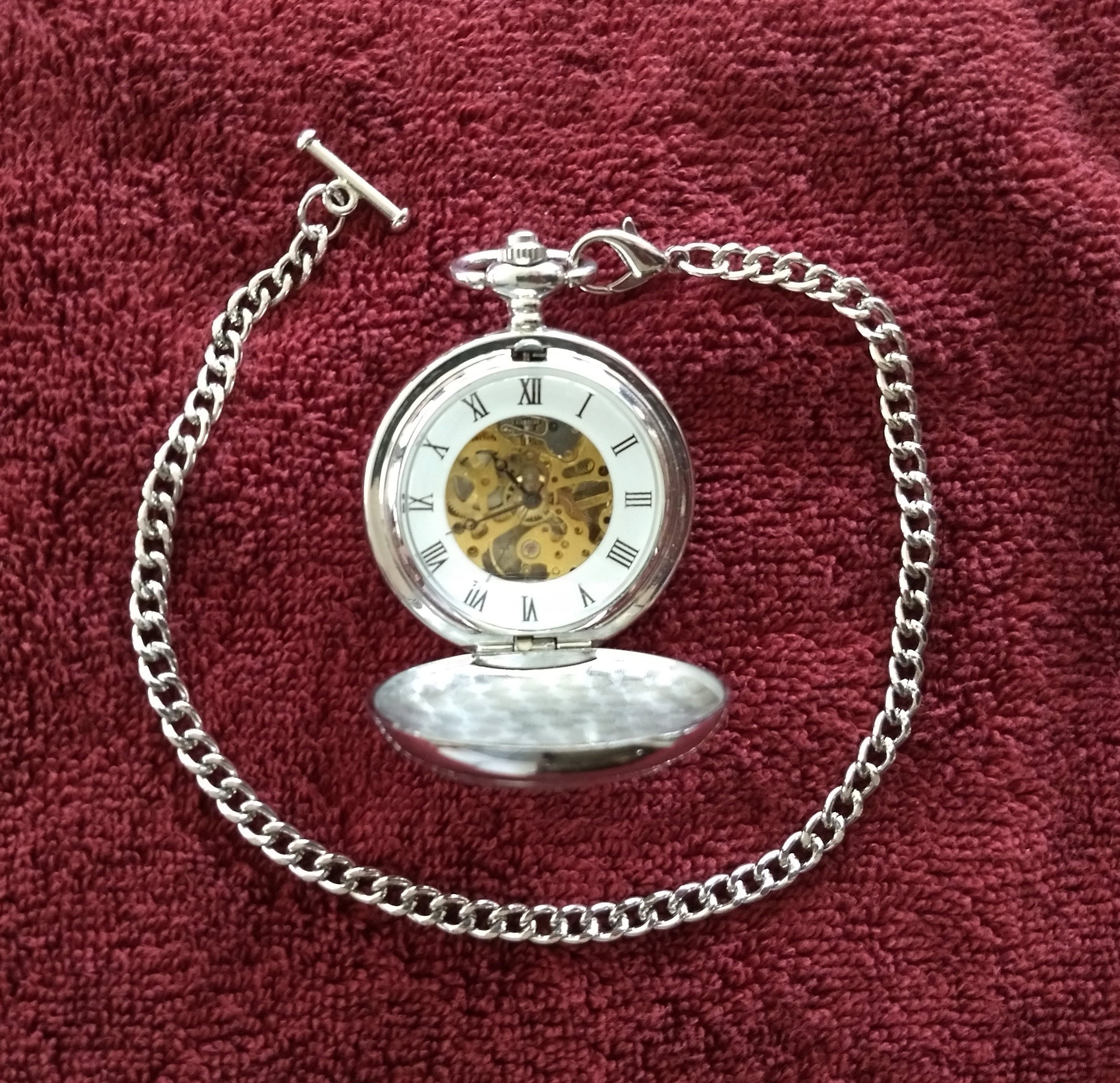
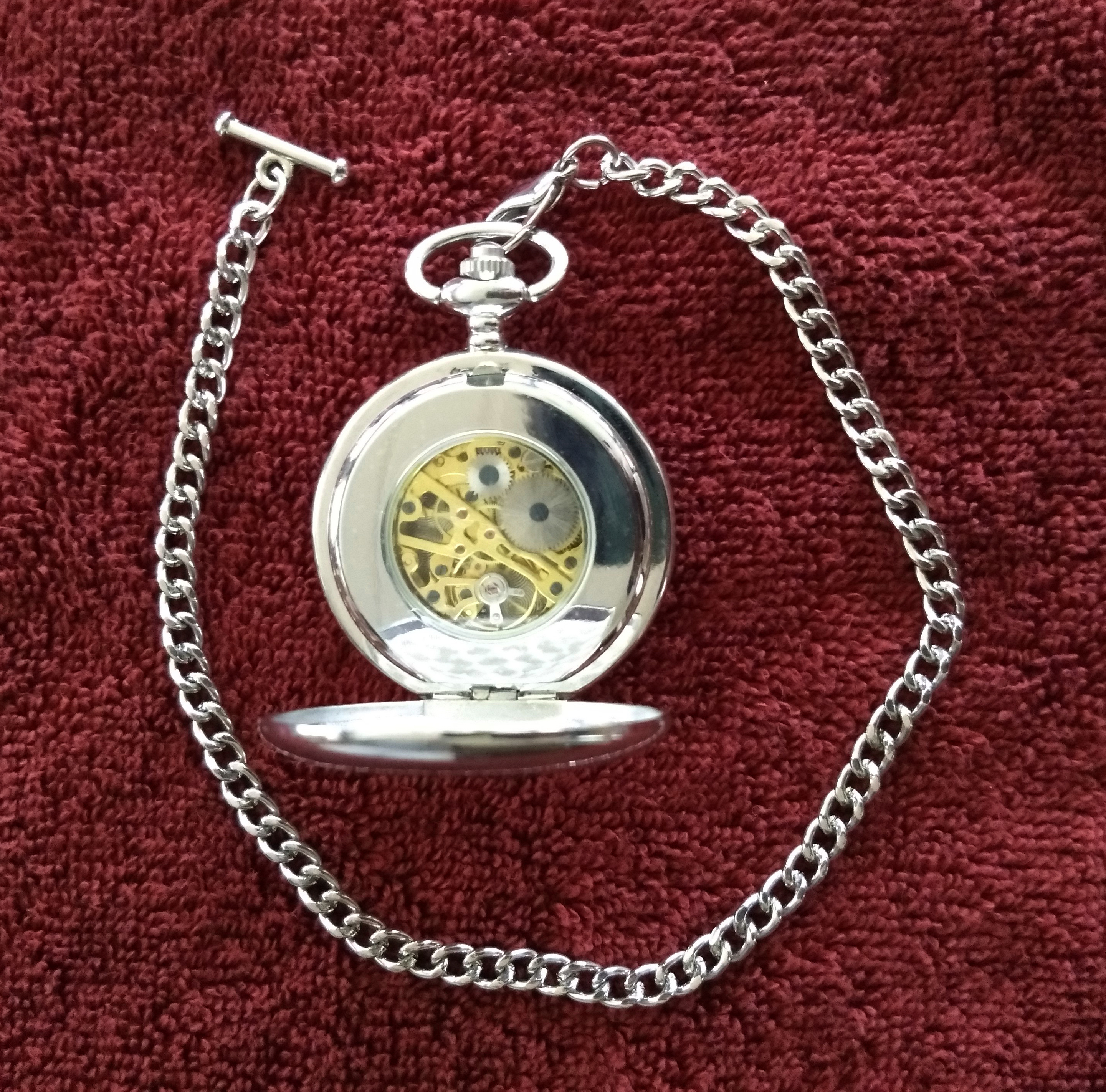
In my father’s belongings, after he died, I found a lovely small silver pocket watch and chain. The watch has a case that opens both on the front and at the back. Inside, from both sides, you can see the clock’s works, the spinning wheels and golden gears that enable the watch to keep time (chronos). But the watch has one fault in this regard. It has to be wound about every four hours in order to keep marking the passage of chronos.
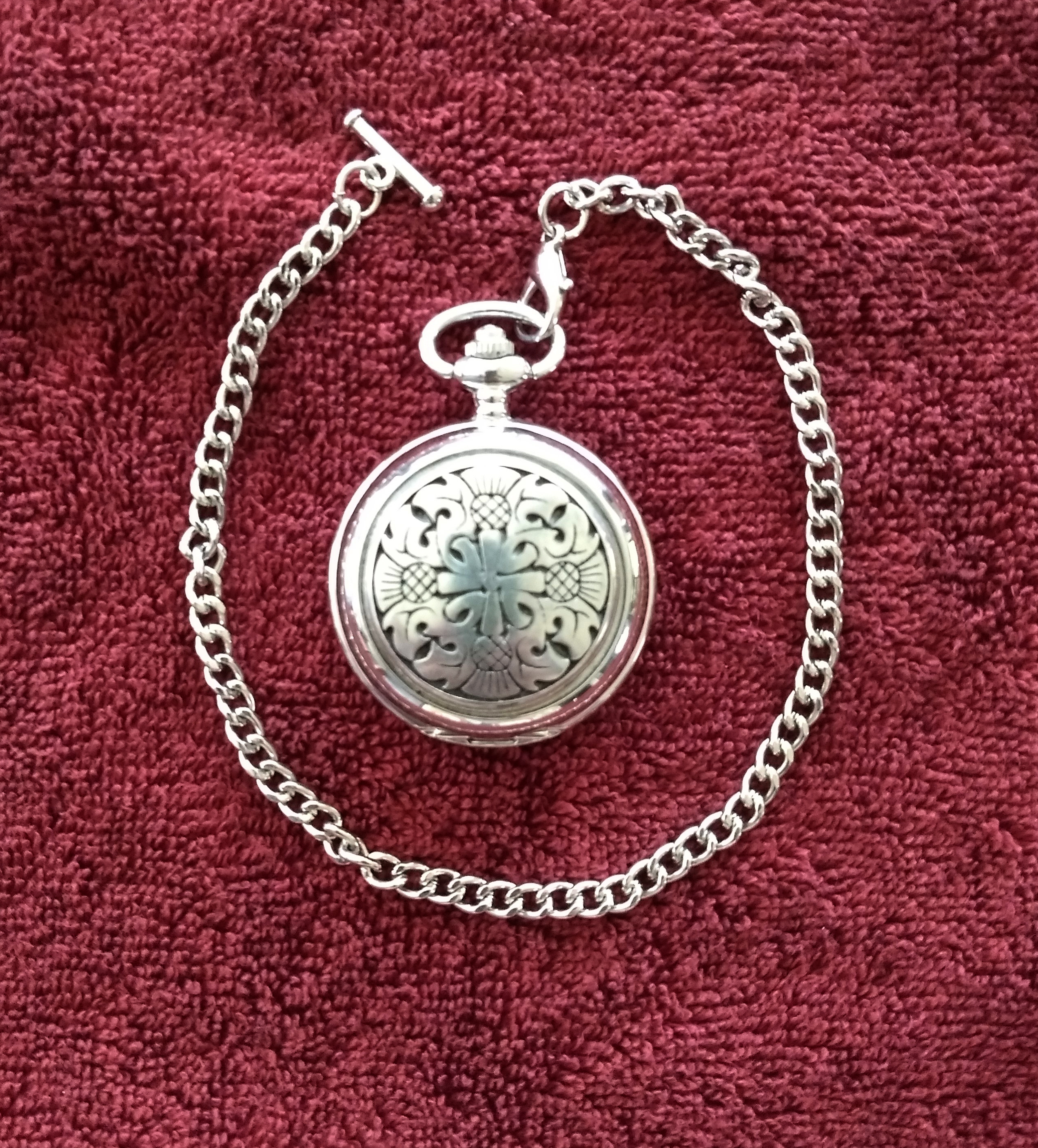
At the same time, the watch has another feature. On its cover is an engraving of a Celtic cross. Each limb of the cross ends in a design that looks like a blossoming flower, and the whole design is woven into a pattern of leaves and growing plants. This familiar pattern of Celtic crosses reminds us that Jesus’s life and achievement, did not end with his death on the cross. Jesus went through death and out the other side to the new life of his resurrection which he now makes available to us. And this is the pattern also of our lives when we place our lives in his care. We experience death to all that has misshapen and distorted our humanity made in God’s image, and we begin to experience the “first fruits” of the resurrection now, as we live our lives in His Spirit, and look forward to the Day of actual physical resurrection when our Maker brings the whole creation to the long-awaited fulfillment. Thus, is biblical time filled with meaning.
I don’t imagine my father worried too much about keeping this watch wound up all the time in order to keep track of chronos. He had other, more efficient chronometers for that purpose. But I know he kept his mind and heart centered on the story symbolized on the cover of this watch so that he could face with faith, hope, love, and courage whatever he met in the course of his own life and death. I know for a fact, that the hope of the resurrection filled his mind and heart with the fullness of kairos during the last hours of his life in this age of the world. And I am sure that he would want me, and you, especially at this time of the changing year, to remember our lives as well (past, present, and future) within the great story of redemption and restoration that gives our lives their deepest and fullest meaning—not so much the story that we tell, as the Story that tells us.
 Faith and the Arts