Ordinary Time and the Echo of the Far Country [1]


Canyon, Watercolor, copyright 2007 by Craig Gallaway

According to the Apostle Paul, Jesus our King (the “Messiah” of Israel) has risen from the dead and is, even now, praying for us as we walk in his Spirit on the road of new creation (Romans 8:34). And as he prays, again according to Paul, he is also working through his Spirit to extend his reign over every enemy that opposes the godly order of creation, including the final enemy, death (1 Corinthians 15:25-26). His goal in all of this is to restore the order of Creation throughout the world, corrupted and misshapen as it is since the fall of Adam (Romans 1:18-32), and in particular to restore the order of our Maker’s own creative, strong, and loving image in us human beings (Romans 8:18-29). This is all in fulfillment of the Creator’s promise to Abraham, described in the book of Genesis, that Abraham’s descendent (his seed) would be the means by which the Maker would restore the fallen world (Genesis 12:1-3). According to Paul again, this promise to Abraham, and this restoration of the fallen world, is what King Jesus came into the world to accomplish through his victory over sin, death, and the fallen powers in his cross, his resurrection, and the sending of his Spirit (Romans 4:13-5:21; 8:1-17). That is, in his own body—his faithful life and death, and then through his victorious resurrection and the sending of His Spirit—he is even now at work in those who put their lives into his hands by faith. He is transforming and restoring us and the whole created order with us (Romans 5:12-21; 6:6-14; 12:1-2; 1 Corinthians 15:20-22).

This story of Jesus’s victory over sin and death and his reign as the risen Lord through his Spirit is, Deb and I believe, what Paul means by the word “gospel” as in Romans 1:16. If we want to know what Easter is really about, what Christmas is about, and what God’s purpose for the world is all about, this is the story. There are, of course, various opinions and theories[2] in the history of Christian thought which attempt to interpret some part or facet of these bedrock Scriptural events; but the good news embodied in the events themselves is the main path of Scripture. Jesus was faithfully obedient even unto death on the cross (Philippians 2:6-8). He died to sin once and only once, so death no longer has any authority over him (Romans 6:10-11). Therefore, God has raised him from the dead and made him Lord and King over all (Philippians 2:9-11). So now, by his Spirit, he is guiding, strengthening, and leading us toward the great day of our own resurrection, judgement, and the new heaven and earth, of which we now have the first fruits (Romans 8:18-39). With this scriptural account of Jesus’s victory over sin, death, and the devil in his own body, and his continuing work as our risen Lord by the presence and power of his Spirit to restore the fallen world, we find ourselves, if we put our faith in him, on the main path of Scripture moving toward the fulfillment of the promise of new creation (Romans 8:18-39).[3]

With this journey of faith in Christ on the road of new creation in mind, and mindful also of the suffering and spiritual warfare of the current time in our culture, Deb and I offer the attached song as a kind of theme “music for the road,” expressing at least part of the emotional range of the daily path and battle as we know it. The title of the tune is “Craigieburn” which ties Craig’s own name to its Scottish origins, and means “rocky stream.”[4] We hear this music as an “echo from the far country,” a kind of longing for and foretaste of the beauties of the world fully restored. And yet it also has something in it of the groaning that Paul acknowledges for those who are on this new creation path with our Lord (Romans 8:18-26). And isn’t this why the Apostle exhorted the believers at Philippi to put their minds on certain kinds of things: “Whatsoever things are true, noble, just, pure, beautiful, admirable, virtuous, and worthy of praise, think on these things” (Philippians 4:8-9). We are called to be cheerful in a still fallen, dangerous, and disordered world. Jesus also spoke of this when he encouraged his first disciples, “In this world you will have much suffering, but be of good cheer, for I have overcome the world” (John 16:33). And, for a more recent witness, we can recall C. S. Lewis’s thoughts about the Christian doctrine of suffering and how our Lord encourages us to live a life of cheerful insecurity:

The Christian doctrine of suffering explains, I believe, a very curious fact about the world we live in. The settled happiness and security which we all desire, God withholds from us by the very nature of the world: but joy, pleasure, and merriment He has scattered broadcast. We are never safe, but we have plenty of fun, and some ecstasy. It is not hard to see why. The security we crave would teach us to rest our hearts in this [present] world and oppose an obstacle to our return to God: a few moments of happy love, a landscape, a symphony, a merry meeting with our friends, a bathe [swim] or a football match, have no such tendency. Our Father refreshes us on our journey with some very pleasant inns, but will not encourage us to mistake them for home.[5]  

Craigieburn Wood, arranged by William Coulter, played by Craig and Deborah Gallaway

And so, Deb and I offer this music as an inn along the way, echoing with strains of the good, the true, and the beautiful from the far country of the restored and reordered world. And as we continue on our journey, we are convinced—despite all of the troubles that we are surely facing—that nothing can separate us from the promise of this homecoming. The Lord is risen. He is risen indeed.

_____________________________________________________________

[1] “Ordinary Time” refers to those stretches in the calendar of the Christian year when the great festivals of Advent-Christmas and Lent-Easter are not in action; when the days and weeks are simply numbered with the numbering system known as the “ordinals,” such as the first Sunday in Pentecost, or the second Sunday in Kingdomtide. Thus, the word ordinary doesn’t really imply that nothing special or “extraordinary” ever happens during these periods; yet it does, in a different sense, remind us that there are times in our daily Christian lives when we have simply to practice with patience the regular disciplines of our faith. And one of those disciplines is surely to remember well the basic story of the gospel and the Scripture which brings order to all of our lives.    

[2] For example, the various “theories of atonement” such as the moral influence theory, the penalty substitution theory, and so forth; but none of these hold together the full range and depth of our Lord’s new creation purpose which animates and integrates the narrative of Paul’s faith and world view.    

[3] For additional help in tracking this Scriptural story of salvation, see for example: Athanasius, On the Incarnation; John Wesley, “The Scripture Way of Salvation;” Craig Gallaway, The Presence of Christ with the Worshipping Community; and N. T. Wright, How God Became King.

[4] We first heard this lovely melody and the basic arrangement that we are using, on a CD by the guitarist William Coulter titled “The Crooked Road.” The title of the original tune is “Craigieburn Wood,” which comes from a poem by Robert Burns (1759-1796). The compound word “Craigieburn” in the Scottish dialect refers to a rocky or stony stream (a “craggy burn”). The connection with Craig’s own name has given him a chance to reflect on the parallels between his journey, with its many ups and downs and twists and turns, and that of the Apostle Peter (Petros, “rock”) as well as the description of our shared and sometimes-rocky Christian journey to new creation given in Romans 8. All of these journeys evoke the attitude of patient faith and hope that is the way of new creation, of life in the Spirit, as we journey toward the great day of fulfillment and banqueting, when “the knowledge of the glory of the Lord shall cover the earth as the waters cover the sea” (Isaiah 11:9; Habakkuk 2:14; Revelation 21:1-4).

[5] C. S. Lewis, The Problem of Pain (Macmillan, 1966) p. 115.  

All Hallows Eve with Christ: For Our Grandchildren, Part 2

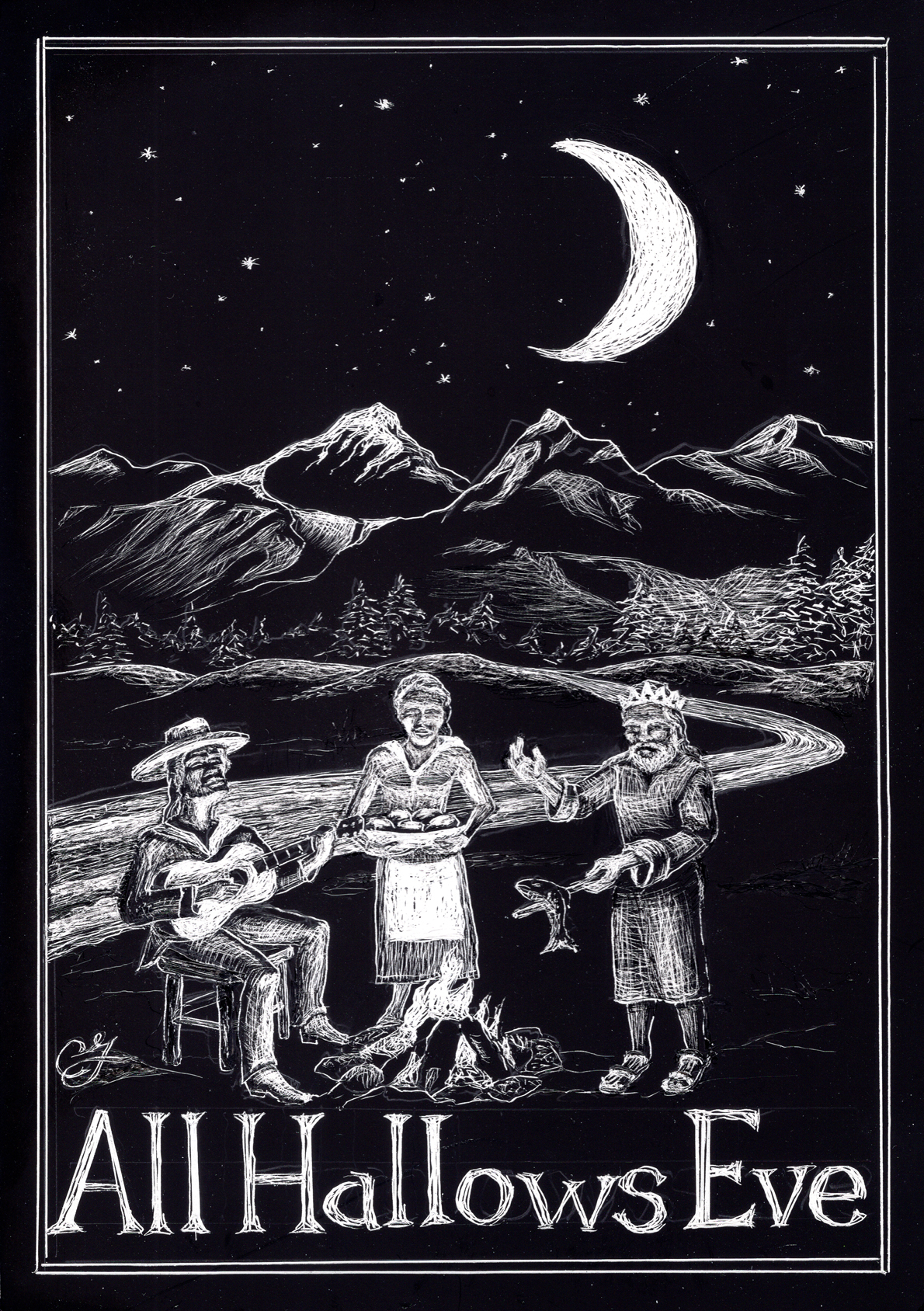
All Hallows Eve, by Craig Gallaway, 2021 (scratchboard)
© 2021 by Gallaway Art

One of the first things that Jesus did after he rose from the dead was to fix a breakfast of fish for his disciples by the sea of Galilea. His camp fire effort is a sign of the kind of holy life that we believe we too shall have when we rise on the Day of New Creation. But who are the other two people in the picture? They could be some of the people whose stories we tell in this album. They could also be us, Grandpa and Grandma Gallaway, once we leave this present life, and make our journey to be with Christ in paradise until the new Day comes. You see, we too have loved to share music, and to make delicious food for you and others. What is more, we believe that we shall enjoy these gifts again, just like Jesus did by the sea, when we gather around the fire with him. That’s why our picture also has mountains and cold and snow. Life with Jesus was never meant to be a life with no weather or work, no challenges or faith, no courage or hope. The Hallows know this better than anyone.

_______________________________________________


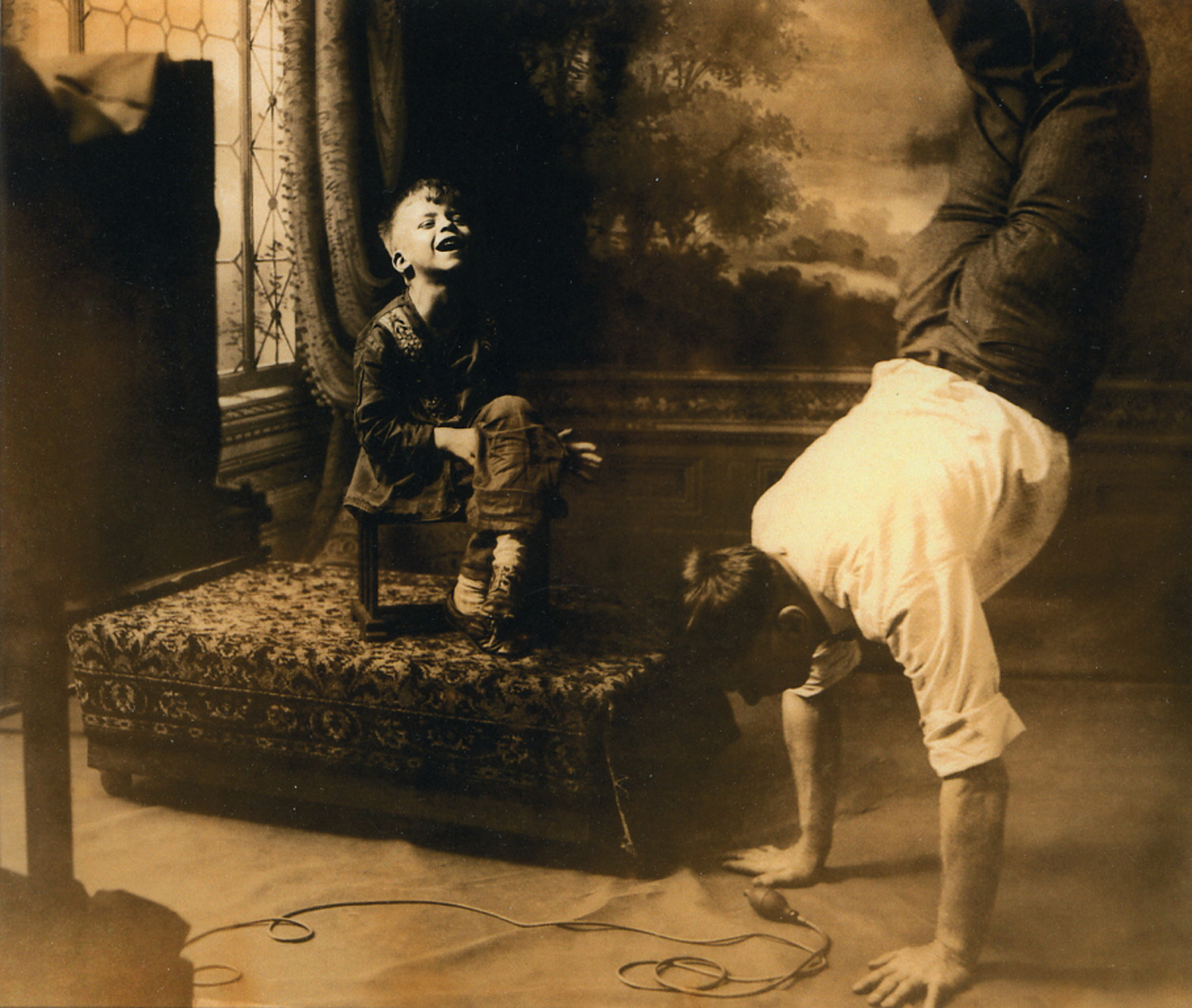
Great Granddad Luder with his father, about 1925

Carl Raymond Luder, 1921-2007

Your Great Grandfather on Your Father’s Side

Great-Grandpa Luder grew up in Washington, Indiana, a small town where his father was a photographer. That’s grandpa Luder, when he was a boy, playing with his father in the studio. But Grandpa Luder’s life wasn’t always easy and fun. Like many in his generation he served in World War II and in Korea. He met your great-grandmother, Marylouise, in Hawaii at the time of Pearl Harbor. 


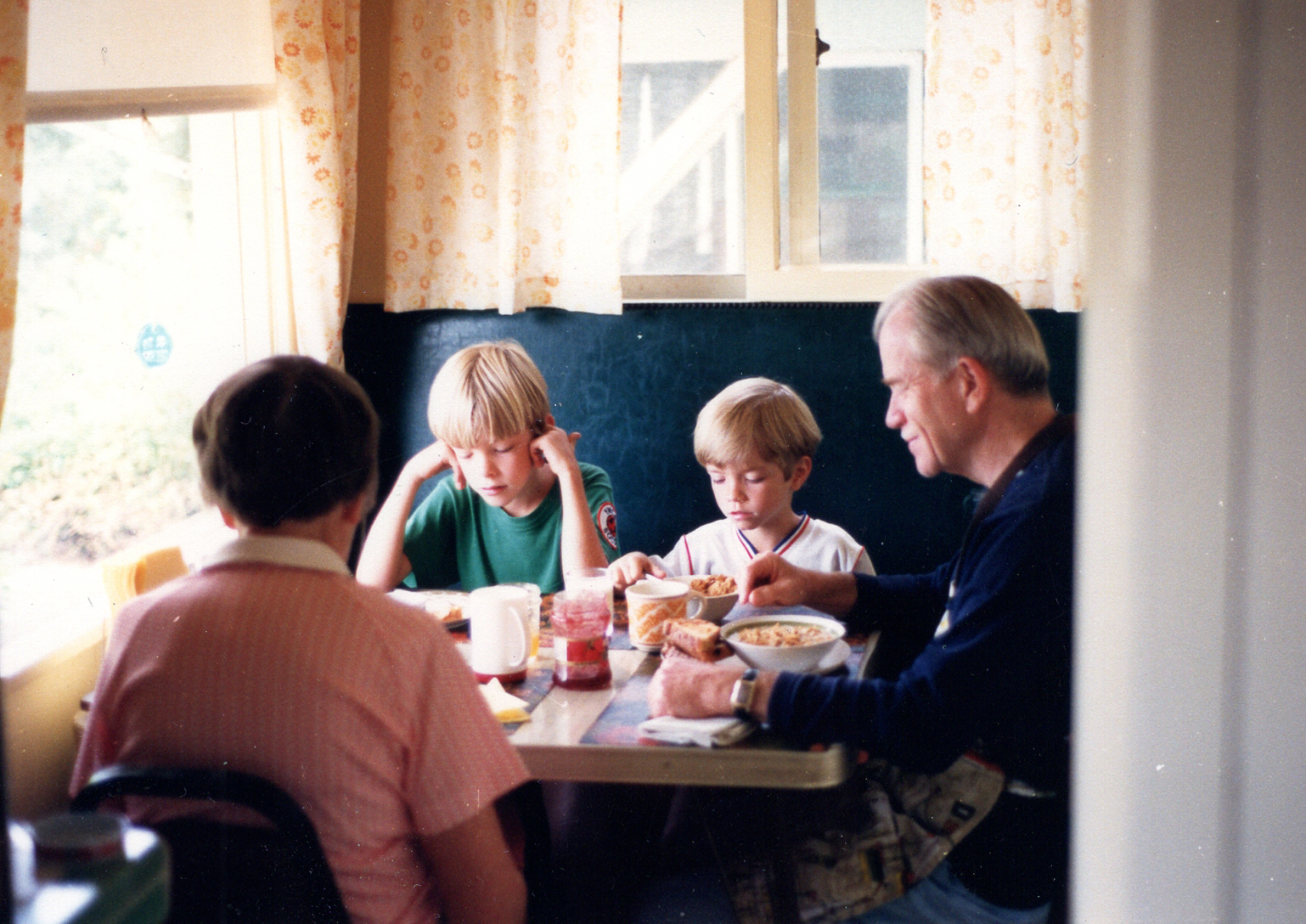
Carl and Louise with Ben and Chris, 1988

Later in life, Grandpa Luder enjoyed planting a vegetable garden each summer. He was a gentle man who always told the truth. He and Marylouise sang a prayer to start the day: 

Good morning, Lord–It’s great to see the sun again! 

Good morning, Lord—It’s great to talk to You again. 

This day’s a flower and as it blooms, I’ll trust its care to You. 

That’s why I say, as it begins, “Good morning, Lord!”

  “This is the day that the Lord hath made; we will rejoice and be glad in it.”

Psalm 118:24

_________________________________________________


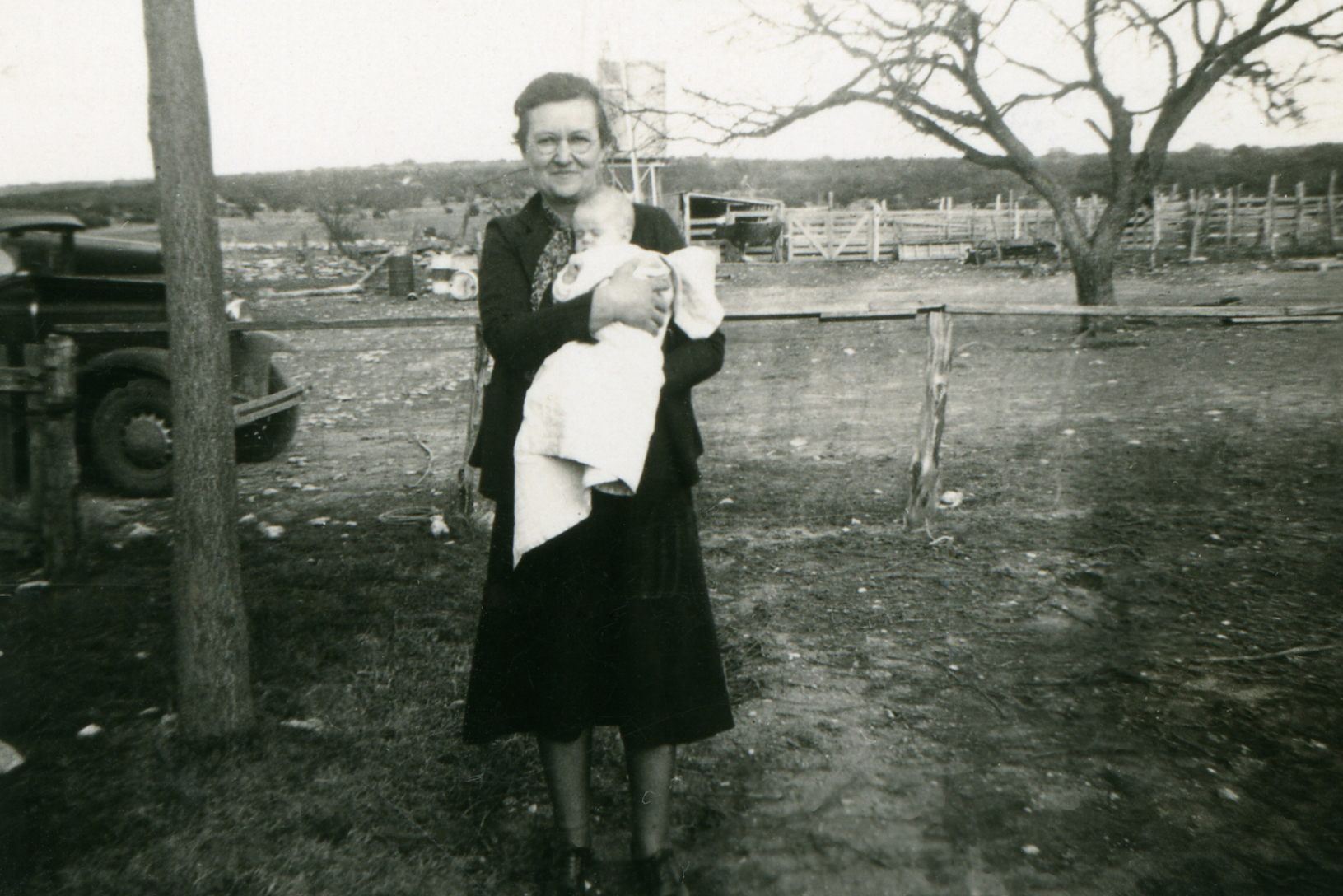
Mama Gallaway with baby Ira, about 1925

Julia Estelle Taylor Gallaway, 1894-1968

Your 2nd Great Grandmother, Your Father’s Side

“Mama” Gallaway, as she was known not only to her family but to everyone in the countryside around Glen Cove, Texas, was a wonderful woman. She came of age in the 1920s, and raised her family during the hard Depression years. That’s her, holding baby Ira, in about 1924-25 at the old Burton Place.  Mama grew big gardens, and put up hundreds of jars of fruit and vegetables so her five sons could eat during the winter. 


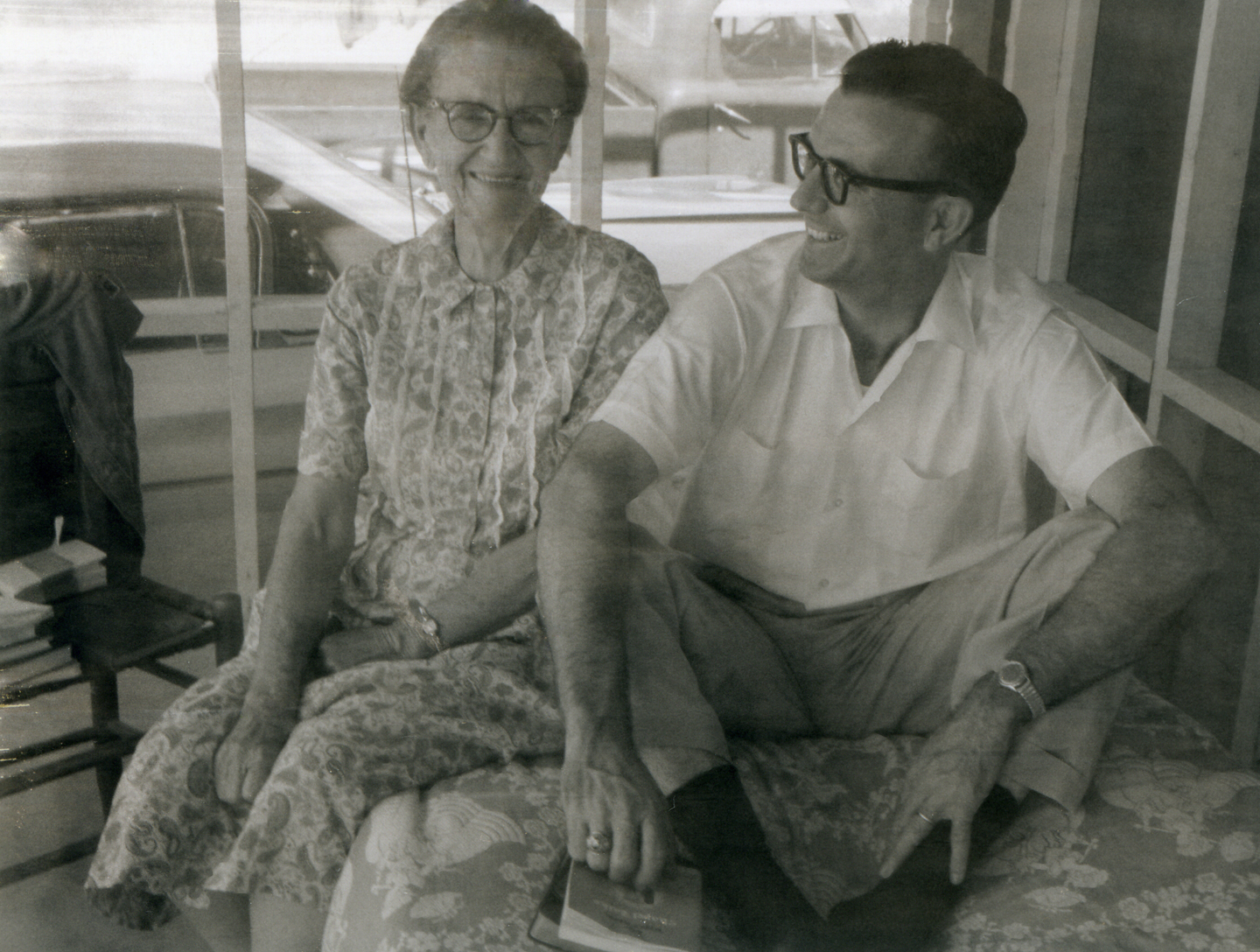
Mama with Great Granddad Ira on her front porch about 1956

Mama was kind. She always reached out to you and offered something. I (Grandpa Gallaway) used to come begging a pinch of dough when she was making bread. “Why Craig, that’ll give you a belly-ache.” “But Mama, I just want a little piece.” “Well, alright then; but not any more!” This happened pretty much daily. Despite the many hardships of her life, Mama was a grateful and a happy person. How good it will be to see her again.

Ephesians 4:32 – “And be ye kind to one another, tender-hearted, forgiving one another, even as God for Christ’s sake hath forgiven you.”

___________________________________________________  

All Hallows Eve with Christ: For Our Grandchildren

All Hallows Eve, by Craig Gallaway

Dear Colin and Rose,

All Hallows Eve, or “Halloween,” is a special day, once a year on October 31, when Christians remember and celebrate those who have gone before us in the life of faith; those who have already died and are now with our Lord in the place that Jesus called “paradise” (Luke 23:43). These people include our friends and family members who have died in the faith, and many others we have never known, all of whom believed in Christ, and all of whom are now with Christ in paradise waiting for the great and final day of the Lord’s judgement and the resurrection. They are “resting,” or “asleep” as the Scriptures say, until the Day of the Lord (Revelation 6:9-11).

In this photo album, we are gathering pictures and short stories about the members of our family who have already made this journey, men and women, maybe sometimes boys and girls, who lived with faith in Christ and His Spirit, who grew in that faith for the time allotted to them, and who then died and now wait (even as we wait) for the renewal of life-in-the-body that will come with the resurrection from the dead  (1 Cor. 15:12-26).

The people in this album were not perfect. They had their own flaws and failures. They struggled with temptations and difficulties. But because they believed in Christ and His Spirit, they did not face those troubles alone. They faced them with His help and guidance. And so, they became what the Scriptures call “saints,” that is, people who, despite their flaws, are being made holy by Christ and His Spirit. The stories we tell about them will include some of their struggles and how God helped them.

Our goal, each Halloween, will be to add to this album so that you, our grandchildren, can remember these examples of faith and holiness in your own family as you face your own struggles and temptations. This is the “communion of the saints,” saints above with saints below, and it is what “all hallows eve” is all about. 

Of course, there are other customs at Halloween, like “trick or treat” and dressing up in costumes, that are fun. And there are some old traditions in other religions, like Samhain, that sometimes are not like Christ at all. But we want you to know how to celebrate Halloween in Christ.

2 Corinthians 10:5 – “Take every thought captive for Christ.” 

_______________________________________________________________

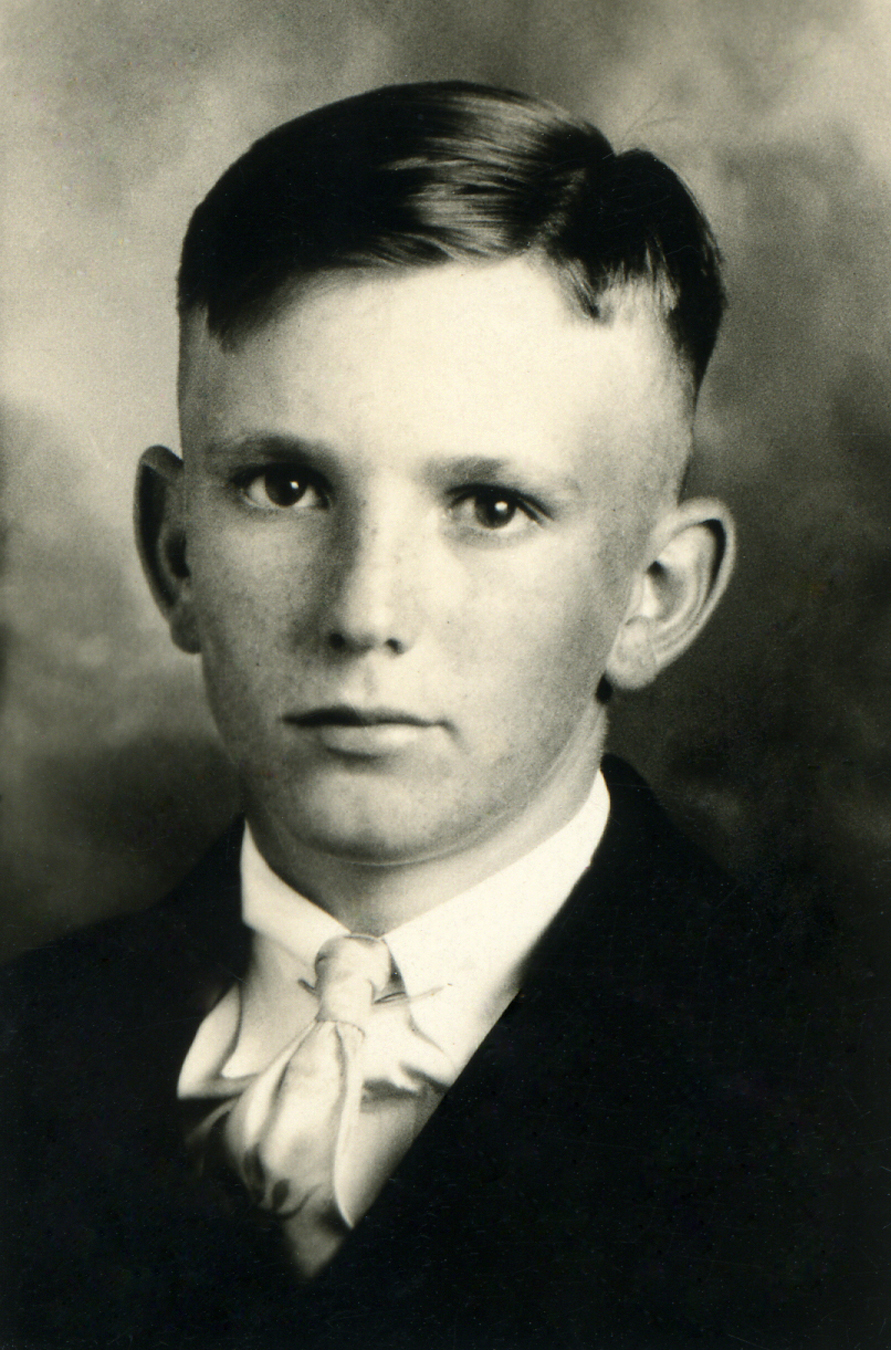
Ira Leon Gallaway at 6 years old

Ira Leon Gallaway,  1924 – 2015

Your Great Grandfather on your father’s side

Granddad Ira grew up and went to school at Glen Cove, Texas. When he was still little, there was a bully at school that used to pick on him. Every day he came home crying and complaining about this bully; until one day his older brother, Presley, said, “If you come home one more day complaining about that bully, I’m gonna whip you too.” Press knew that Granddad needed to learn to stand up for himself. And Granddad was more afraid of Press than of the bully. So, the next day, Granddad beat up the bully; and that put a stop to that.

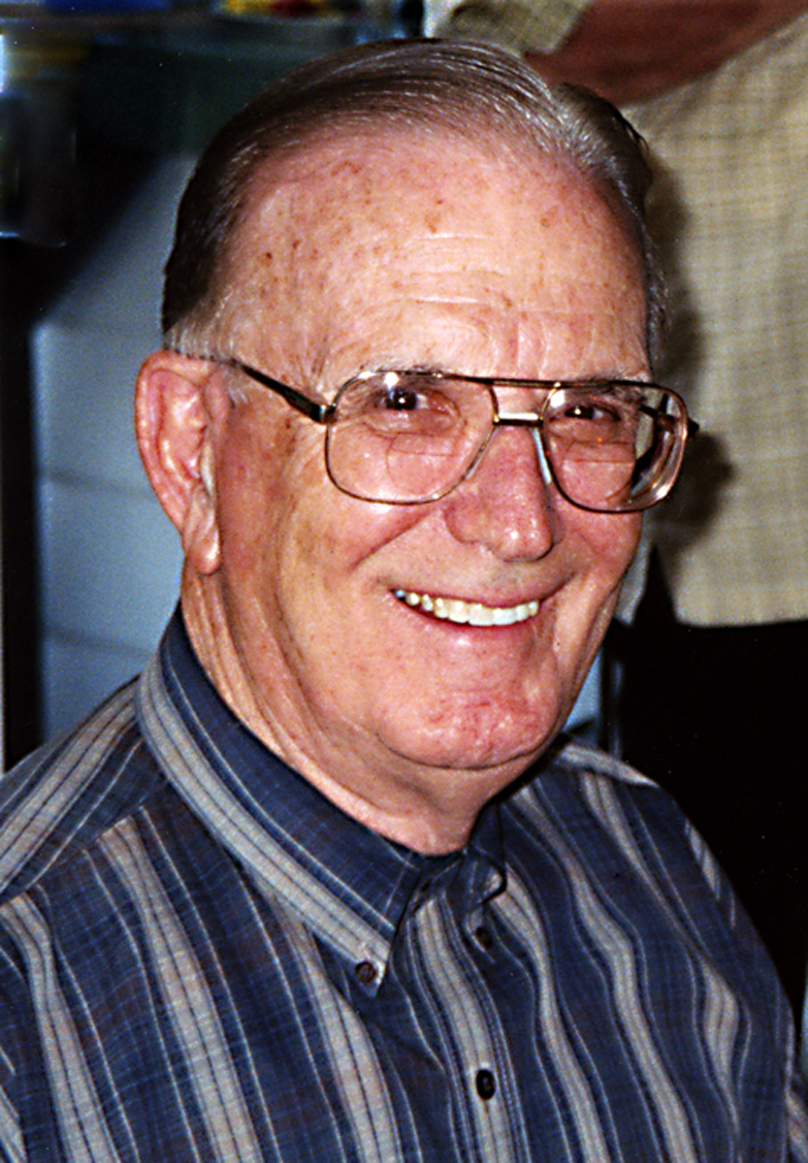
Ira Leon Gallaway at 79 years old

Later in life, Granddad became a very brave and courageous man. He would often stand up for what was right when other people were afraid. Maybe that’s why his parents gave him the middle name, Leon, which means “lion.”

Philippians 4:13 – “I can do all things through Christ who strengthens me.”

________________________________________________________________

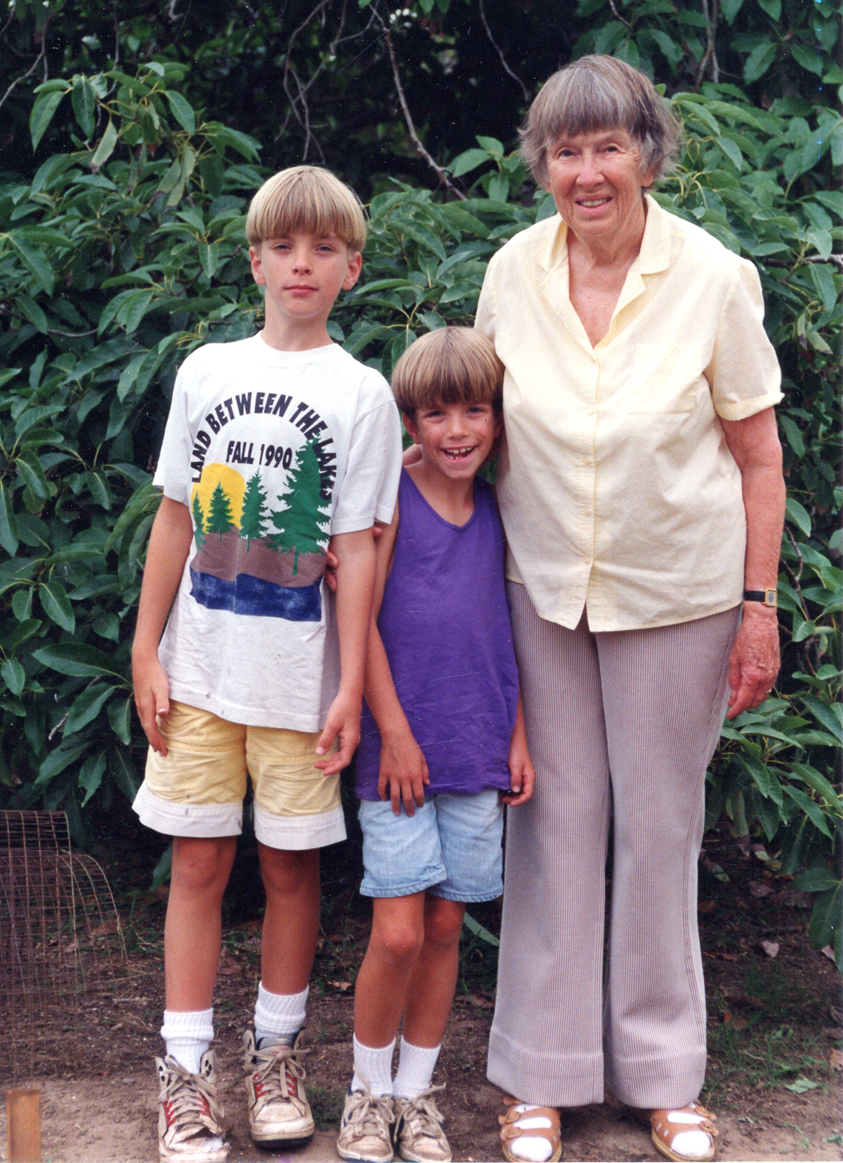
Great Grandma Luder with Ben and Chris, 1990

Marylouise Wellensgard Luder, 1913-2004

Your Great Grandmother on Your Father’s Side

Great-Grandma Luder lived most of her life in Santa Barbara, California. Your Grandma Gallaway is her daughter. When your dad and his brothers Ben and Zach were little boys, they would go to Santa Barbara to visit Grandma Luder. She loved having her grandchildren come to visit. She would fix their favorite foods. She made delicious pies.

Grandma Luder with Spenser, 2000

Great-Grandma Luder also loved animals—very much! The Luder household always had several furry occupants. But the thing people remember most about your Great-Grandma Luder is that she was a very, very good friend. She was a true friend to people who needed a friend—the sick, the sad, and the lonely. She loved Jesus, and she wanted very much to be just like Him.

John 15:13 – “There is no greater love than this, to lay down your life for your friends.”

___________________________________________________________

Well, Colin and Rose, we may send one or two more hallows stories to you this year, before October 31, if we can get to it; but we will certainly send more next year, providing neither of us have made the journey to paradise ourselves. In any event, we want you to know that we love you and, with all the saints, we will always rejoice with you in the goodness of our Creator and Redeemer.

On this road of New Creation,

Grandpa and Grandma Gallaway

Desperado Deconstructed: 1970-1973, Part 3 of 3

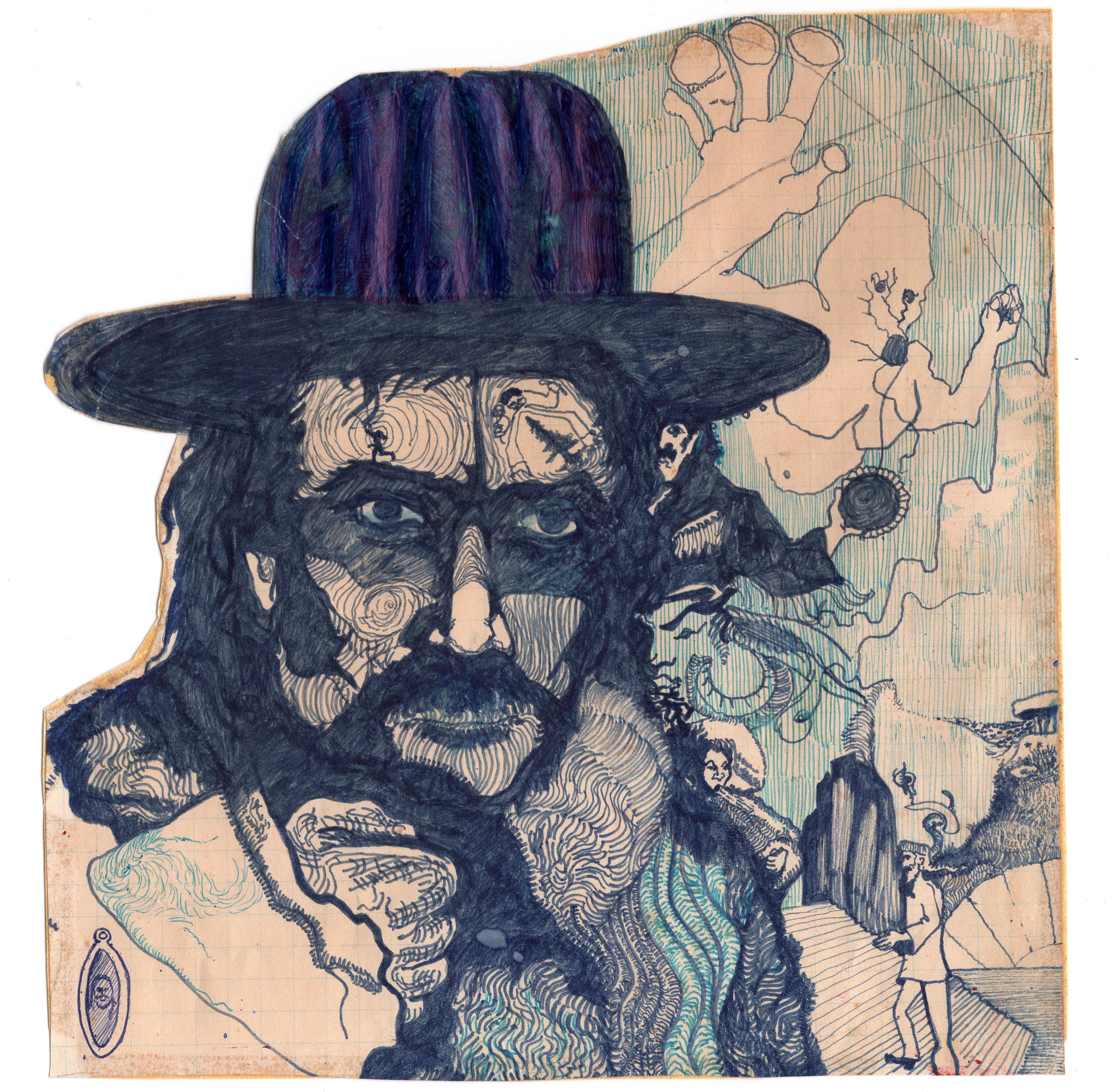
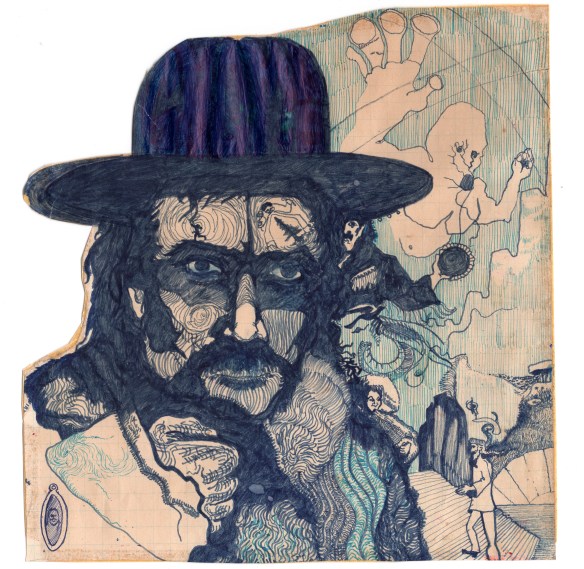
A picture drawn in 1968 of my older brother Jerry, which also reflects how I saw myself, especially after our dreams for the “Summer of Love” began to crumble and fall apart.

By the end of my first year at the University of Texas at Arlington (June 1969) the pain of staying the same had become greater than the pain of making some kind of change. Not only had I returned the previous summer from the debacle of Haight-Ashbury. I had now lived and partied with my friends on campus for a year. My girlfriend had become pregnant and had an abortion. I had played in a rock band, demonstrated with SDS, been arrested and put in jail with the band in Sherman,Texas for helping stage a curfew demonstration against the Sherman police. And I was aware that my personal life was a wreck, and my political ideals, though grand in scale (“Make love, not war!”) were also historically vague and practically incoherent.

When summer came, I moved home to live again with my parents. I had not reconciled myself to their culture or religious ideas; but I knew I needed something more stable  and more self-disciplined in my life.[i] I was still going out with my campus friends, partying at local lakes and rivers, and trying to live it up. Yet I was also dissatisfied with this scene. I knew it was empty of something more substantial that I was longing for. An early sign of this shift in perspective came when I resigned my summer job at a local music store where my friends often hung out, and took a job as a garbage man with the city of Fort Worth. I could make about twice as much per hour. Dad said to me, “Well, at least you can say that you started right at the bottom.”

I also began at this time to read more regularly in the New Testament, especially the stories in the four Gospels about Jesus: what he did, whom he met, and how he interacted with a wide variety of people. I would be out with my friends until late at night; then come home, fall into bed, and open my Bible to read until I fell asleep. I saw how Jesus interacted with a full range of everyday ordinary sinners: an adulterous woman, a greedy tax collector, power-hungry men like the Chief Priest and Pilate, and with his own failing followers (like Peter) who had wanted (like me and my friends) to be known for their revolutionary style and bravado, only to run away in confusion and bewilderment when their ideals proved groundless and self-indulgent.

As I read the gospel stories, I knew they were also about me; and given the ending of the Gospels, where the risen Jesus promises to continue to be present with his followers by the presence and power of his Spirit, I took a second step. Lying alone in my bed in the wee hours, after earlier efforts to live it up with the gang, I began to pray. The prayer was very simple, somewhat in the vein that my father later told me had also been one of his early prayers, “Lord, if you are there, can you also help me?” And the wonder of the thing was this: He was there. “Yes, I will help you. Trust me, Lean on me” (Matthew 11:28). The responding message came through very clear in my mind and heart. And, for the first time in a long time, I rested.

Thus began a couple of years of rather bumpy beginnings. Bumpy, yes, but not all that uncommon I think for a young believer, even in its bumpiness. A sort of two steps forward, one step back; start, stop, and start again, journey. One big step forward came as I found that my experiences of faith were inspiring me to write my own songs and music. Until then I had played mainly cover songs with the band (Cream, Dylan, etc.). Now I was writing about something that was rising up in my own life. Yet even now, my songs sometimes expressed a kind of ambivalence about leaving my old way of life and actually identifying myself as a Christian. One song in particular, the “Washday Blues,” expressed this ambivalence, drawing for its imagery on then popular TV ads about laundry soap. The song is addressed to Jesus, though he is never named explicitly. (You can hear an old recording of the song here.)

WASHDAY BLUES

I’ve been wondering, just what to do about You.

And you know, my mind needs laundering

Cause all I’ve got is dirty confusion.

And I’ve been looking for a brand-new recipe;

But I can’t seem to get nothing cooking:

Baked, broiled, fried, stewed, or fricasseed.

And you know, I need some real good enzymes to brighten up my day.

But it can’t be just any old detergent.

I need something strong to wash my dirt away.

I’ve got a ring around my collar, and a spot on my tie.

I’ve got the washday blues; I feel like I could cry.

If something doesn’t happen soon, I may lay down and die.

What can change my scene? Is it Mr. Clean?

O, I’ve been wondering just what to do about You.
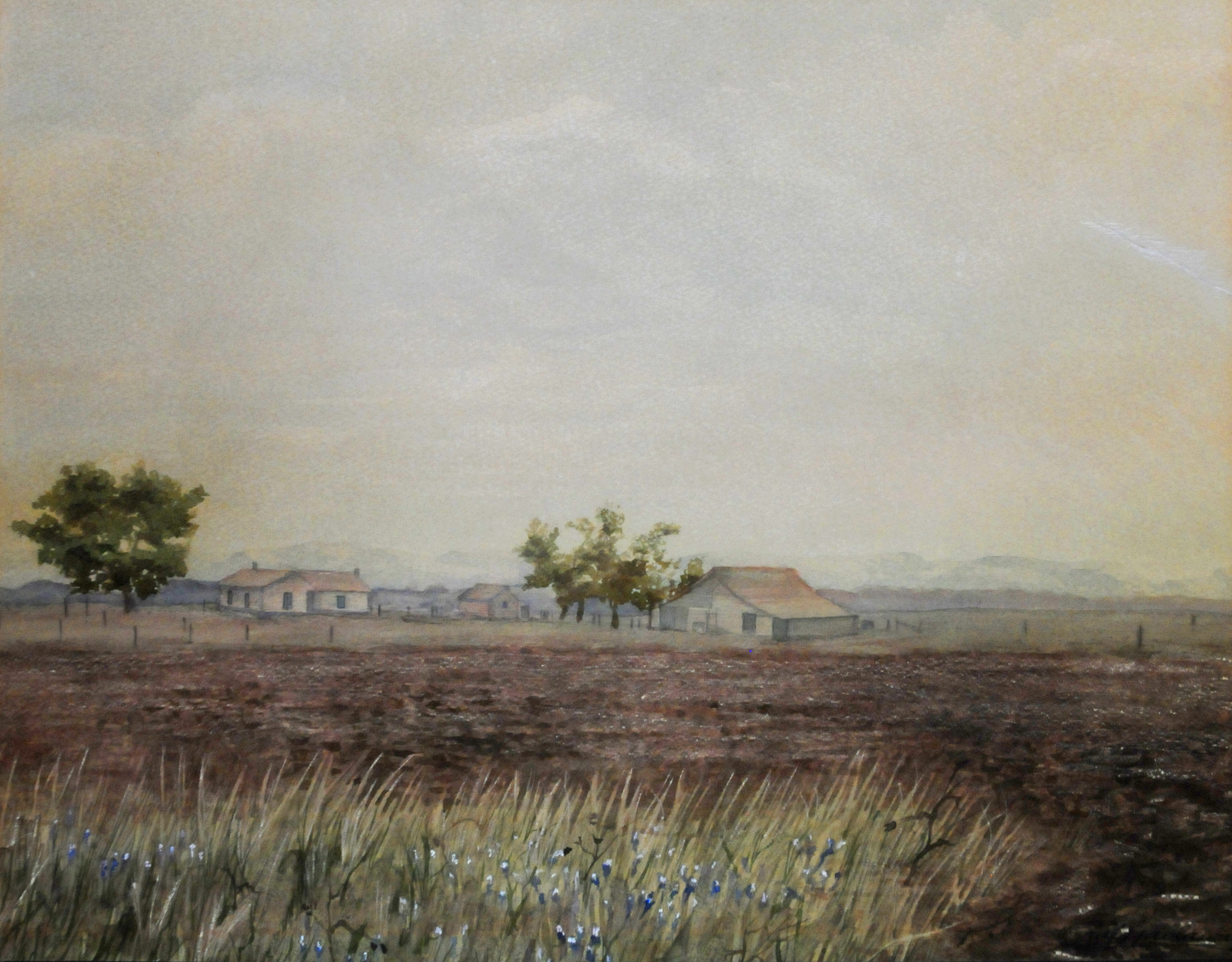
Glen Cove, watercolor by Craig Gallaway, copyright 1970. Based on a stock photograph and my own memories of my grandparents’ West Texas farm. I was trying to recall the atmosphere of their life and faith.

By the end of my second year at UTA (1970), still living at home with my parents, and hanging out with my rambling friends, the tension inherent in my double life was beginning to wear thin. Trying to live both as a cool neo-pagan rocker, and as a Christian (at least in private) has its fault lines and tremors. I had by then written a number of songs. I was surprised in a way to find myself in some of these songs (and in some of my paintings for watercolor class at UTA)  reaffirming the bonds of faith and country life that tied me to my family (for example, “The Hills of Coleman County”, mentioned at the end of Part 1). And though this kind of song resonated to some extent with a new turn in rock and roll at that time toward a more progressive country style (Dylan, the Birds, the Band), and wasn’t therefore a direct challenge to my revolutionary “style,” I think I knew at some level that this affirmation of family history was turning my political ideals toward something much more down to earth and grounded. I was letting go the world of sweeping claims about social justice and rediscovering the world of struggle, pain, and even joy in common life. This came out more explicitly in a Christmas song I wrote at the end of 1969, entitled “White Star.” (You can hear an early recording here.)

WHITE STAR

White star, how You came to be

shining down upon that country place

is beside me.

Bright and Morning Star, how you came to be

Walking around inside that country man

Is beside me.

And I was so surprised to find

That anything as ordinary as that country place

Could lighten every space

And brighten every face.

Bright and Morning Star, how you came to be

Looking right into these country eyes

Is beside me.

You’re inside me.

The tension inherent in my double life came to a head in the summer of 1970 when my father suggested that I might help out a young local preacher/evangelist named Billy Hanks. Billy was working with several young gospel singers, such as Cynthia Clawson, and he needed a guitarist for studio recording. I had a new red Guild guitar and I went straight to work. As a result, I myself became involved in some of Billy’s crusades, sharing my songs and my embryonic witness all over Texas, and eventually with the Youth for Christ organization in Europe. I also met a new set of friends and musicians; and this led later to my working with a popular Christian rock group called Love Song, as an opening act for concerts at various Texas colleges and universities.

Meanwhile, some of my old campus friends were wondering what was happening with my “music career.” I think some of them liked the music I was writing, and at least some of the lyrics. The band members even helped me, with various instruments, to produce some early recordings of the songs. But others in the troupe took offense at my increasingly public faith. The fellow on whose reel-to-reel tape machine we recorded even charged me with wanting to steal his tapes in order to get a music contract, get rich, and leave him out of the windfall. I had no such plans, and never pursued his vision for me; but I knew I had to walk away from that kind of suspicion and hatred. So, I did.

Another song that I wrote at about this time coincided with the decision to break more clearly from my old pattern. I was aware that my friends and I, with all of our ideals about social change and freedom and “love,” had long been disgruntled with life itself, working jobs that we didn’t really like or want, waiting for the weekend to come so we could party, get high, and escape our boredom, only to find ourselves worn out and starting another week in the same sort of stupor as the week before. I knew I needed to turn a corner, to spend my time differently. And what good did it do to keep sharing my songs when, as far as I could see, I might only be bugging them with my “witness”? I needed to strengthen what few real gains I had made (personal and spiritual) and begin with more effort to “redeem the time,” (Ephesians 5:16). The song I wrote about all of this was entitled “Time.” It was addressed in this case both to myself and to my old friends. It was a kind of farewell song and a wake-up call to make good use of time–and everything else we were being given. (You can hear an early recording of the song here.)

TIME

What can we do to save time that we think we can use

For a better time as soon as we have finished

What we’ve got to?

And what can we do to pass time when we find we’ve saved too much

And we’re spending all our time

Wondering just how we can pass it?

What does time mean to you?

Does it mean just that another day is through?

Are you rushing? Are you wishing? Are you lazy?

Do your days just pass you by, come and go?

Do you know the reason why?

I was letting go of one way of life. I was taking up another. In 1971, I began working as a youth director at the First Methodist Church in Carrollton, Texas, with pastor Ken Carter and his wife Freddie. I learned a lot at Carrollton about keeping a schedule and connecting with people who had regular jobs and families, people who were willing to work with me as we tried to make a difference in our surrounding community. In the summer of 1972, for example, instead of spending a lot of money, as we had done the year before, for the youth group to travel to Kentucky to work with the great Appalachian Service Project, we found a way to create our own service project in the rural countryside around Carrollton. Like ASP, we helped local people and families living in poverty to rebuild porches and roofs, and we enjoyed musical and cultural exchanges with the generous black congregations whose members welcomed us into their communities.

At the same time, among the people I had met through Billy Hanks, were two twin brothers, Brad and Stan Ferguson, who were part of the Inter-Varsity Christian Fellowship at North Texas State University in Denton. I lived with Brad and Stan on the NTSU campus for one semester in the fall of 1970, and then later spent time with them while I was completing my art degree at UTA. Among other things, my friendship with Brad and Stan helped me to clarify what it would mean to make a more grounded break from my old life of so-called “free love,” and to move into a new way of life in Christ that looked instead for a kind of wholeness, justice, joy, and wholesomeness in faithful marriage.

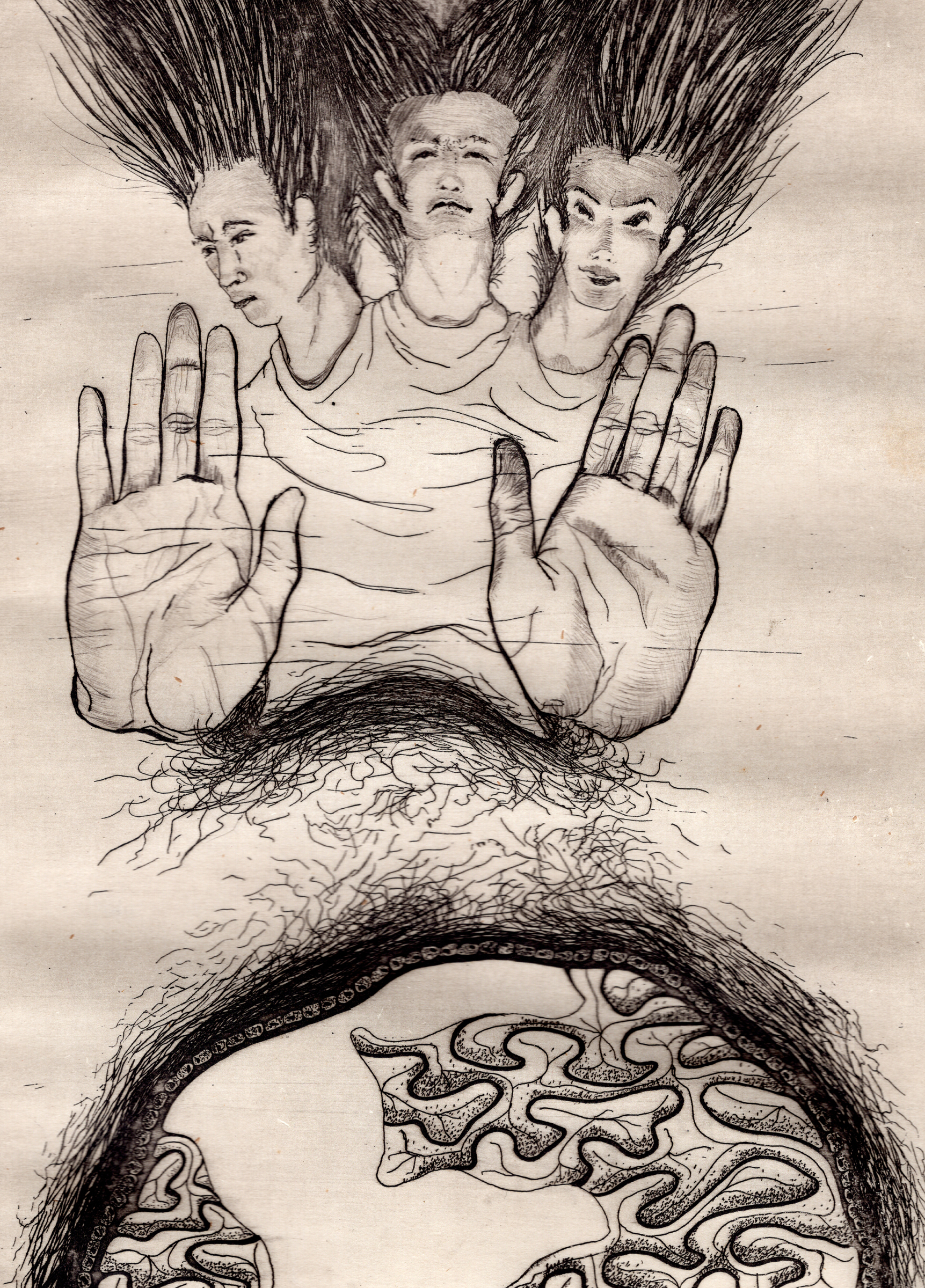
This was not a simple or easy time of transition for me. I was a young man in art school, taking life-drawing classes with nude models. I wrestled quite a bit with the meaning of my own desires. I even started at one stage in my art work, without really knowing the background or history, to drift toward the ancient gnostic heresy which once dogged the early Christians. This is the idea that the solution to our passions and unruly desires is in some way to get rid of the body itself, to be taken away to another world where there will be no body to bother with. I memorialized this in an etching that shows a young man, divided severally in his own mind, somehow breaking away from his brain and the world in order to find peace.
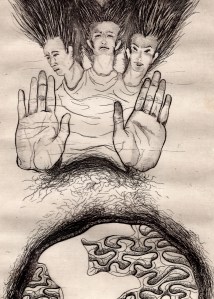
Gnostic Vision, etching by Craig Gallaway copyright 1970.

One day in Denton, when I was showing Brad some of my life drawings of nudes, I became embarrassed and said something about how he didn’t have to look at all of this “nasty” stuff. And Brad simply reminded me that for us as Christians, the body is not “nasty.” It is God’s good creation. Our task is not to escape it; but to learn to live faithfully with it and in it, in the physical world, with self-control, holiness, joy, and wisdom. Here, in a deeper connection, I was learning ever more clearly how the personal and the political, the social and the moral, far from being separate compartments, really belong together; and how practical and down to earth this way of Christian faith is designed to be. The Spirit was working with me, even as I at first misinterpreted what I thought the Spirit was aiming at. But this is how the Spirit often seems to work when one is in need of deconstruction and reconstruction!

In the summer of 1973, after graduating from UTA, I returned to the San Francisco area to live in Richmond and to work with a group known as “The Christian World Liberation Front.” Led by Jack Sparks on the campus of the University of California at Berkeley, CWLF sounded like another radical political group. And in a way it was. But it was focused on helping young people recover a sense of faith, hope, and grounding in Christ. I too was still learning how to bring my old revolutionary ideals down to earth, to embrace a way of life that was faithful in love, disciplined in work, focused on service, and open to all people under the guidance of the risen Lord and his Spirit. I came to see that these practical steps of faith, as common and ordinary as they seem, really are the Christian alternative to the overblown rhetoric that we often encounter in revolutionary circles, such as the Zealots in the New Testament, the hippies of the 1960s, and the recent cultural harangues from the riots of 2020. This is also, by the way, the kind of mission grounded in faith and individual responsibility that we find at work today among leading black Christians and public intellectuals such as Robert Woodson, Shelby, Steele, and Glen Loury.

So this is how I began to learn over time what it meant to sing the words of my own song: “Jesus’ blood, dripping on the stones, has set me free to soar.”  Set free not only from the physical confines of the SLO. CO. JAIL, but also from the spiritual and moral rabbit trails of my own limited vision, my story, my self-understanding. His death and resurrection, his defeat of the powers of sin and death, and his continuing power and presence by the Spirit, are the foundation for a real revolution that aims finally at resurrection and new creation. Nonetheless, like the Apostle Paul, those of us who follow him do not dare nor even wish to claim that we have already arrived, for we are still on the road hiking with purpose toward the final restoration and victory (Philippians 3:12-15). But we are “in him” and that makes all the difference: On the road of new creation, fighting back against the fallen powers, under the banner of the King!

[i] I wish I could say that I recognized clearly during the early years portrayed in this account just how much my father and my mother had been an ever-present help to me. After all, when Dad came to Haight-Ashbury to get Jerry and me out of trouble, he was, in a way, enacting the gospel in person. I didn’t see it so clearly then. Later, looking back, I was able to recognize how, to put it mildly, it had not been easy for him to come to that particular “far country” to find us, to bear the costs (monetary, personal, and emotional) and the drab ignominy of our sins and failures, and all of this in order to give us a second chance to start again; yet to see no immediate signs of gratitude or change in either of us. Dad was no more perfect than the Apostle Paul. But, like Paul, on behalf of the runaway slave, Onesimus, and like King Jesus who is the source and foundation of this whole endeavor, he was ready to take our debts upon himself in order to bring about, if possible, the desired reconciliation.

The Way of True Romance: Valentines Day 2018

Two robins, under their Maker’s care, find their way within the bleak yet beautiful conditions of mid-winter.

The painting above (Two Robins, 2010, Craig Gallaway) and the song below (Love Is Like, 1994,Craig and Deborah Gallaway) are a poetic introduction to the themes explored in the longer essay below. Both song and painting evoke reflection on our human experience of romantic love. Love, as something deeper and more difficult than we often acknowledge; something that is grounded, moreover, in the Mind of our Maker and in the order of creation itself. We hope you enjoy the song and the painting, and then, if you choose, spend some time with us thinking about the way of true romance.

Love Is Like, 1994, Craig and Deborah Gallaway

Deb and I first met in the fall of 1975 at Regent College in Vancouver, British Columbia. A little over a year later, with a strong sense of adventure and romance, we began our journey into the mystery of Christian marriage. From the beginning, we were buoyed up by many things. We were studying together at a great school, surrounded by brilliant teachers and stimulating friends. We took long walks along the shores of English Bay, and watched one night as a family of geese swam through the channel of light reflected from the moon over the top of Hollyburn Mountain. We snowshoed up that mountain, strolled the seawall at Stanley Park, and shared wonderful meals, music, and church services with friends and colleagues. And then we completed our degrees, left Canada, and moved to Texas.

We moved to Dallas to work with some of my old friends in a rundown, inner-city neighborhood. Our first child, Ben, was born in 1979, and we began the long pilgrimage of making a household, keeping jobs, and building our family. Our second son, Chris, came to us in 1983 while I was completing doctoral work at Emory in Atlanta. And then we moved to Nashville to take a job in publishing where our third son, Zach, was born in 1992. Of course, not all of these times were as “romantic” as those early days in Vancouver. We had to face hard times financially, to rediscover our own woundedness while learning to face differences and work through conflicts with each other; and then, later, to wrestle with rearing our sons through adolescence, and even to lose dear Zach in a motorcycle accident in Birmingham in 2013, just when he had nearly made it through those stormy years.

There have been times in this pilgrimage when, as both Deb and I could tell you, we weren’t sure there was much left of the two young romantic people who met in Vancouver. And yet, by a providence not our own, the dark and trying times did not destroy us, or ruin our journey into the mystery of Christian romance and marriage. That mystery, as we see it now, might be summed up in a single phrase from the letter of Paul to the Ephesians (5:21). “Submit to one another out of reverence for Christ.”

To be sure, this idea of “submission” will raise red flags for some in our era of sexual “liberation” and romantic adventurism (which Deb’s and my 60’s generation sadly helped to launch). The mantra now, as we all know, is that everyone is “free” to explore, or to invent, one’s own sexual identity or romantic style, and then to honor these experiments, so long as they are consensual, with the title of “marriage.” Likewise, the commonplace of “Hollywood” romance (both in the movies and among the stars) is that one “falls in love” under the thrill and ecstasy of romance; but then one is free again, when difficulties arise, or the shine wears off, to fall out of love, and to seek a new partner who will take one’s breath away. The idea of “submitting to one another out of reverence for Christ” sounds archaic and stilted over against these contemporary themes. Is Christian marriage then simply out of touch with what is really romantic?

In 1976, when Deb and I first began to think about marriage, we started discussing a book with a somewhat daunting title, The Theology of Romantic Love. This book, by Mary McDermott Schideler, explores the ideas of Charles Williams concerning how our experiences of human romance, at their best, are grounded in the reality of God’s love for the world in Christ. Williams (a friend of C. S. Lewis) also followed the logic of Ephesians 5, where Paul urges “husbands to love their wives as Christ loved the church and gave himself up for her.” And “wives to submit to their husbands as the church submits to Christ.” Paul’s conclusion anticipates Williams’s main theme. The gift of marriage is given to us as a sign of an even greater and deeper mystery: God’s sacrificial love for the whole world in his Son, the Bridegroom, Jesus the King. From our first conversations, Deb and I felt that we were touching here on something deep and rich, a key to the full reality and potential of our own romance and marriage. But, of course, we were just starting out, and there was as yet a long way to go.

Charles Williams’s reflections on romantic love are also illuminated with Dante’s poetry about his beautiful and beloved Beatrice. Williams saw in Dante and Beatrice three stages In the romantic journey of lovers, which parallel three stages in the love of Christ for the world. First is the stage of the appearance, or the revelation, of the image of love. For Dante this occurred when he first met Beatrice. She was the very image of love incarnate. Her beauty and grace stunned him. To be addressed by her on the street was to have his whole world set right all at once, to see the color of the sky anew, to hear the sounds of nature as if for the first time. This is what we call “falling in love.” It is echoed, at least dimly, in the scripts of Hollywood. It is what Deb and I experienced along the shores of English Bay, when the whole world seemed to have been remade just for us. And in the life of Christ, it is the period of his first appearance, his birth, and his early, vibrant ministry. He was the image of God’s love made visible. And the response of the people, at least at first, was like that of Dante, or me, or any lover: They were flocking to be near him, to see him, to touch his garment, to be healed and fed, and to hear his words of authority and power. Once they opened their hearts to him, they couldn’t get enough of this wonderful, magical person.

But just as Jesus’ popularity with the people came under strain as he and they met with resistance from various sources–trials, testings, temptations, difficulties, and direct opposition–so the first glories of romance do not last forever, as lovers go on to face the challenges and responsibilities of life together. This leads to the second stage of romantic love, the stage at which the image of love fades and dies. According to Williams, this happens to all lovers. For one reason or another, sooner or later the beloved no longer embodies all of those superlatives that once seemed to set the whole world humming. For Dante, this occurred when Beatrice literally died. For Deb and me, and for many married couples, it comes with the daily grind of living, the trials of being different, with conflicts about important decisions, or poor communication, and eventually with the trials of growing older. It can also come, of course, with abuse, or unfaithfulness. In Jesus’ case, it came with his growing conflict with the religious authorities, and then emphatically with his crucifixion by the state. At this point, lovers (even spouses and disciples) often lose faith and turn away. The really important question, then, is whether lovers will make it through this death to what lies beyond.

Williams expands on this: In the first stage of love, the image of the beloved comes to us and shocks us, almost as if we were a passive observer. As we open our hearts to the other person, despite the dangers and risks involved, we are overwhelmed with life and joy. Likewise, in the second stage, we may feel anxious and helpless as the exhilarations of romance begin to fade. Even Hollywood seems to get these two stages more or less right. In the third stage, however, the stage of Ephesians 5, of “submitting to one another out of reverence for Christ,” we enter a new dynamic. There is to be no more passivity, no more waiting for everything to be given to us. We are called, instead, to make a very conscious and active choice in faith, to become the image of love for our beloved, to lay down our lives in love for our wife or our husband, as Christ laid down his life for the world. And the promise in this is that those who lay down their lives will find them. “The happy old couples,” wrote C. S. Lewis, “have come through a difficult death and re-birth. But far more have missed the re-birth.”

The third stage of romantic love, then, according to Williams, is the stage of resurrection. Had the cross been the end of Jesus, we probably would never have heard anything more about him. He would have been at best another brave revolutionary whose vision and foresight betrayed him. But as the Scriptures attest, and as his presence by the power of his Spirit with his people, the church, has proven to countless believers throughout history, his life did not end with his death on the cross. As Paul says elsewhere, “He humbled himself, even unto death on a cross . . . therefore God has highly exalted him.” And for those of us who face the loss of romance, when it seems that love itself has died, this is our calling in Christ as well. He submitted his life to his Father, and so broke through the fearful power of death that binds the world; just so, “out of reverence for Christ,” and by faith in Him, we are called to serve and to love one another, even when it looks like love has died.

In this way, Deb and I are still seeking to live into the mystery of Christian marriage and romance. We see how the prototype for our love is the deeper reality of God’s love for the world in Christ. We bear witness that Christ’s presence and guidance in our lives has made our love and romance grow richer, finer, fuller–not thinner or duller. And yet we also see that our marriage, on this foundation, is not in itself the goal of everything, even for us. There is, after all, to be no marriage or giving in marriage in the world to come. When Dante encounters Beatrice again, in his vision of Paradise, she is his guide for a while; but then she turns back to the eternal fountain. The kind of love we are learning in marriage, then–including eros, friendship, family, shared decision-making, and sacrificial serving–is not just about us. It pulls us forward and outward, beyond ourselves, to anticipate with justice, beauty, and kindness toward others in this life, the wedding feast of the Lamb of God, when all things shall be made new and we shall “grow up into Christ in all things.” And this also means, even now, the best and richest and most down-to-earth romance as well.